THE UNITED STATE CENTERS FOR DISEASE CONTROL AND PREVENTION
A Quick Reference Guide to NTD Diagnostics and Diagnostic Methods
Lymphatic filariasis is a significant public health concern in many tropical and subtropical regions.
2013 · 1 pages
Sign in to readA free account is required to download.
Abstract
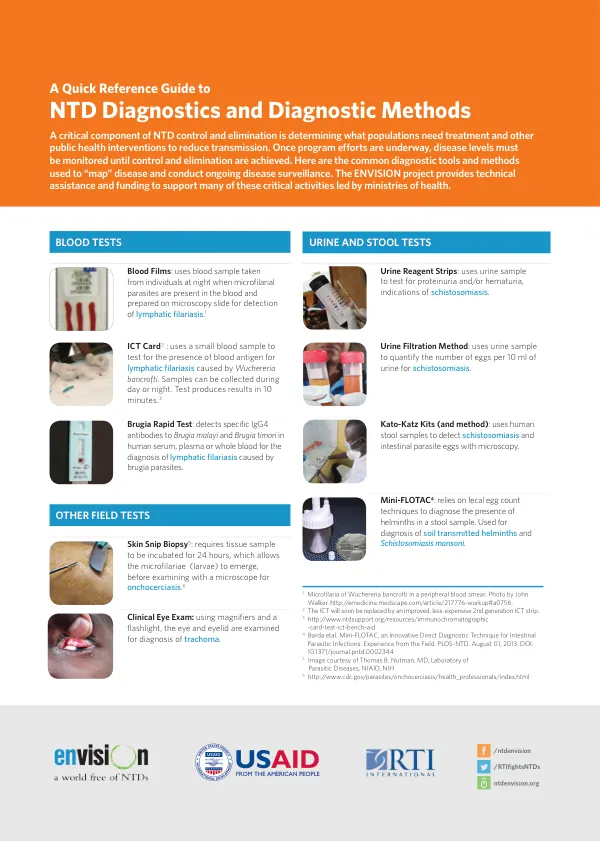
The disease is caused by parasitic worms, including Wuchereria bancrofti, Brugia malayi, and Brugia timori. Diagnosis of lymphatic filariasis typically involves the use of various diagnostic tools and methods. Blood tests are a common approach for diagnosing lymphatic filariasis. The Blood Films method involves taking a blood sample from an individual at night when microfilarial parasites are present in the blood. The sample is then prepared on a microscopy slide for detection of lymphatic filariasis. Another blood test, the ICT Card, uses a small blood sample to test for the presence of blood antigen for lymphatic filariasis caused by Wuchereria bancrofti. This test can be performed during the day or night and produces results in 10 minutes. The Brugia Rapid Test detects specific IgG4 antibodies to Brugia malayi and Brugia timori in human serum, plasma, or whole blood for the diagnosis of lymphatic filariasis caused by Brugia parasites. In addition to blood tests, other diagnostic methods are used to detect lymphatic filariasis. The Skin Snip Biopsy involves taking a tissue sample, which is then incubated for 24 hours to allow the microfilariae to emerge. The sample is then examined with a microscope for onchocerciasis. The Clinical Eye Exam is used to diagnose trachoma, a disease caused by Chlamydia trachomatis, which is often associated with lymphatic filariasis. Urine and stool tests are also used to diagnose various neglected tropical diseases (NTDs). The Urine Reagent Strips test for proteinuria and/or hematuria, which are indications of schistosomiasis. The Urine Filtration Method uses a urine sample to quantify the number of eggs per 10 ml of urine for schistosomiasis. The Kato-Katz Kits and method use human stool samples to detect schistosomiasis and intestinal parasite eggs with microscopy. The Mini-FLOTAC relies on fecal egg count techniques to diagnose the presence of helminths in a stool sample. This method is used for the diagnosis of soil-transmitted helminths and Schistosomiasis mansoni. Determining the populations that need treatment and other public health interventions to reduce transmission is a critical component of NTD control and elimination. Disease levels must be monitored until control and elimination are achieved. The ENVISION project provides technical assistance and funding to support these critical activities led by ministries of health.