MEASURE EVALUATION PRH
The Importance of Gender in HIV and AIDS Data
Addressing gender when monitoring and evaluating HIV projects ensures equity in access and benefits for men and women.
2017 · 4 pages
Sign in to readA free account is required to download.
Abstract
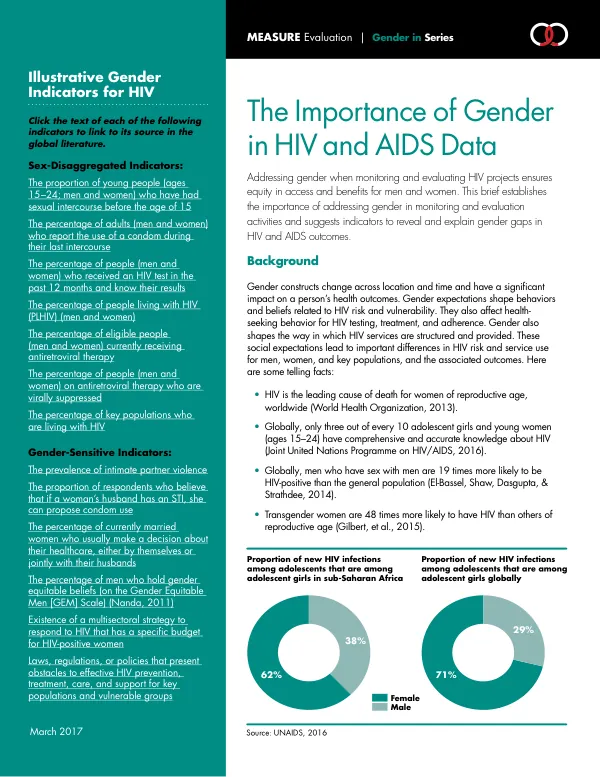
Gender constructs change across location and time and have a significant impact on a person's health outcomes. Gender expectations shape behaviors and beliefs related to HIV risk and vulnerability, as well as health-seeking behavior for HIV testing, treatment, and adherence. These social expectations lead to important differences in HIV risk and service use for men, women, and key populations, and the associated outcomes. HIV is the leading cause of death for women of reproductive age worldwide, with only three out of every 10 adolescent girls and young women having comprehensive and accurate knowledge about HIV. Men who have sex with men are 19 times more likely to be HIV-positive than the general population, while transgender women are 48 times more likely to have HIV than others of reproductive age. Harmful notions of masculinity can increase men's risk-taking behavior, making them vulnerable to acquiring HIV, and may also make men less likely to seek help and adjust to living with HIV post-diagnosis. Unequal power relationships increase women's vulnerability by limiting their ability to negotiate sexual relationships and condom use, restricting women's access to and use of health services, and exposing women and girls to violence. Harmful gender norms and practices associated with a culture's understanding of masculinity can increase the likelihood that men and boys will engage in sexual risk-taking and substance-use behavior that exposes them to HIV. Gender norms for men and boys may reduce or delay help-seeking behavior and testing and treatment adherence after they acquire the virus. Disaggregating key indicators by sex is essential to understand the effect of gender on program efforts. This data can identify where, when, and if gender inequalities exist, and can be used to target programs more effectively. For example, where women are more vulnerable, data will likely show that they have a higher prevalence of HIV, and women will likely have a greater presence throughout the care cascade. Data visualization by sex can quickly show if percentages of females diagnosed, linked to care, retained in care, and prescribed antiretroviral therapy are slightly higher than for males. Disaggregating data by sex can be challenging and time-consuming, especially without a computer-based system. However, results from a gender analysis can help determine which data should be prioritized for sex-disaggregation. More expedient means to obtain the data needed to uncover gender-related disparities include record review in a few facilities, focus groups with providers, or small-scale surveys. PEPFAR data and other HIV program data are disaggregated by sex, but it is also important to disaggregate other health data that intersect with HIV, such as those tracking tuberculosis, nutrition, or malaria. Gender-sensitive indicators can illuminate the reasons gender inequities exist in HIV data. For example, studies have demonstrated that gender-based violence is both a risk factor for HIV acquisition and a consequence of acquiring the virus. Gender-based violence increases the risk of acquiring HIV, and those living with HIV often experience violence owing to their HIV status. It is essential to analyze data with a gender lens, as low adherence to treatment among women and high prevalence of GBV may indicate that women are not seeking treatment owing to fear of their partner's reaction. Questions to assess how gender affects HIV outcomes include examining differences in exposure and risk between men and women and boys and girls, cultural constraints or power dynamics around discussing sexual health issues and condom use, and gender differences in access to information or knowledge about HIV and AIDS. Additionally, questions can be asked about gender differences in who is accessing antiretroviral therapy, gender constraints around who has the authority to access health services, and provider bias toward clients based on sex, age, sexual identity, or gender identity.
Related documents