USAID DEC
A Rapid Assessment of Ebola-related Implications for RMNCH Service Delivery and Utilization in Guinea
Sign inMEASURE EVALUATION PRH
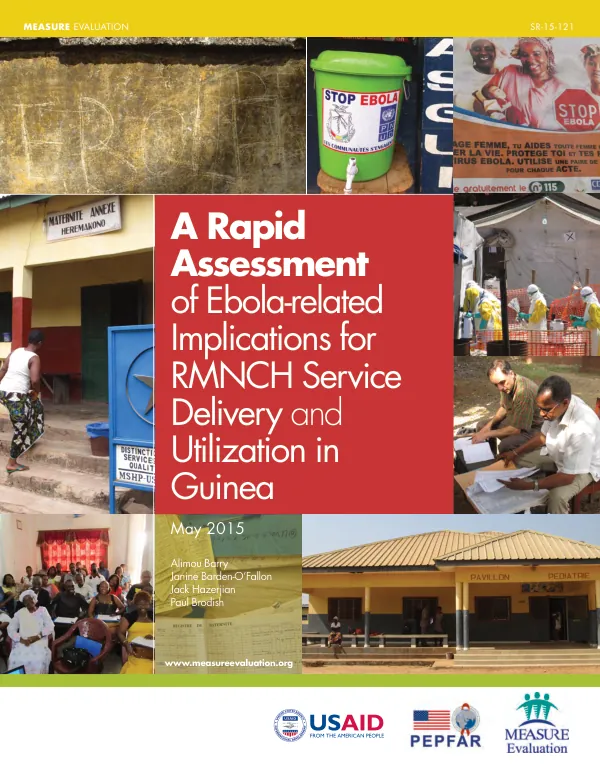
A Rapid Assessment of Ebola-related Implications for RMNCH Service Delivery and Utilization in Guinea
The Ebola virus disease (EVD) outbreak in Guinea began in March 2014, with a mortality rate of 66%, higher than in Sierra Leone and Liberia.
2015 · 83 pages
Sign in to readA free account is required to download.
Abstract
The epidemic in Guinea was more sustained, with new cases continuing to arise from March 2014 to the present. Health experts were concerned that other critical health issues, such as malaria, pneumonia, and typhoid, as well as routine care for maternal and child health, might go unattended due to clinic closures, patient avoidance of facilities for fear of contracting Ebola, or patients with Ebola-like symptoms being turned away. Two prefectures in Guinea reported an 87% drop in the number of women giving birth in a facility with a skilled birth attendant from the latter part of 2013 compared to nine months later during the epidemic. The rate of new and returning contraceptive users fell by nearly 70% over the same period. These reports suggested that levels of service delivery for routine reproductive, maternal, newborn, and child health (RMNCH) care had fallen precipitously during the Ebola epidemic. However, there were no data on service utilization available to measure the extent to which this was true or to inform planning and resource allocation in response. To address this need, USAID/Guinea requested that MEASURE Evaluation conduct a rapid assessment to better understand the effects of Ebola on delivery and utilization of routine RMNCH services. The study goal was to understand the effects of Ebola on delivery and utilization of routine RMNCH services, rather than to make recommendations going forward. The study's methodology was designed to be comparable to future assessments. The study was conducted in 12 prefectures in Guinea, with a focus on outpatient visits, family planning, maternal health, child health, and stockouts of essential medicines. Data were collected through surveys of health facilities, interviews with health district officers, and analysis of district-level data on service availability and the health labor force. The study also included interviews with health directors and managers to gather information on the impact of Ebola on RMNCH service delivery. The study found that outpatient visits decreased significantly during the Ebola epidemic, with a 45% decrease in the number of visits to health facilities in the 12 prefectures. Family planning services were also severely impacted, with a 70% decrease in the number of new and returning contraceptive users. Maternal health services were also affected, with a 50% decrease in the number of births attended by skilled birth attendants. Child health services were also impacted, with a 30% decrease in the number of children under the age of five receiving vaccinations. The study also found that stockouts of essential medicines were a significant problem during the Ebola epidemic, with a 60% increase in the number of stockouts reported by health facilities. The study concluded that the Ebola epidemic had a significant impact on the delivery and utilization of routine RMNCH services in Guinea, with significant decreases in outpatient visits, family planning services, maternal health services, and child health services. The study also highlighted the need for improved planning and resource allocation to address the impact of Ebola on RMNCH service delivery. The study's findings have important implications for the development of strategies to improve RMNCH service delivery in Guinea and other countries affected by the Ebola epidemic. The study's results suggest that a comprehensive approach is needed to address the impact of Ebola on RMNCH service delivery, including the development of contingency plans for emergency situations, the provision of training and support to health workers, and the allocation of resources to support the delivery of RMNCH services.
Related documents