MIYAMOTO INTERNATIONAL, INC.
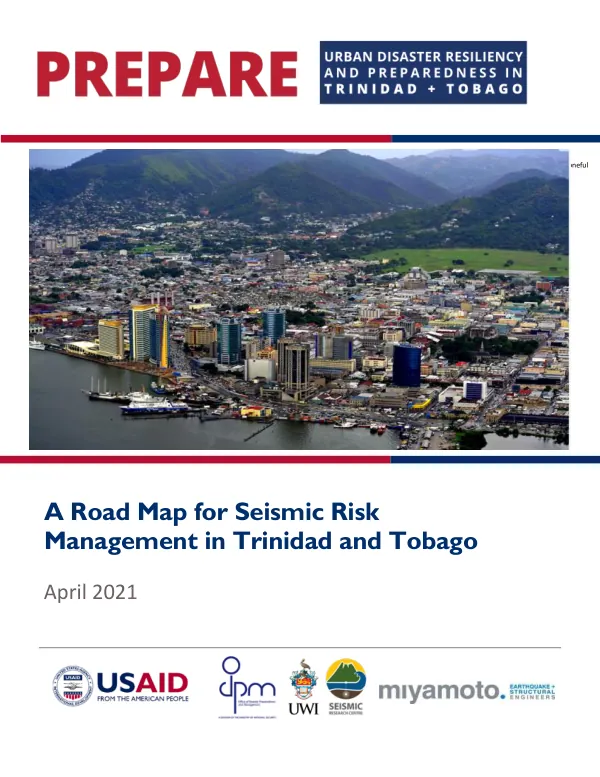
A Road Map for Seismic Risk Management in Trinidad and Tobago
Trinidad and Tobago (T&T) is exposed to significant earthquake risks due to its location on and along faults in a seismically active zone.
2021 · 47 pages
Sign in to readA free account is required to download.
Abstract
The country had not experienced a large magnitude earthquake (M 6.9-7) for over 50 years, but when such an event occurred in August 2018, the peak ground acceleration was below the design curves used by engineers. This has led to a level of complacency among the population, despite existing exposure and vulnerability. Increased urbanization (72%), discretionary construction standards, and high levels of housing informality put T&T's building stock and population at high risk. The country's national development must address low-frequency, high-impact seismic risk to be sustainable. Initiatives are being implemented to reduce seismic risk to the built environment, including Ministry of Works and Transport (MOWT) standards for public buildings, the DevelopTT planning and automated building permit digital platform, and urban seismic microzonation. The Office of Disaster Preparedness and Management (ODPM) is guiding the execution of the Urban Disaster Resiliency and Preparedness in Trinidad and Tobago (PREPARE TT) program, which aims to strengthen risk management policy and practice of national, municipal, and Tobago disaster risk reduction/management (DRR/DRM) institutions. The program is supported by the American people through the United States Agency for International Development's (USAID) Bureau of Humanitarian Assistance (BHA). A road map for seismic risk management in T&T was developed as a result of a multi-stakeholder online meeting held on June 18, 2020, and a socially distanced in-person meeting of stakeholders on November 24, 2020. The road map presents an opportunity to better address and implement national disaster risk reduction, preparedness, response, and recovery needs identified by stakeholders. The development of the road map was proposed to understand concerns and solutions needed to effect improved seismic risk reduction and preparedness linked to the PREPARE TT program. The road map aims to strengthen risk management policy and practice of national, municipal, and Tobago disaster risk reduction/management (DRR/DRM) institutions for a reduction in internally displaced people (IDPs), lives lost, people injured, and economic disruption. The road map will focus on risk governance, knowledge management, mitigation and preparedness, public awareness and education, response, recovery, and reconstruction, and risk financing and business continuity planning. Key stakeholders involved in the development of the road map include national and municipal-level governments, academic institutions, and private sector partners. The road map will be guided by the Office of Disaster Preparedness and Management (ODPM) and will be implemented in collaboration with various stakeholders. The development of the road map is a critical step towards reducing seismic risk in T&T and ensuring the country's national development is sustainable. The road map will address the challenges and opportunities identified in the development of seismic risk management in T&T. The challenges include the country's exposure and vulnerability to seismic risk, the lack of a comprehensive seismic risk management policy, and the need for increased public awareness and education on seismic risk. The opportunities include the implementation of initiatives to reduce seismic risk to the built environment, the development of a road map for seismic risk management, and the strengthening of risk management policy and practice of national, municipal, and Tobago disaster risk reduction/management (DRR/DRM) institutions. The road map will provide a framework for the implementation of seismic risk management in T&T, including the development of a comprehensive seismic risk management policy, the establishment of a seismic risk management committee, and the implementation of public awareness and education programs. The road map will also provide guidance on the development of a seismic risk management plan, the establishment of a seismic risk management database, and the implementation of a seismic risk management training program. The development of the road map is a critical step towards reducing seismic risk in T&T and ensuring the country's national development is sustainable. The road map will provide a framework for the implementation of seismic risk management in T&T and will guide the country's efforts to reduce seismic risk and ensure the sustainability of its national development.