MIYAMOTO INTERNATIONAL, INC.
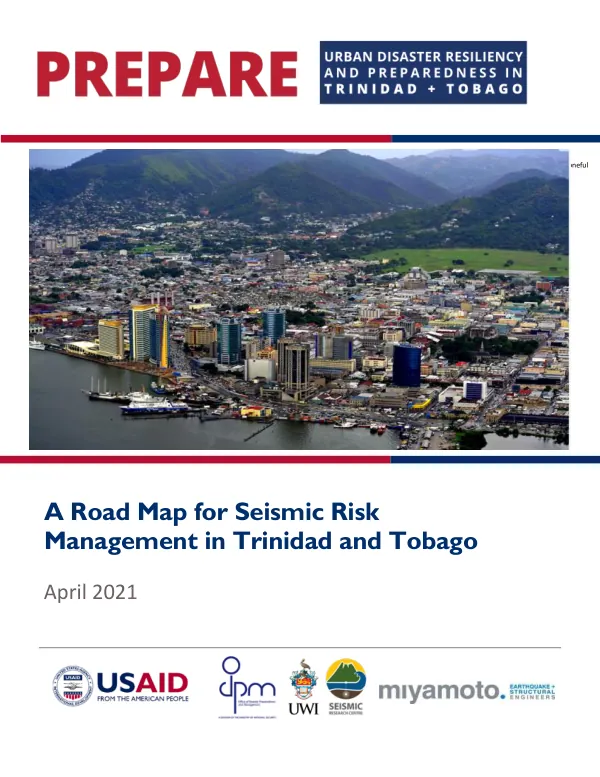
Urban Disaster Resiliency and Preparedness in Trinidad and Tobago (PREPARE TT)
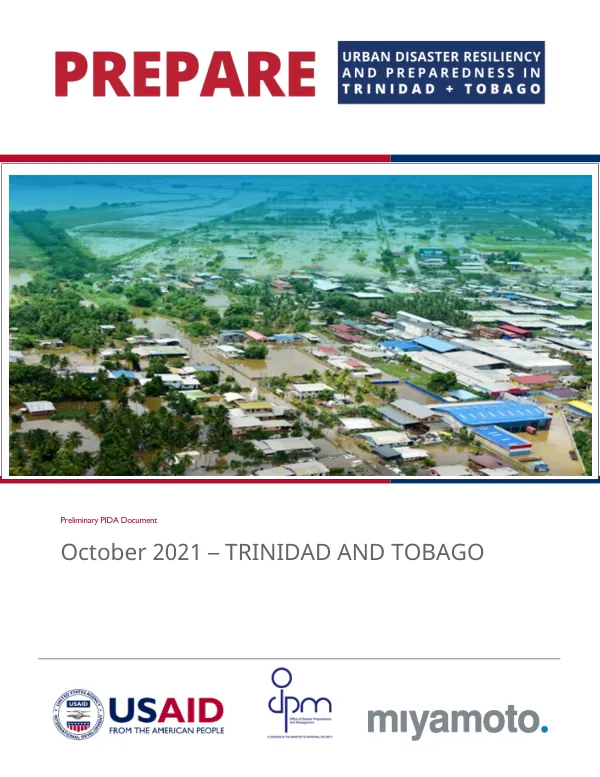
The PRELIMINARY PIDA document for the PREPARE Trinidad + Tobago program aims to provide a clearer picture of the probable impact of an urban earthquake disaster and facilitate advocacy and planning initiatives around strengthening seismic disaster risk reduction and preparedness measures in Trinidad and Tobago.
2021 · 251 pages
Sign in to readA free account is required to download.
Abstract
The program is implemented by Miyamoto International, Inc. with the approval of the Government of Trinidad and Tobago, and is led by the Office of Disaster Preparedness and Management, Ministry of National Security. The document is a result of the Pre-Impact Data Analysis (PIDA) conducted by Miyamoto International, Inc. in collaboration with the PREPARE TT Program's Technical Advisory Committee, which included representatives of the Office of Disaster Preparedness and Management and Miyamoto International. The PIDA baseline data provides a comprehensive overview of the disaster risk reduction and preparedness measures in Trinidad and Tobago, including the population demographics, building footprint, and hazard analysis. The population demographics in Trinidad and Tobago are characterized by a diverse population with a mix of urban and rural areas. The country has a total population of approximately 1.4 million people, with a high population density in urban areas such as Port of Spain and San Fernando. The building footprint in Trinidad and Tobago is also a concern, with a high concentration of buildings in urban areas, particularly in the Port of Spain metropolitan area. The hazard analysis for flooding in Trinidad and Tobago highlights the risks associated with coastal flooding and sea level rise, as well as surface water flooding. The analysis identifies areas that are highly vulnerable to flooding, including the coastal areas of Trinidad and Tobago, particularly in the Port of Spain metropolitan area. The document also identifies priority persons, including the elderly, children, and people with disabilities, who are most vulnerable to the impacts of a disaster. The PREPARE TT program aims to reduce the lives lost, people injured, internally displaced persons, and social and economic disruption resulting from an urban earthquake disaster in Trinidad and Tobago. The program will focus on strengthening seismic disaster risk reduction and preparedness measures, including the development of a comprehensive disaster management plan, the establishment of a disaster response system, and the provision of training and capacity-building programs for disaster responders. The document provides a comprehensive overview of the disaster risk reduction and preparedness measures in Trinidad and Tobago, and highlights the need for a comprehensive approach to disaster management. The PREPARE TT program is an important step towards reducing the risks associated with disasters in Trinidad and Tobago, and towards building a more resilient and disaster-ready community. The PREPARE TT program will focus on several key areas, including the development of a comprehensive disaster management plan, the establishment of a disaster response system, and the provision of training and capacity-building programs for disaster responders. The program will also focus on strengthening the capacity of the Office of Disaster Preparedness and Management to respond to disasters, and on building partnerships with other stakeholders, including the private sector, civil society, and international organizations. The document highlights the importance of a comprehensive approach to disaster management, which includes the development of a disaster management plan, the establishment of a disaster response system, and the provision of training and capacity-building programs for disaster responders. The PREPARE TT program is an important step towards building a more resilient and disaster-ready community in Trinidad and Tobago. The PREPARE TT program will also focus on building partnerships with other stakeholders, including the private sector, civil society, and international organizations. The program will work closely with the Office of Disaster Preparedness and Management, the Ministry of National Security, and other government agencies to ensure that the program is aligned with national policies and priorities.
Related documents