MIYAMOTO INTERNATIONAL, INC.
Semi-Annual Performance Report: PREPARE Trinidad and Tobago
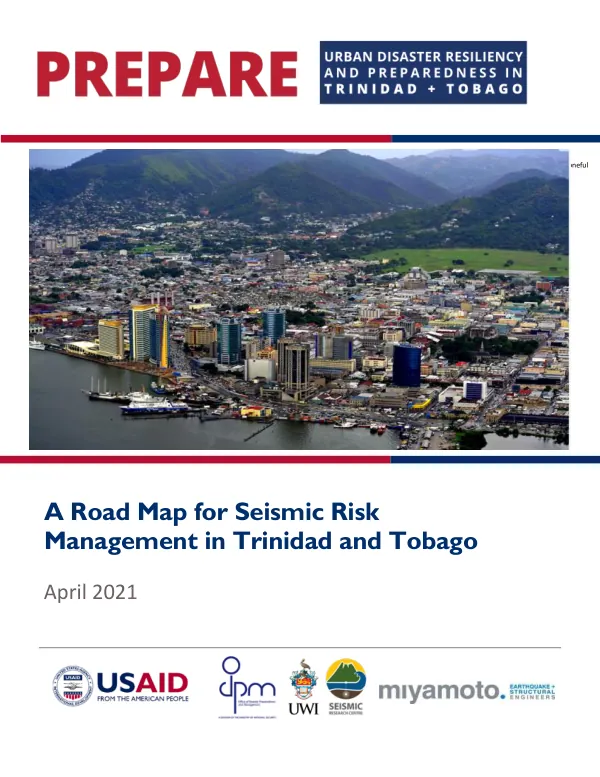
The PREPARE Trinidad and Tobago program is a USAID/BHA initiative aimed at strengthening seismic disaster risk reduction and preparedness measures in Trinidad and Tobago.
2021 · 20 pages
Sign in to readA free account is required to download.
Abstract
The program began on October 1, 2019, with a 24-month implementation period, which was later extended to May 31, 2022, due to COVID-19 pandemic restrictions. The program's goal is to provide a clearer picture of the probable impact of an urban earthquake disaster and facilitate advocacy and planning initiatives to reduce lives lost, injuries, internally displaced persons, and social and economic disruption. The program objectives are to strengthen risk management, preparedness, and response planning of national and local institutions, enhance the capacity of national and local institutions in risk management and response, and facilitate the incorporation of risk management and response best practices into critical national and local planning processes. During the reporting period, the program made progress toward these objectives by conducting a City-Wide Assessment of Earthquake Risk in Port of Spain, which raised awareness of earthquake risk and advocated for risk reduction action among public and private sector stakeholders. The assessment results were shared with broader groups by the University of the West Indies Seismic Research Center, which added more specific recommendations regarding the risk assessment. The program also engaged with high-level government officials, councilors, and senior staff of the Port of Spain City Corporation, the Ministry of National Security, and the Claims Sub-Committee of the Association of Insurance Industries in T&T. The program's implementation partner, Miyamoto International, worked closely with the Office of Disaster Preparedness and Management Ministry of National Security and the University of the West Indies Seismic Research Center to achieve the program's objectives. The program's budget is $1,000,000, and the semi-annual performance report covers activities carried out from April 1, 2021, to September 30, 2021. The program's progress toward its objectives is reflected in the following indicators: * Indicator 1: Number of hazard risk reduction plans, strategies, policies, disaster preparedness, and contingency plans developed and in place * Indicator 2: Number of people participating in discussions regarding national risk reduction strategies as a result of the program * Indicator 3: National and local risk assessment, hazards data, and vulnerability information is available within targeted areas (Y/N) * Indicator 4: Number of institutions involved in the development of plans, policies, and strategies The program's overall performance is satisfactory, with progress made toward its objectives. However, challenges remain, particularly in the area of risk management and response planning. The program will continue to work with national and local institutions to strengthen their capacity in risk management and response and to facilitate the incorporation of risk management and response best practices into critical national and local planning processes. The program's exit strategy and sustainability plan are being developed, and the program will continue to work with national and local institutions to ensure the long-term sustainability of the program's outcomes. The program's humanitarian stories, including the inclusion of the PREPARE risk study in high-level Ministry of National Security meetings, demonstrate the program's impact and effectiveness in reducing earthquake risk in Trinidad and Tobago.