ARD INC
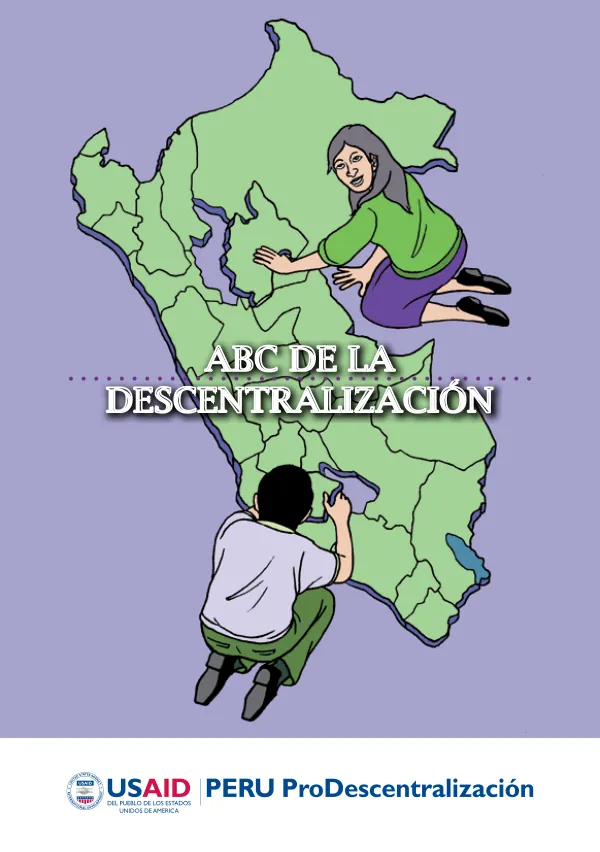
ABC DE LA DESCENTRALIZACIÓN
The Peruvian state is a unitary and decentralized state, with a single entity that has common responsibilities and pursues shared goals, such as the general well-being and protection of individuals.
2010 · 52 pages
Sign in to readA free account is required to download.
Abstract
However, the government is exercised in three levels: a national government, 25 regional governments, and 1834 municipal-provincial and district governments. This decentralization process is a democratic process and a permanent policy of the state, with the fundamental objective of the country's integral development. The decentralization process involves the transfer of public competencies from the national government to regional and local governments, the redistribution of state resources among the three levels of government to promote efficient and equitable development, the development of sustainable and competitive economic growth in departments and localities, and citizen participation and oversight. The main laws governing the decentralization process are the Constitution of the Republic of Peru (Chapter on Decentralization), the Law of Bases of Decentralization (Law No. 27783), the Organic Law of Regional Governments (Law No. 27867), the Organic Law of Municipalities (Law No. 27972), and the Organic Law of the Executive Power (Law No. 29158). The decentralization process is a means to achieve good governance, which is an effective, efficient, and people-serving government. The process involves the distribution of competencies, functions, and resources among the three levels of government to exercise the state power in a balanced manner. The goal is to organize the territory in a rational way to ensure the adequate provision of services to citizens. The main objectives of decentralization are to transfer public competencies from the national government to regional and local governments, redistribute state resources among the three levels of government, promote sustainable and competitive economic growth in departments and localities, and ensure citizen participation and oversight. The decentralization process is a key aspect of public management, as it involves the transfer of power and resources from the national government to regional and local governments, allowing for more effective and efficient service delivery to citizens. The process is governed by a set of laws and regulations that establish the framework for decentralization, including the Constitution of the Republic of Peru, the Law of Bases of Decentralization, and other organic laws. The decentralization process in Peru has been implemented through a series of reforms aimed at strengthening the country's democratic institutions and promoting economic development. The process involves the transfer of competencies, functions, and resources from the national government to regional and local governments, allowing for more effective and efficient service delivery to citizens. The decentralization process in Peru has been supported by international organizations, including the United States Agency for International Development (USAID), which has provided technical assistance and funding to support the country's decentralization efforts. The USAID/Peru ProDescentralización project has been instrumental in promoting decentralization in Peru, providing technical assistance and training to regional and local governments, and supporting the development of policies and regulations to govern the decentralization process. The decentralization process in Peru has been accompanied by a series of challenges, including the need to strengthen the capacity of regional and local governments, improve the management of public resources, and ensure citizen participation and oversight. However, the process has also brought about significant benefits, including the promotion of economic development, improved service delivery, and increased citizen participation and oversight. The decentralization process in Peru is a key aspect of the country's democratic development, and it has the potential to promote economic growth, improve service delivery, and increase citizen participation and oversight. The process is governed by a set of laws and regulations that establish the framework for decentralization, and it has been supported by international organizations, including the USAID/Peru ProDescentralización project.