FHI 360
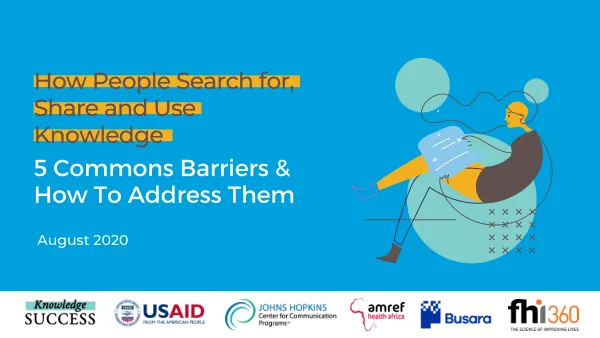
Addressing Commons Barriers to Knowledge Sharing: 5 Best Practices
The concept of choice overload refers to the phenomenon where individuals experience mental difficulty when faced with an excessive number of options.
2020 · 15 pages
Sign in to readA free account is required to download.
Abstract
This can lead to decision fatigue, unhappiness, and a tendency to default to the most convenient or familiar choice. Research has shown that humans tend to struggle with processing large amounts of information, and excessive choice can exacerbate this issue. To address choice overload, several best practices can be employed. One approach is to curate content, presenting users with a carefully selected set of relevant information in a single location. This can be achieved through the use of topic pages, listicles, and newsletters that highlight the top 3-5 things users need to know. Additionally, incorporating keywords early in content and optimizing images can improve search engine visibility and make it easier for users to find relevant information. Another strategy for mitigating choice overload is to implement innovative search methodologies. This can involve using visual elements, such as icons or pictures, to help users navigate and find the information they need. Employing search filters can also aid in narrowing down a list of resources to those that are most relevant to the user's search query. Furthermore, creating centralized and managed databases can provide a single point of access to relevant information, reducing the need for users to sift through multiple sources. Cognitive overload occurs when information is presented in a way that is difficult to understand and apply. This can lead to excessive cognitive engagement, making it challenging for individuals to process and apply the information. To address cognitive overload, several best practices can be employed. One approach is to use standard templates, which can help users quickly locate key information. Improving readability and scannability through the use of clear headings, bullet points, and white space can also aid in reducing cognitive overload. Providing opportunities for Q&A and using visuals can further enhance understanding and application of information. Learning styles refer to the different ways in which individuals prefer to receive and process information. Some people prefer to see information, while others prefer to hear or read it. To address learning styles, several best practices can be employed. One approach is to create content in a range of formats, including videos, infographics, podcasts, and interactive experiences. Providing visual and verbal versions of platforms and information can also cater to different learning styles. Additionally, using a mix of online and interactive knowledge management tools and techniques can help meet the diverse learning needs of individuals.
Related documents