ENCOMPASS, LLC
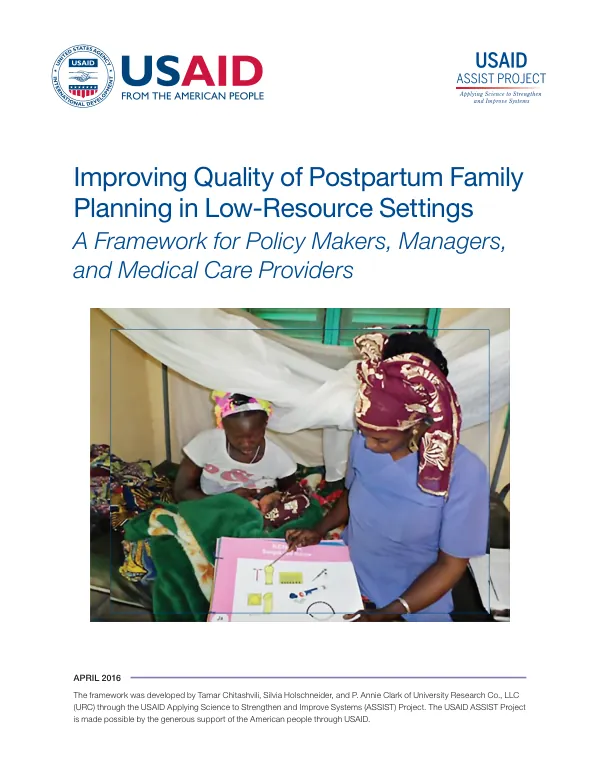
Addressing Gender Issues in Postpartum Family Planning Services
The postpartum period is a critical window for women and their partners to access reliable and high-quality family planning services.
2014 · 4 pages
Sign in to readA free account is required to download.
Abstract
Globally, 50-60% of women make prenatal visits or have contact with healthcare providers at or following delivery, offering a high likelihood of contact with the healthcare system. According to health survey data from 27 countries, 65% of women who are 0-12 months postpartum want to avoid a pregnancy in the next 12 months but are not using modern contraception. Postpartum family planning (PPFP) is defined as counseling and services to prevent unintended and closely spaced pregnancies through the first 12 months following childbirth. PPFP is imperative to reduce preventable mother and newborn morbidity and mortality and improve health outcomes for families. Spacing pregnancies by at least 24 months after a live birth (or at least six months after a miscarriage or induced abortion) could avert an estimated 25-40% of maternal deaths and 44% of newborn deaths, as well as reduce other neonatal morbidities. Gender-related values and traditions significantly affect the ability of women and their partners to access and utilize quality family planning services. In many countries, the ability to have children shapes one's social status, and many men and/or women desire large families, yet not all couples agree on family size. Husbands, mothers-in-law, and co-wives can play a prominent role in deciding family size and influencing reproductive decisions and care. Sons are considered highly desirable in many cultures, since a male child is often expected to earn money to support the family later in life. A woman may be less likely to accept PPFP services due to culturally-driven expectations to give birth to a male child. Religion also influences PPFP decisions by fostering traditions and beliefs around contraception and birth, yet the interpretations of these traditions and beliefs may vary depending on the geographic and social landscape. For example, the Qur'an sanctions breastfeeding for at least two years for better nutrition and offers many passages that value the girl child. To address these issues, PPFP programs should be culturally relevant and effective, taking into account local values and traditions. Working to promote education and greater understanding around values and traditions that are potentially harmful to the health and wellbeing of mothers, children, and families is also important for PPFP success. The role of male partners, mothers-in-law, and other actors in PPFP decision-making is critical, as they can influence access to and utilization of quality healthcare services. In Afghanistan, the USAID Health Care Improvement Project incorporated husbands and mothers-in-law into a PPFP intervention in five maternity hospitals in Kabul. The project recognized two key barriers influencing quality and access to PPFP services: a lack of private counseling spaces within the postpartum ward and the inability of women to make independent decisions regarding contraceptive use without a husband and/or mother-in-law. By addressing these barriers, the proportion of women who received their preferred family planning method and the proportion of men participating in PPFP counseling both increased substantially. Engaging male partners in decisions and processes to space or prevent pregnancies is essential to reduce maternal mortality and contributes to male partners taking control of their own fertility and considering male-specific family planning methods such as condom use or sterilization. Mothers-in-law have the potential to be influential advocates and important supporters for access and utilization of PPFP for the women in their families. Health providers should work to provide a welcoming and safe environment as well as resources and support to women in order to empower them to make informed decisions about their reproductive health.