AVENIR HEALTH
Advances in conceptualizing and measuring stigma among people living with HIV
The concept of stigma among people living with HIV (PLHIV) has a profound impact on their health and well-being.
2021 · 6 pages
Sign in to readA free account is required to download.
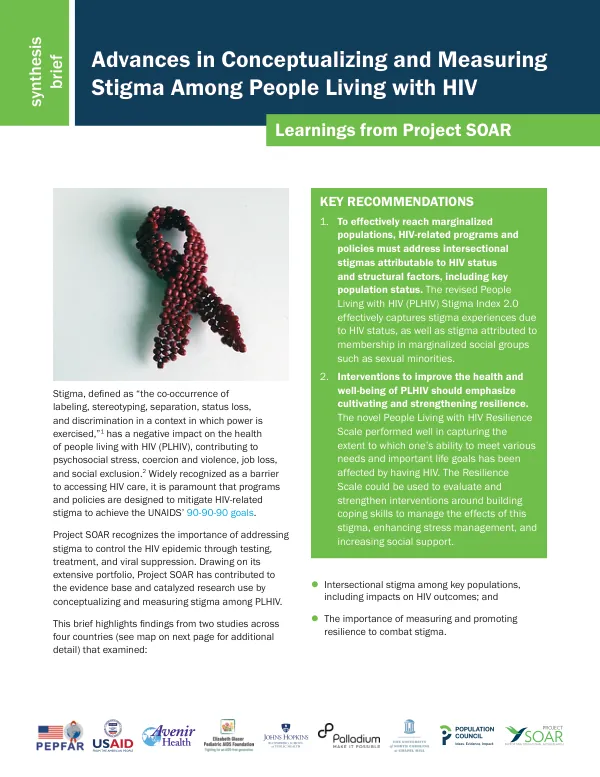
Abstract
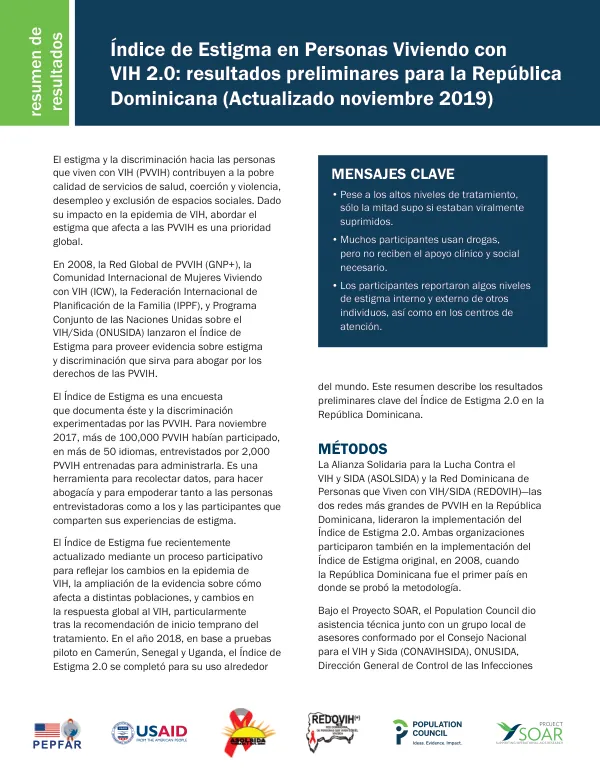
Stigma is defined as the co-occurrence of labeling, stereotyping, separation, status loss, and discrimination in a context where power is exercised. This phenomenon contributes to psychosocial stress, coercion and violence, job loss, and social exclusion, ultimately hindering access to HIV care. Project SOAR, a 6-year USAID-funded implementation science initiative, recognized the importance of addressing stigma to control the HIV epidemic through testing, treatment, and viral suppression. The project drew on its extensive portfolio to conceptualize and measure stigma among PLHIV, contributing to the evidence base and catalyzing research use. Two studies across four countries examined intersectional stigma among key populations, including its impacts on HIV outcomes, and the importance of measuring and promoting resilience to combat stigma. Key findings from the studies indicate that key population members living with HIV experienced heightened levels of stigma compared to other populations and high rates of violence. In Cameroon, Senegal, and Uganda, a total of 1,207 people living with HIV participated in the pilot study, with approximately half in each country being members of key populations. The study found that 33 percent of key population members living with HIV in Senegal experienced at least one form of stigma compared to 18 percent of other respondents. The revised People Living with HIV (PLHIV) Stigma Index 2.0 effectively captures stigma experiences due to HIV status, as well as stigma attributed to membership in marginalized social groups such as sexual minorities. The novel People Living with HIV Resilience Scale performed well in capturing the extent to which one's ability to meet various needs and important life goals has been affected by having HIV. The Resilience Scale could be used to evaluate and strengthen interventions around building coping skills to manage the effects of stigma, enhancing stress management, and increasing social support. In the Dominican Republic, a SOAR-led study found that female sex workers reported higher levels of harassment and stigma due to their HIV status. Compared to other women living with HIV, FSWs reported significantly higher levels of harassment due to their HIV status, with a larger proportion experiencing verbal or physical harassment on account of their HIV status. FSWs also reported more internalized stigma and were more likely to report experiencing stigma in HIV and non-HIV healthcare services. The studies highlight the importance of addressing intersectional stigma to control the HIV epidemic. Key populations are situated at the intersection of HIV-related stigma and stigma associated with their identities, occupations, and behaviors, often experiencing multiple forms of marginalization. The revised PLHIV Stigma Index 2.0 creates opportunities to generate local information needed to inform stigma reduction interventions, monitor progress over time, and advocate for the rights of PLHIV. The findings from Project SOAR emphasize the need for HIV-related programs and policies to address intersectional stigmas attributable to HIV status and structural factors, including key population status. Interventions to improve the health and well-being of PLHIV should emphasize cultivating and strengthening resilience. The revised PLHIV Stigma Index 2.0 and the People Living with HIV Resilience Scale are valuable tools for measuring and addressing stigma among PLHIV, ultimately contributing to the achievement of the UNAIDS' 90-90-90 goals.
Related documents
Documents in this collection
 2019
2019USAID DEC
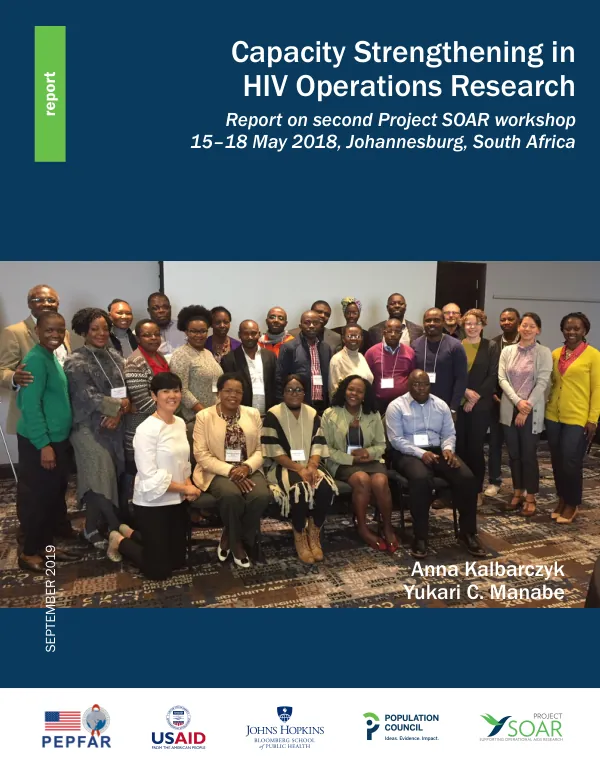
Capacity Strengthening in HIV Operations Research: Report on Second Project SOAR Workshop, 15–18 May 2018, Johannesburg, South Africa
Open record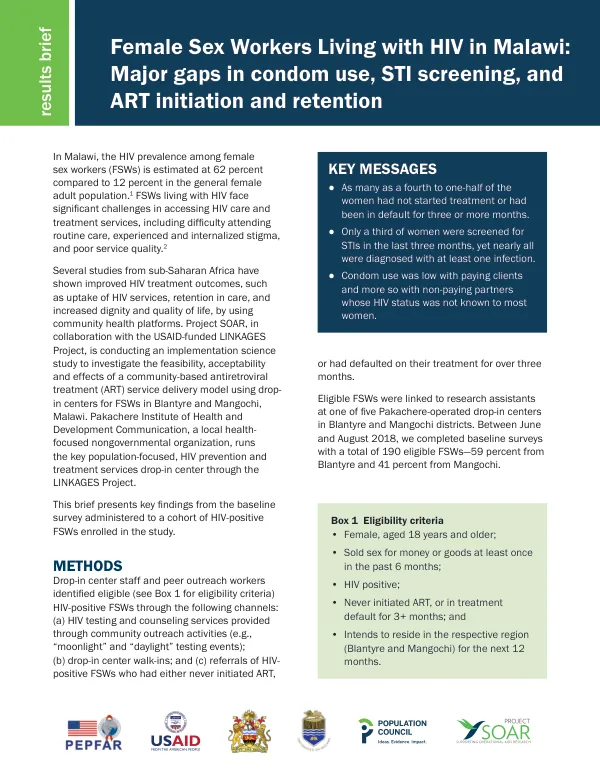 2019
2019USAID DEC
Female sex workers living with HIV in Malawi: major gaps in condom use, STI screening, and ART initiation and retention
Open record