CHEMONICS
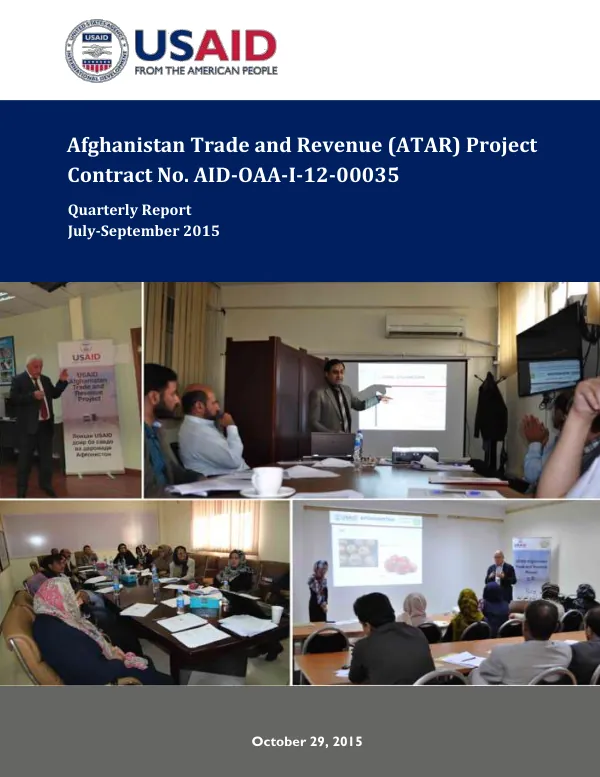
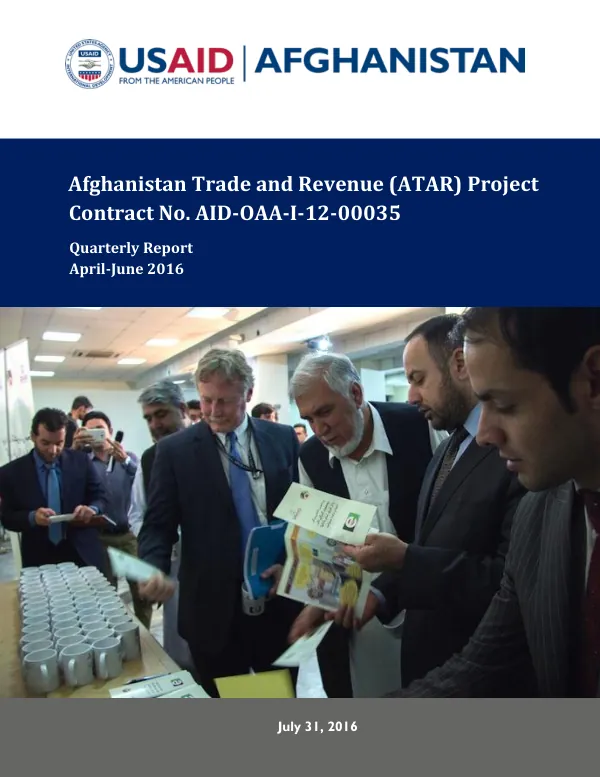
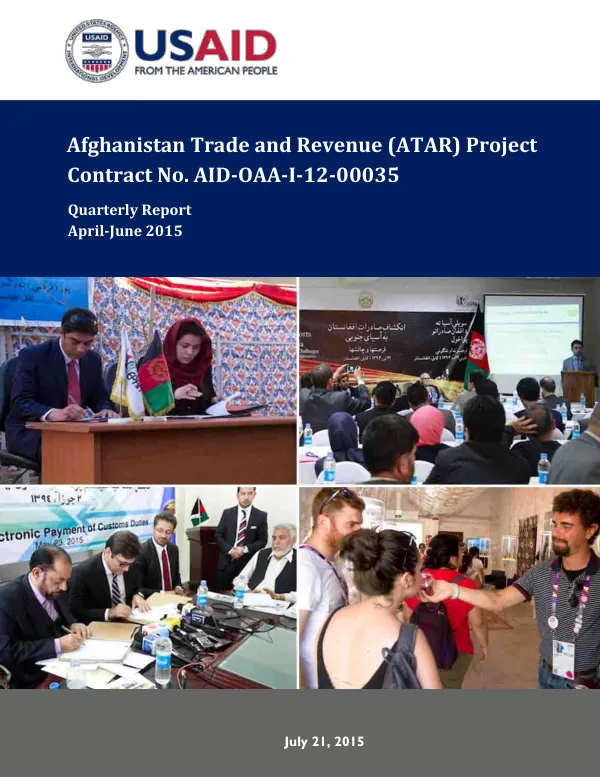
Afghanistan Trade and Revenue (ATAR) Project April-June 2015 Quarterly Report
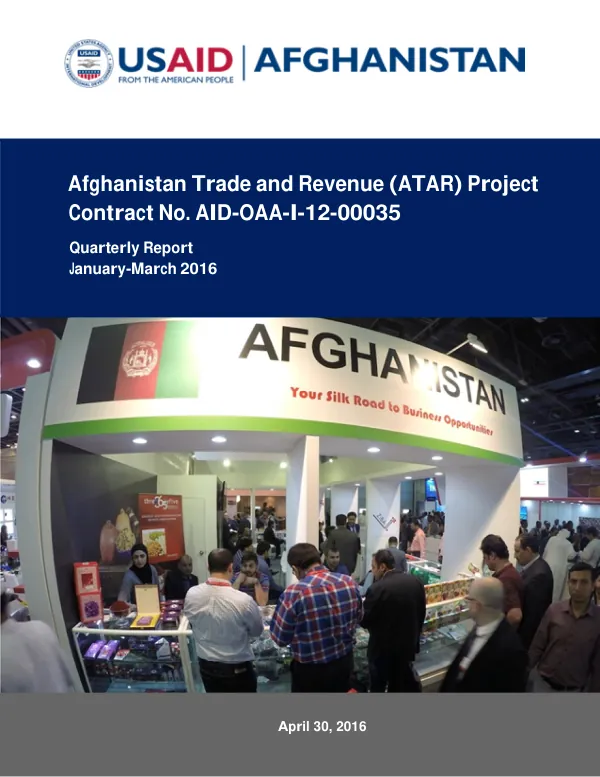
Afghanistan Trade and Revenue (ATAR) Project is a USAID-funded initiative implemented by Chemonics in collaboration with the Economic Integration Forum (EIF).
2015 · 72 pages
Sign in to readA free account is required to download.
Abstract
The project aims to support Afghanistan in realizing its full potential in the global trading market. ATAR is based in Kabul and has staff in Mazar-e Sharif, Herat, and Jalalabad to support regional customs activities and works in Tajikistan, the Kyrgyz Republic, Turkmenistan, and Uzbekistan to strengthen Afghanistan's trade ties in Central Asia. The project provides assistance to improve the business climate of Afghanistan, enabling private investment, enhanced trade, job creation, and fiscal sustainability through the country's critical transition period. Specifically, ATAR is tasked with improving the capacity of the Government of Afghanistan to create and implement a liberal policy framework for trade and investment in accordance with international standards. This involves supporting the World Trade Organization (WTO) accession process, legislative reforms, and the implementation of WTO laws and commitments. ATAR also focuses on facilitating enhanced access to regional markets, including Afghanistan, the Kyrgyz Republic, Tajikistan, Turkmenistan, and Uzbekistan. The project supports regional integration, institutionalizes the Border Management Model, and strengthens the Customs Code and Customs Policies. Additionally, ATAR aims to implement risk management systems, electronic payment of customs duties, and increase gender representation in the Afghanistan Customs Department (ACD). The project's implementation is ongoing, with a focus on supporting the Government of Afghanistan in creating a favorable business environment. ATAR works closely with various stakeholders, including the Ministry of Commerce and Industries, the Ministry of Transportation and Civil Aviation, and the Afghanistan Customs Department. The project's activities are guided by a Memorandum of Understanding (MOU) with the Government of Afghanistan, which outlines the terms and conditions of the project. In the first quarter of 2015, ATAR made significant progress in supporting the Government of Afghanistan's efforts to improve the business climate. The project provided training to customs officials, supported the implementation of risk management systems, and facilitated the exchange of information between customs authorities in Afghanistan and its regional partners. ATAR also worked closely with the Afghanistan Customs Department to strengthen its capacity and improve its services. The project's quarterly report highlights the achievements and challenges faced by ATAR in the first quarter of 2015. The report provides an overview of the project's activities, progress, and future plans. It also includes annexes that provide additional information on the project's activities, including a list of acronyms, a summary of USAID social media highlights, and an activity report from the Afghanistan Information Project. Overall, the ATAR project is making significant contributions to improving the business climate in Afghanistan and enhancing the country's trade ties with its regional partners. The project's ongoing efforts are expected to have a positive impact on the country's economic development and its transition to a more stable and prosperous future.