CHEMONICS
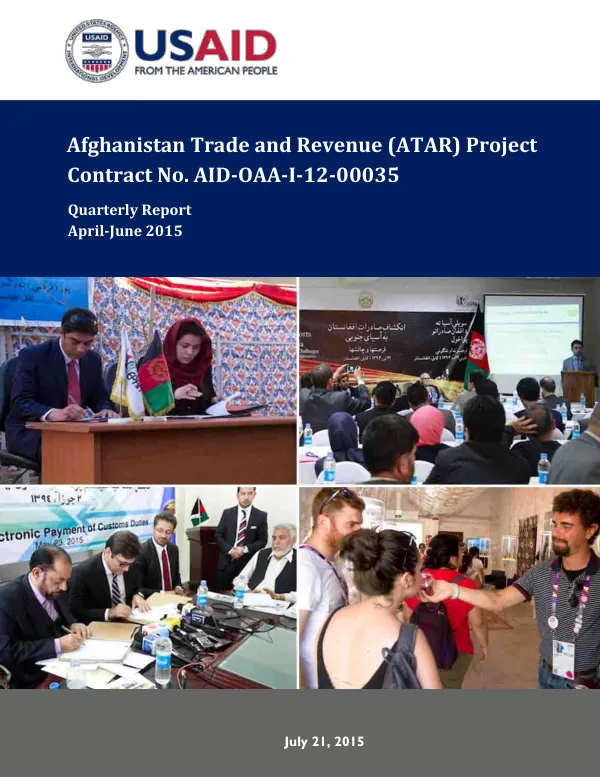
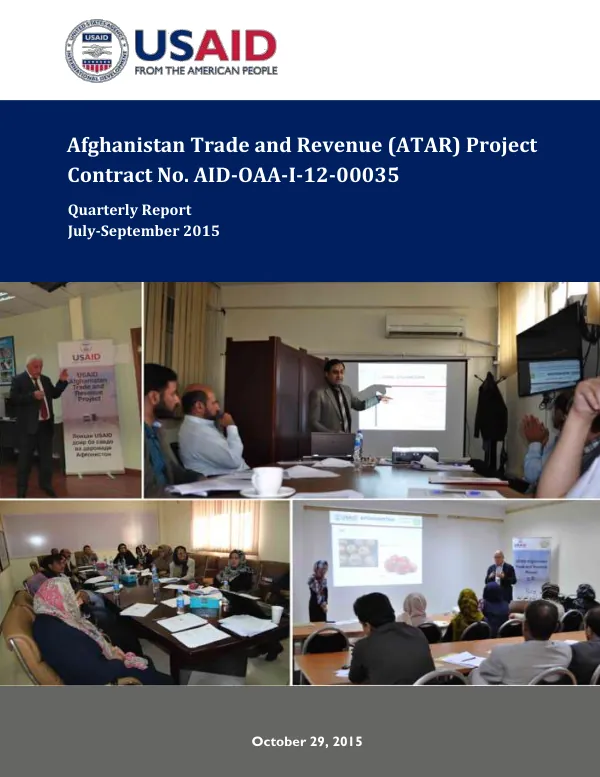
Afghanistan Trade and Revenue (ATAR) Project July-September 2015 Quarterly Report
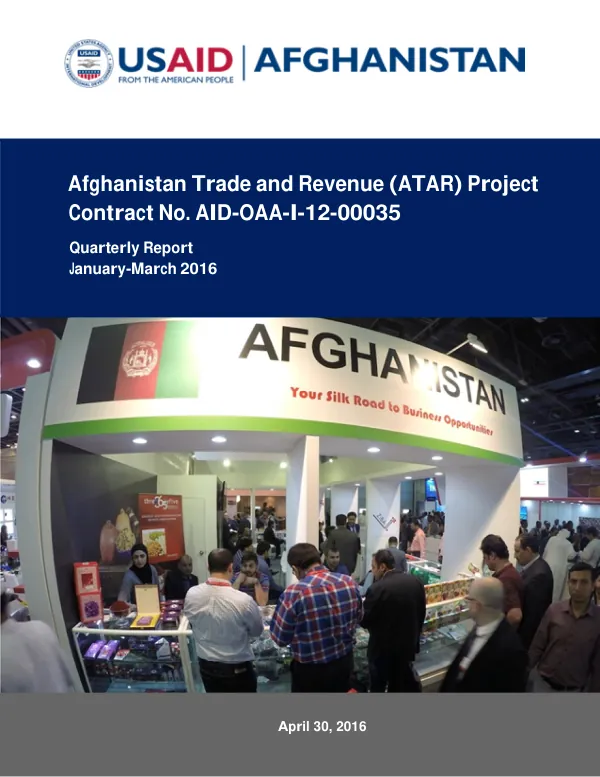
Afghanistan Trade and Revenue (ATAR) Project began in November 2013 with the goal of supporting Afghanistan in realizing its full potential in the global market.
2015 · 53 pages
Sign in to readA free account is required to download.
Abstract
The project, implemented by Chemonics in partnership with the Economic Integration Forum (EIF), aims to improve the business climate of Afghanistan to enable private investment, enhanced trade, job creation, and fiscal sustainability during the country's critical transition period. The project's objectives are achieved through three components: Component 1, Component 2, and Component 3. Component 1, Support Trade Policy Liberalization, promotes liberalization of Afghanistan's trade regime by supporting its accession to the World Trade Organization (WTO). This support is accomplished by building the necessary technical capacity and providing technical assistance to the Government of Afghanistan. Key activities under this component include supporting the WTO accession process, legislative reforms for WTO conformity, and implementation of WTO laws and commitments. Component 2, Facilitate Enhanced Access to Regional Markets, focuses on strengthening Afghanistan's trade ties in Central Asia. The component involves supporting regional integration, promoting trade and agreements, and enhancing governance of corridors and private-sector linkages throughout South and Central Asia. Activities under this component include supporting trade facilitation in Afghanistan, Kyrgyzstan, Tajikistan, Turkmenistan, and Uzbekistan, as well as promoting regional trade agreements and enhancing private-sector linkages. Component 3, Improved Customs Administration, aims to strengthen revenue generation for fiscal sustainability and trade facilitation through reforms and anti-corruption measures in customs. Key activities under this component include supporting regional integration, institutionalizing the Border Management Model, strengthening the Customs Code and Customs Policies, and implementing risk management systems and electronic payment of customs duties. Additionally, the component focuses on increasing gender representation in the Afghanistan Customs Department (ACD), reducing corruption at ACD, and implementing outreach programs and streamlined customs procedures. The project has made significant progress in its first two years, with notable achievements in supporting the WTO accession process, promoting regional trade agreements, and strengthening customs administration. The project has also established partnerships with key stakeholders, including the Government of Afghanistan, the World Customs Organization, and regional trade organizations.