CHEMONICS
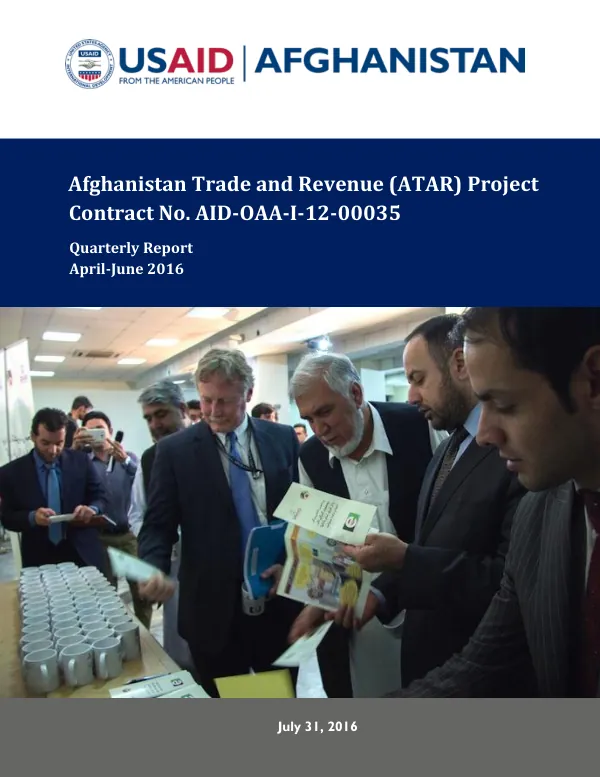
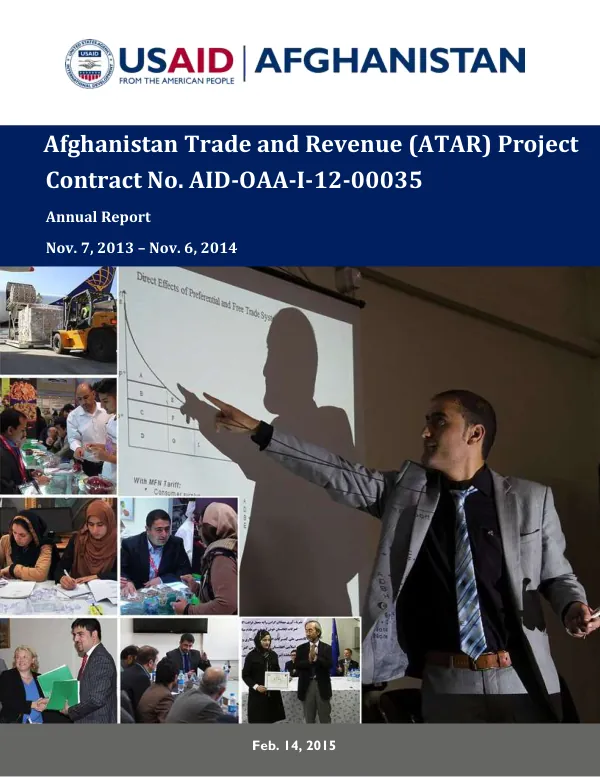
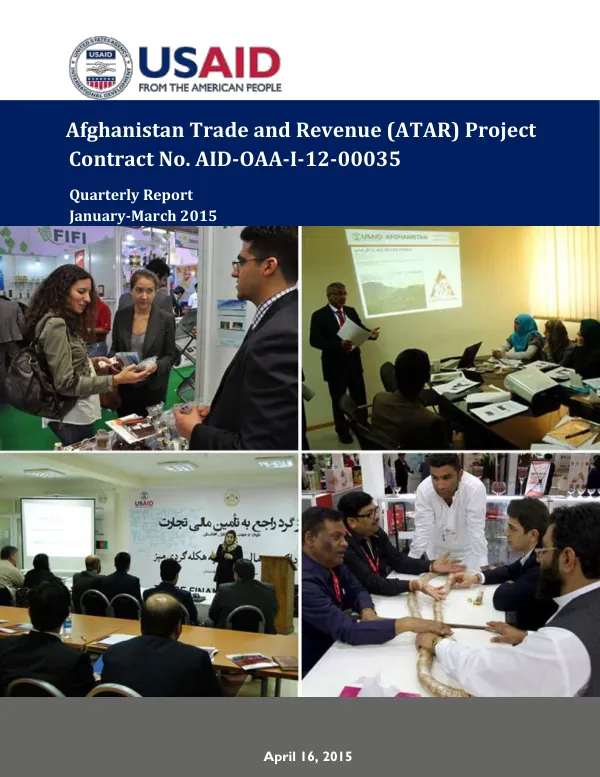
Afghanistan Trade and Revenue (ATAR) Project January-March 2015 Quarterly Report
Afghanistan Trade and Revenue (ATAR) Project began in 2012 with funding from USAID/Afghanistan.
2015 · 89 pages
Sign in to readA free account is required to download.
Abstract
The project's primary objective is to enhance Afghanistan's trade and revenue capacity through policy and institutional reforms. The project is implemented by Chemonics International. The project is divided into three components: Trade Policy Liberalization, Facilitate Enhanced Access to Regional Markets, and Improved Customs Administration. Component 1 focuses on supporting the World Trade Organization (WTO) accession process, legislative reforms, and implementation of WTO laws and commitments. Key areas of focus include intellectual property rights, sanitary and phytosanitary measures, safeguards law, and customs. Component 2 aims to facilitate enhanced access to regional markets through trade facilitation support to Central Asian Republics and South Asia. The project also supports trade/business promotion, with a focus on Afghanistan's trade relationships with the Kyrgyz Republic, Tajikistan, Turkmenistan, and Uzbekistan. Component 3 focuses on improving customs administration through support for regional integration, institutionalization of the Border Management Model, and strengthening the Customs Code and customs policies. The project also aims to implement risk management systems, electronic payment of customs duties, and increase gender representation in the Afghanistan Customs Department (ACD). During the January-March 2015 quarter, the project implemented various activities, including support for the WTO accession process, trade facilitation support to Central Asian Republics, and improved customs administration. The project also collaborated with various stakeholders, including the Government of the Islamic Republic of Afghanistan, the Afghanistan Customs Department, and the Afghanistan Chamber of Commerce and Industry. Key achievements during the quarter include the completion of a study on the Afghanistan-Pakistan Transit Trade Agreement, the launch of a trade facilitation support program for Central Asian Republics, and the implementation of a risk management system at the ACD. The project also made progress in strengthening the Customs Code and customs policies, as well as increasing gender representation in the ACD. The project's geographic focus is Afghanistan, with a particular emphasis on its trade relationships with Central Asian Republics and South Asia. The project's timeframes are quarterly, with a focus on achieving specific objectives and milestones during each quarter. Recommendations for future action include continued support for the WTO accession process, trade facilitation support to Central Asian Republics, and improved customs administration.