ACDI/VOCA
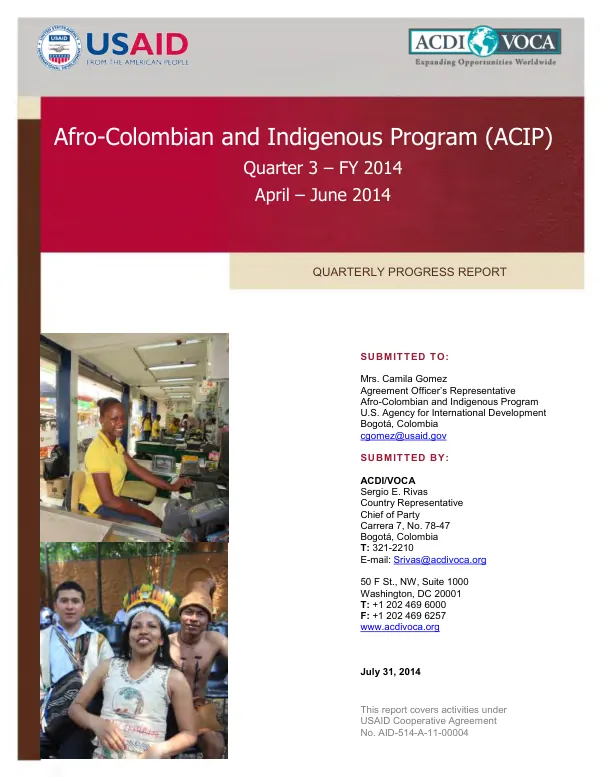
Afro-Colombian and Indigenous Program (ACIP) Quarterly Report April-June 2014
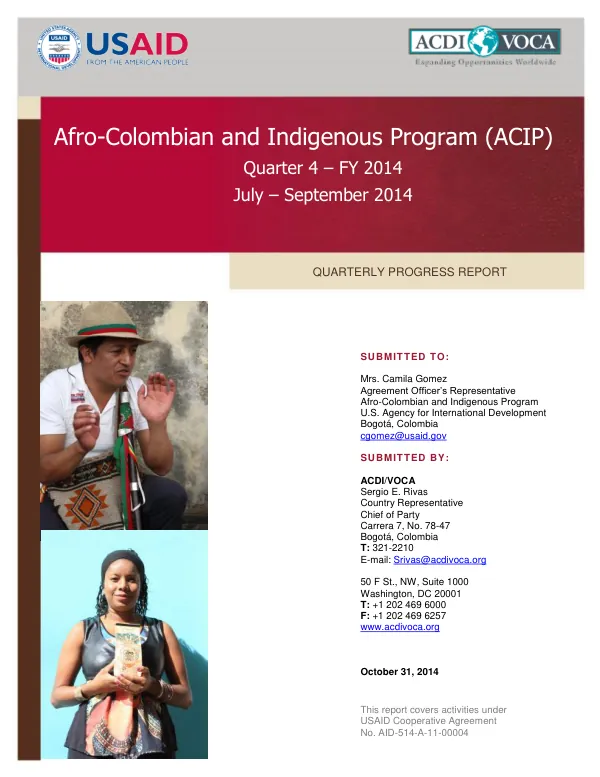
The Afro-Colombian and Indigenous Program (ACIP) is a five-year initiative aimed at improving the lives of Afro-Colombian and indigenous persons in Colombia.
2014 · 49 pages
Sign in to readA free account is required to download.
Abstract
The program was launched in 2011 through a Cooperative Agreement between the United States Agency for International Development (USAID) and ACDI/VOCA. The agreement was modified several times to update program provisions and incrementally fund the award. ACIP focuses on addressing the unique challenges faced by ethnic minority populations in Colombia, including exploitation, inequality, poverty, discrimination, exclusion, displacement, violence, and feelings of invisibility. The program's primary objective is to promote economic inclusion and raise awareness of women's rights, with a particular emphasis on combating gender-based violence. One of the key strategies employed by ACIP is to support community-led initiatives and organizations, such as ASOMUQUIB, a women's organization led by Lastenia España. Through these partnerships, ACIP aims to empower local communities to take ownership of their development and address the root causes of poverty and inequality. ACIP's work is guided by a comprehensive understanding of the social, economic, and cultural context of Afro-Colombian and indigenous communities in Colombia. The program's approach is centered on promoting inclusive economic growth, improving access to education and healthcare, and enhancing the capacity of local organizations to advocate for their rights. The program's geographic focus is on the departments of Chocó, Cauca, and Valle del Cauca, where Afro-Colombian and indigenous populations are most concentrated. ACIP's activities are designed to be context-specific and responsive to the unique needs and challenges of each community. ACIP's progress is monitored and evaluated through a range of indicators, including the number of community-led initiatives supported, the number of women and indigenous persons empowered, and the impact on poverty and inequality reduction. The program's success is also measured through the establishment of partnerships with local organizations and the development of a robust network of community leaders and advocates. The program's implementation is overseen by a team of experienced professionals, including Sergio E. Rivas, Country Representative and Chief of Party for ACDI/VOCA. The team works closely with local stakeholders, including community leaders, organizations, and government agencies, to ensure that ACIP's activities are responsive to the needs of Afro-Colombian and indigenous communities. ACIP's work is supported by a range of partners, including local organizations, community groups, and government agencies. The program's budget is allocated to support a range of activities, including community-led initiatives, capacity building, and advocacy. Overall, ACIP represents a significant investment in the lives of Afro-Colombian and indigenous persons in Colombia. The program's focus on economic inclusion, women's empowerment, and community-led development has the potential to make a lasting impact on the lives of marginalized communities and contribute to a more equitable and inclusive society.