USAID DEC
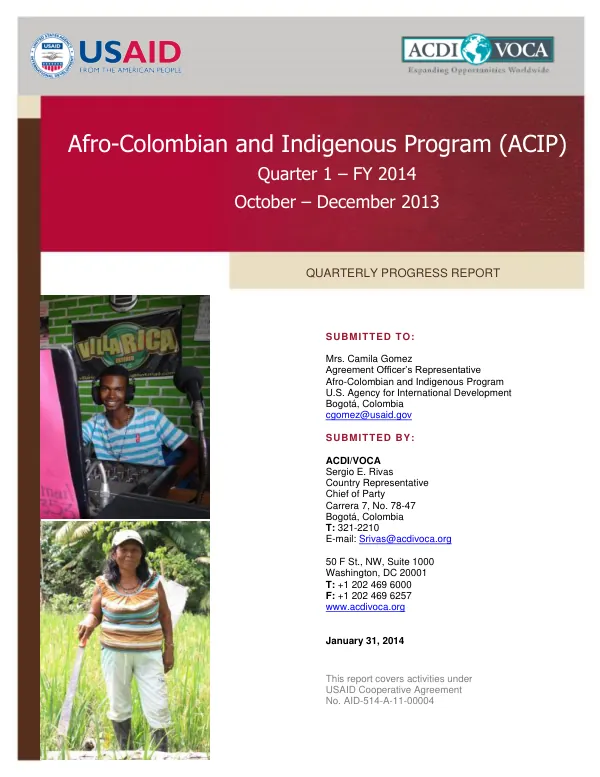
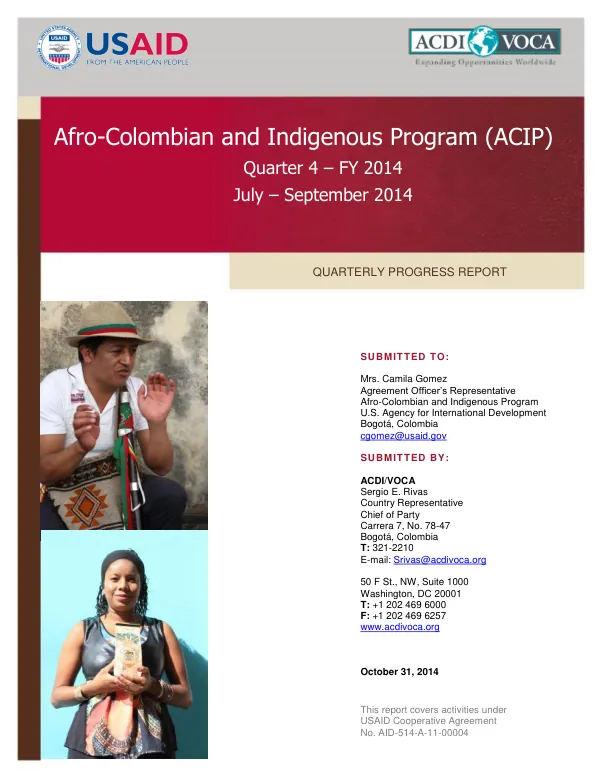
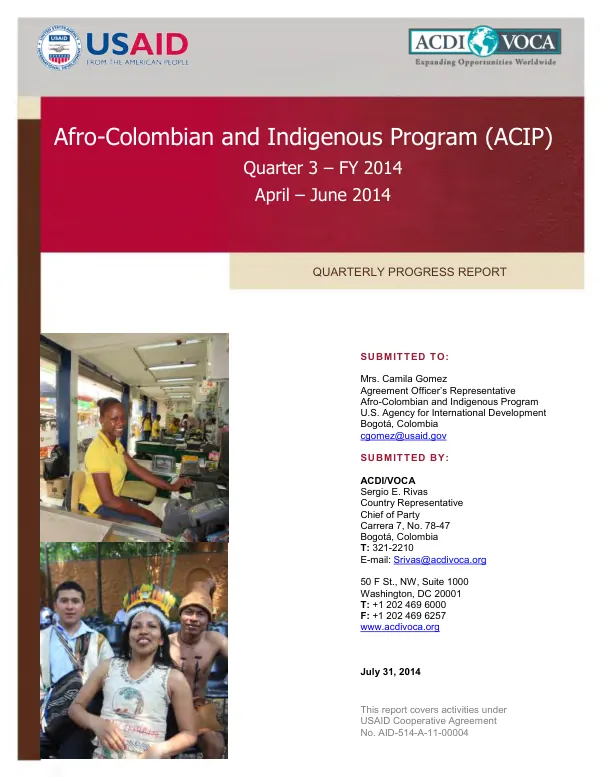
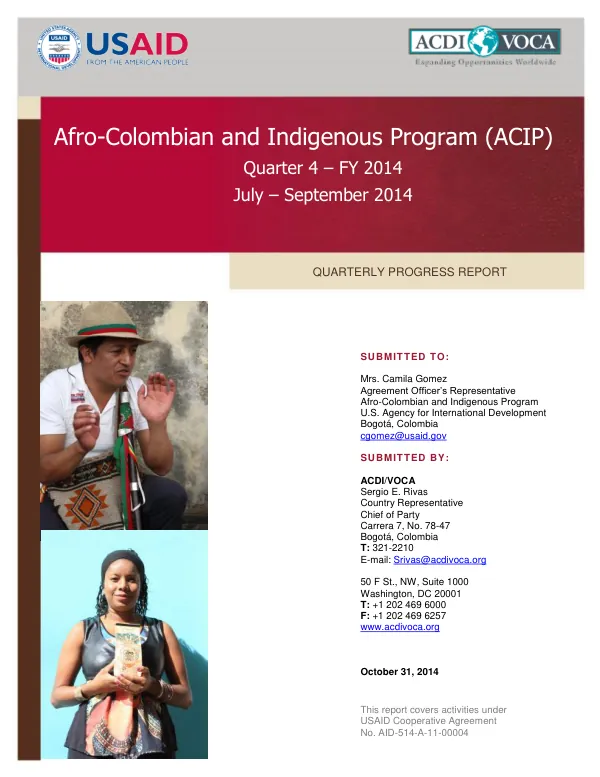
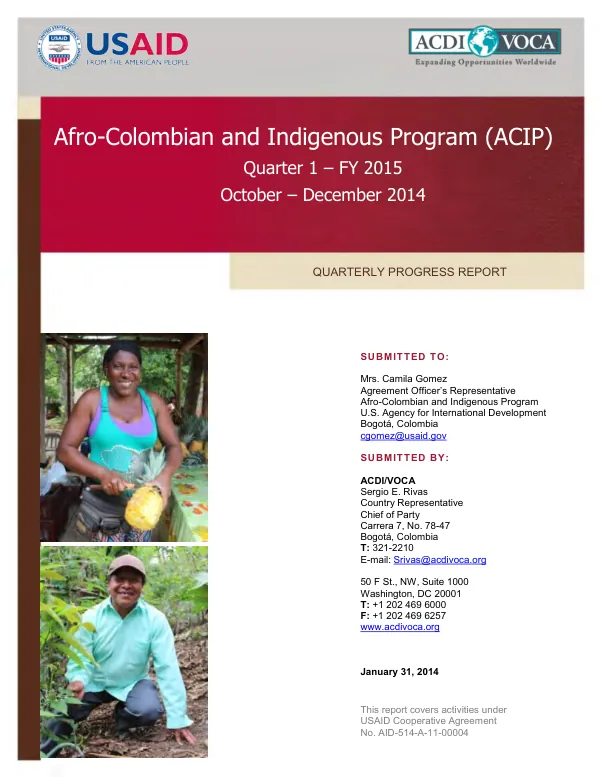
Afro-Colombian and Indigenous Program (ACIP) Quarterly Report September – December 2014
Sign inACDI/VOCA
Afro-Colombian and Indigenous Program (ACIP) Quarterly Report September – December 2014
The Afro-Colombian and Indigenous Program (ACIP) is a five-year initiative aimed at improving the lives of Afro-Colombian and indigenous persons in Colombia.
2014 · 43 pages
Sign in to readA free account is required to download.
Abstract
The program was launched in 2011 through a Cooperative Agreement between the United States Agency for International Development (USAID) and ACDI/VOCA. The agreement was modified several times to update program provisions, incrementally fund the award, and incorporate new objectives. The program's primary objective is to promote economic inclusion and combat gender-based violence among Afro-Colombian and indigenous communities. Community leaders, such as Lastenia España, emphasize the importance of raising awareness about women's rights and increasing economic opportunities for women in these communities. The program's focus on economic inclusion is particularly relevant, given the high unemployment rates in these regions. The program's implementation is guided by a comprehensive approach that addresses the unique needs and challenges of Afro-Colombian and indigenous communities. This includes working with community-based organizations, civil society organizations, and government institutions to promote social and economic development. One of the key strategies employed by the program is to support the development of community-based organizations and civil society organizations that work with Afro-Colombian and indigenous communities. These organizations play a critical role in promoting social and economic development, as well as advocating for the rights of these communities. The program also places a strong emphasis on promoting economic inclusion through the development of sustainable livelihoods. This includes supporting the development of small-scale agriculture, livestock production, and other economic activities that are tailored to the needs and capacities of Afro-Colombian and indigenous communities. In addition to promoting economic inclusion, the program also focuses on combating gender-based violence and promoting women's rights. This includes working with community leaders and organizations to raise awareness about women's rights and providing support to women who have been victims of violence. The program's geographic focus is on the departments of Chocó, Cauca, and other regions with high concentrations of Afro-Colombian and indigenous populations. The program's implementation is guided by a comprehensive approach that addresses the unique needs and challenges of these communities. The program's timeframes are aligned with the five-year Cooperative Agreement between USAID and ACDI/VOCA. The program's implementation is divided into quarterly reporting periods, with each period focusing on specific objectives and outcomes. The program's progress is monitored and evaluated through a range of indicators, including economic inclusion, social development, and community engagement. Overall, the Afro-Colombian and Indigenous Program is a critical initiative aimed at promoting social and economic development among Afro-Colombian and indigenous communities in Colombia. The program's comprehensive approach and focus on economic inclusion, social development, and community engagement make it a valuable contribution to the country's efforts to promote inclusive and sustainable development.