AFGHANISTAN MINISTRY OF AGRICULTURE, IRRIGATION AND LIVESTOCK
AGRED Monthly Report January 2013
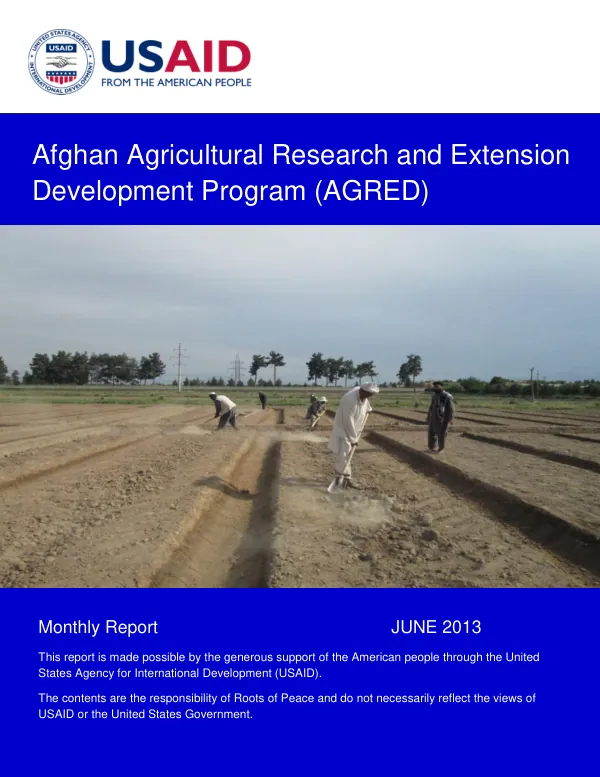
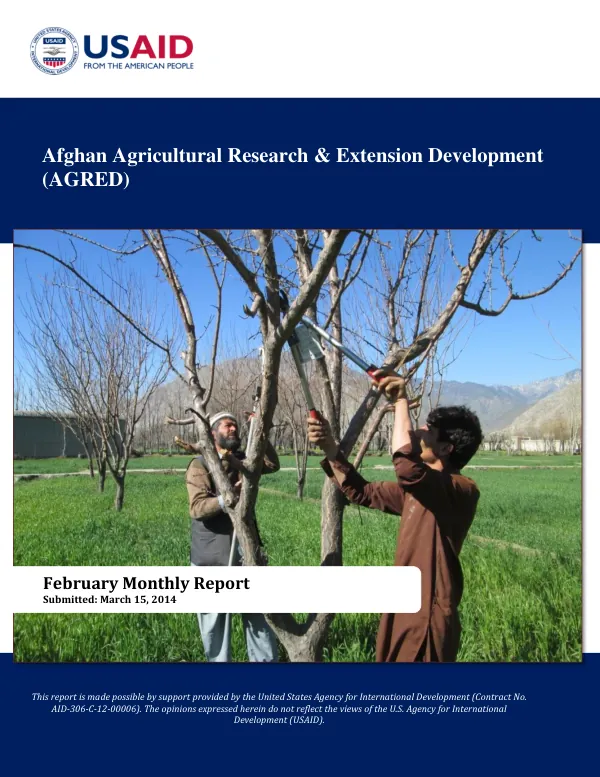
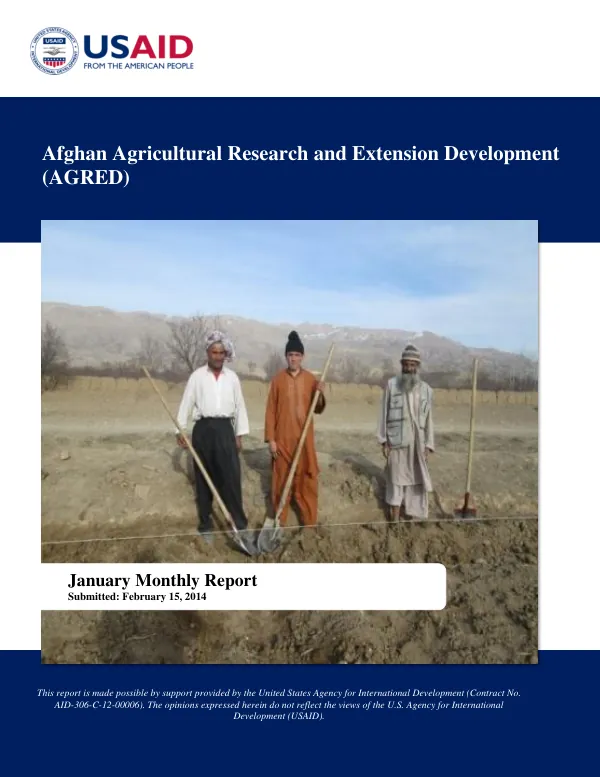
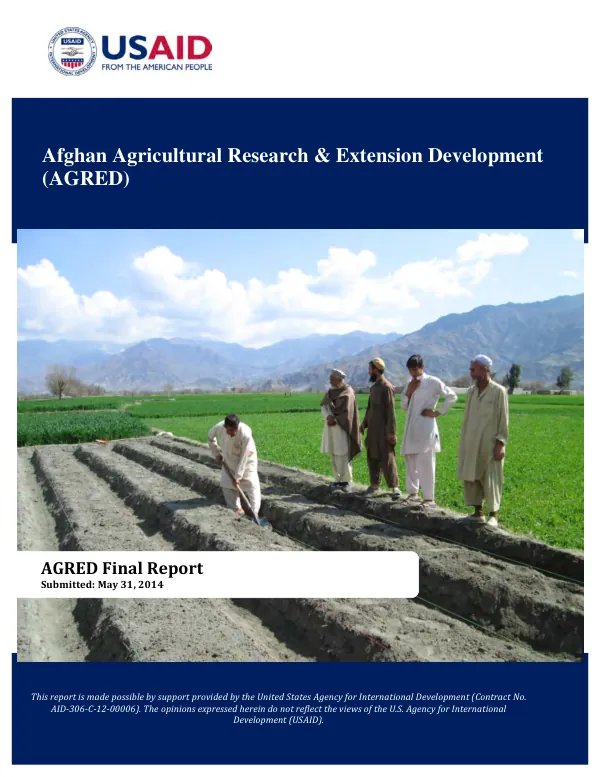
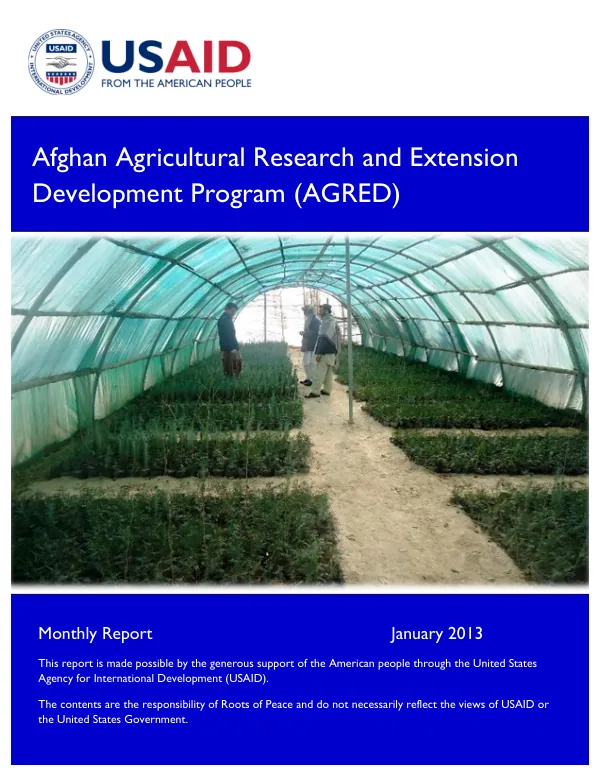
The Afghan Agricultural Research and Extension Development Program (AGRED) is a program implemented by Roots of Peace (ROP) with funding from the United States Agency for International Development (USAID).
2013 · 17 pages
Sign in to readA free account is required to download.
Abstract
The program aims to improve agricultural research and extension services in Afghanistan, with a focus on seven target regions. In January 2013, AGRED continued to focus on building relationships with the Ministry of Agriculture, Irrigation, and Livestock (MAIL) to establish the roles and responsibilities of the AGRED program. The program submitted a revised Performance Monitoring Plan (PMP) and a concept note to assess six of the 13 AGRED baseline values to USAID for approval. Once the concept note is approved, a baseline study will be initiated, and AGRED will begin measuring program outputs and outcomes. AGRED also worked to build relationships with DAIL Directors, Research and Extension Managers, and the Education and Economic Directors to identify farmer needs and incorporate these needs into research and extension priorities for 2013. The research and extension priorities identified in the stakeholder workshops held in December resulted in over 30 mini-proposals that will be presented to MAIL's Technical Working Group. Pending MAIL approval, implementation of the mini-proposals is scheduled to begin in February. AGRED conducted assessments of physical assets and human resources at the research centers and extension centers in target provinces. The inventories will be used to inform the AGRED work plan for MAIL and to develop a plan for using on-budget funding from USAID. Additionally, AGRED Extension staff participated in an Extension Knowledge Workshop conducted at the University of Agriculture Faisalabad (UAF) and sponsored by USDA AAEP. AGRED's research and extension priorities in January were to coordinate with stakeholders in the seven target regions to ensure that the planning processes incorporate existing resources for both extension and research. AGRED research and extension staff conducted inventories of research and extension facilities and resources, and participated in coordination meetings with DAIL Administrative, Research, and Extension departments and TWGs. AGRED also conducted meetings with DAILs Research and Extension Departments in target provinces, where they discussed available equipment, tools, and human resources. The DAIL Research and Extension Managers emphasized that the research and extension farms in target provinces are in poor condition, with more than 70 percent of their equipment damaged during the wartime. AGRED also met with Agricultural Development Teams (ADT) in Ghazni, Kandahar, Logar, and Paktya provinces to share project activities and experiences. AGRED conducted a TOT training for field coordinators on data collection of actual inventory and human resource mapping from research farms and extension centers. The Monitoring and Evaluation Specialist explained the data collection methodology and preparation of inventory survey's reports.
Related documents