AFGHANISTAN MINISTRY OF AGRICULTURE, IRRIGATION AND LIVESTOCK
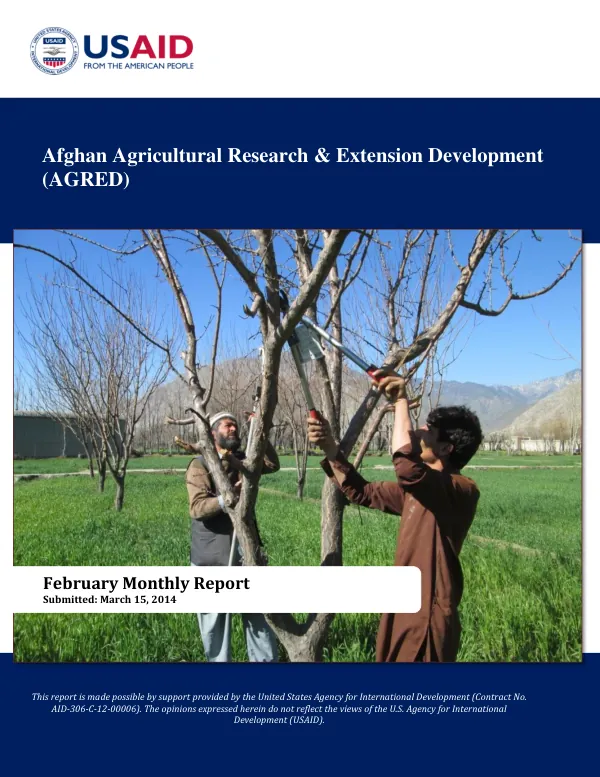
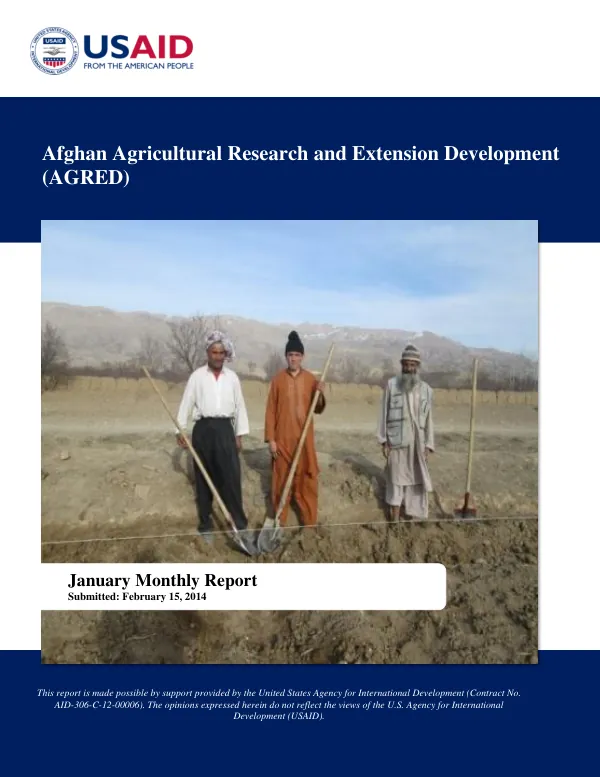
AGRED Monthly Report- January 2014
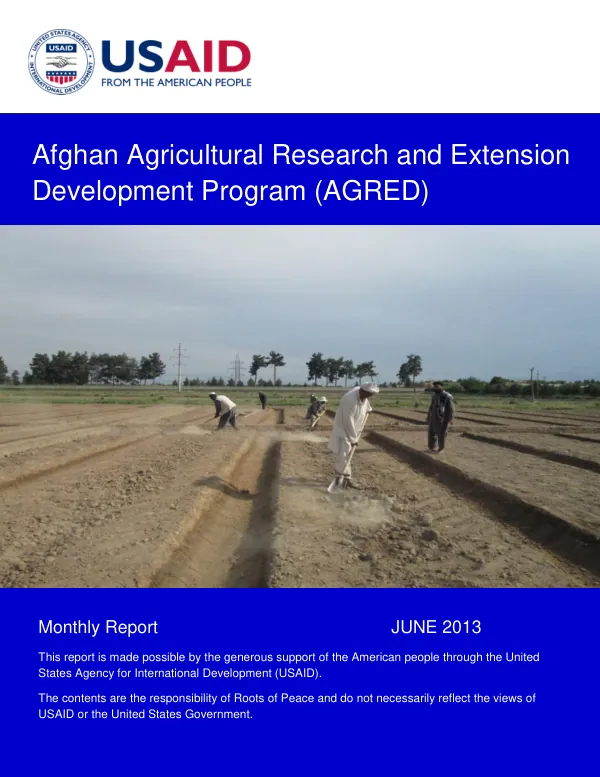
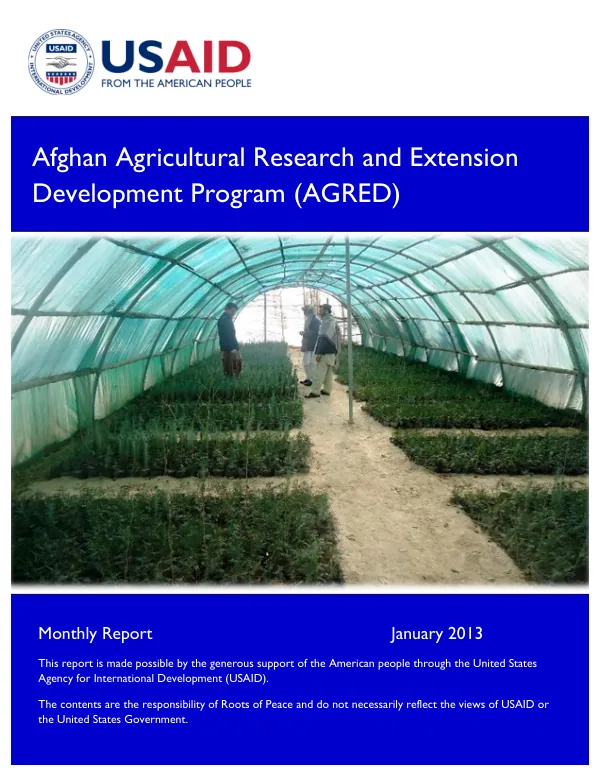
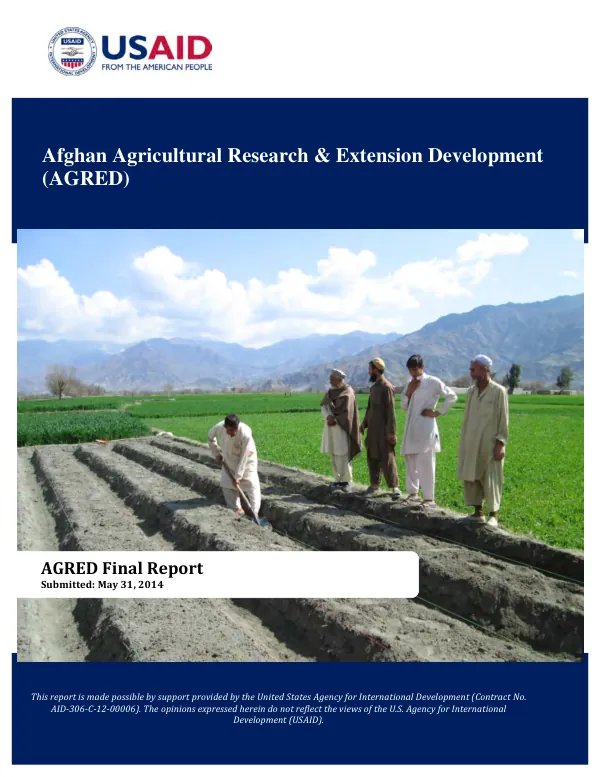
AGRED's Afghan Agricultural Research and Extension Development program is a five-year initiative in partnership with the Afghan Ministry of Agriculture, Irrigation and Livestock (MAIL) and provincial-level Directorates of Agriculture, Irrigation and Livestock (DAILs).
2014 · 20 pages
Sign in to readA free account is required to download.
Abstract
The program aims to increase agricultural productivity and income through the application of science and technology. AGRED's objective is directed by two Intermediary Results (IRs), which deliver services directly to Afghan farmers through improved research and extension efforts and build institutional and human capacities within MAIL and DAILs to help improve their ability to respond to farmers' and herders' needs. AGRED's services are delivered through its Research, Extension, Training, and Gender technical departments, supported by Monitoring and Evaluation (M&E), Communications, Human Resources, Information Technology (IT), and Senior Management departments. The program targets provinces and districts in Afghanistan, with a focus on improving farmer awareness and access to improve technologies, knowledge, and education, as well as improving research and extension infrastructure within MAIL and DAILs. In December, USAID determined that the On-Budget portion of the program would be no longer necessary, eliminating the need for Strategic Goals and Sub-Benchmarks as a reporting structure. AGRED has responded with a revised 2014 Work Plan, which accounts for these changes. Beginning with the December Monthly and October – December Quarterly reports, AGRED has adjusted its reporting structure from the Strategic Goals and Sub-Benchmarks to the IR and Sub IR Results outlined in the signed AGRED / USAID contract. In January, AGRED's senior management team focused on educating and obtaining input from USAID, MAIL, and DAILs on the draft annual Work Plan, conducting five such meetings. These meetings were a critical step in ensuring that AGRED maintained the spirit and letter of collaboration, ownership, and longer-term sustainability amongst its partners. Additional progress was made in January on formalizing relationships with strategic collaborators. AGRED technical teams and DAIL staff continued implementation of activities, primarily through site visits, informal farmer trainings, and direct DAIL technical support. A total of 148 farmers and 52 DAIL staff were engaged through a combined 17 field monitoring trips and other informal trainings. AGRED and DAILs facilitated/coordinated thirteen project concepts and mini-proposals for further consideration, two farmer distributions, and a field day. The AGRED M&E department continued to develop internal systems and respond to USAID feedback, particularly related to environmental compliance, while the Communications department maintained regular communication with stakeholders and partners. AGRED's collaboration with MAIL and DAILs has been critical in achieving the program's objectives. The program has made significant progress in improving research and extension infrastructure, training capacity, and institutionalizing a bottom-up, consultative approach to identifying and addressing farmers' needs. Despite the challenges posed by the winter season and the elimination of the On-Budget component, AGRED has continued to implement activities and make progress towards its objectives.
Related documents