CHECCHI AND COMPANY, CONSULTING, INC.
Agribusiness Sustainability Assessment in Afghanistan
Agricultural Development in Afghanistan.
2016 · 210 pages
Sign in to readA free account is required to download.
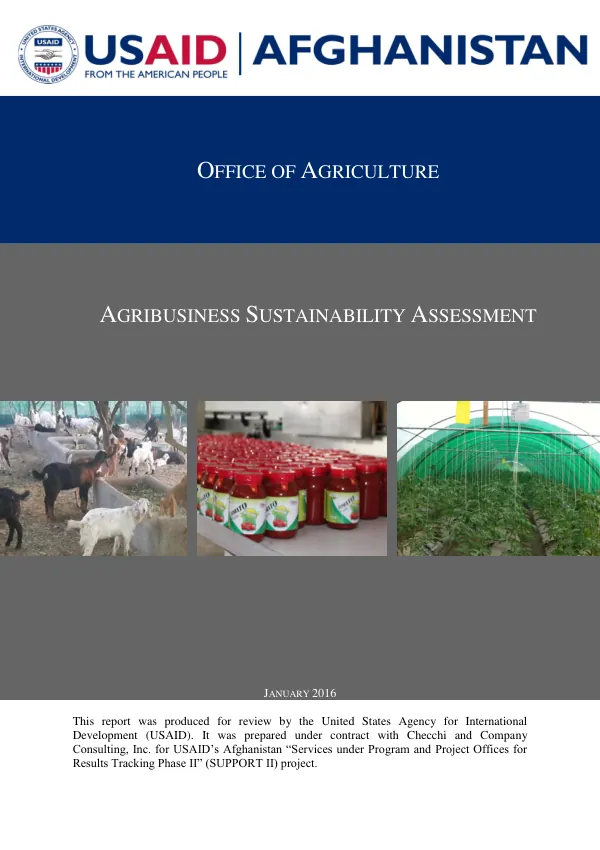
Abstract
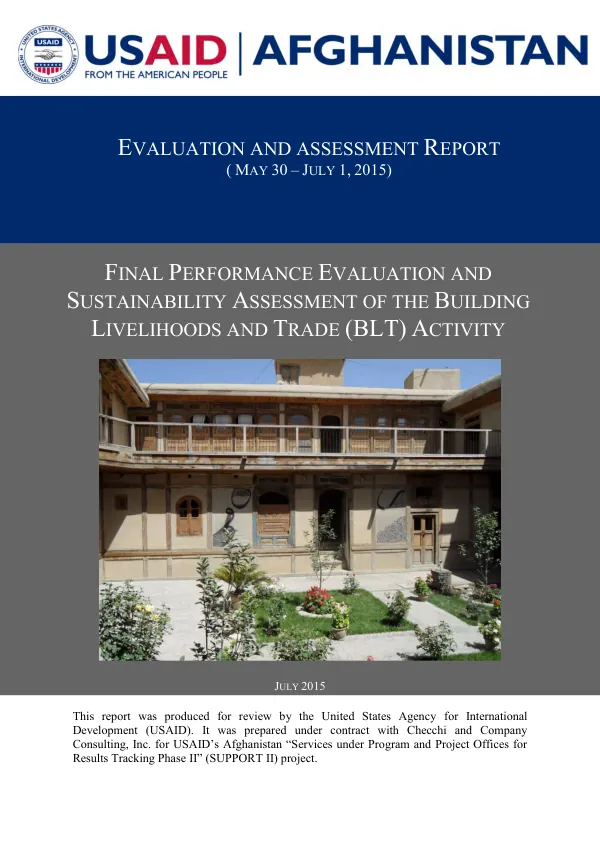
The agricultural sector in Afghanistan has faced significant challenges, including soil degradation, limited market access, and crop yields averaging 44% below regional benchmarks for staple crops such as wheat and maize. The sector's growth has been hindered by a lack of investment, inadequate infrastructure, and limited access to credit and markets. USAID's interventions in the agricultural sector have focused on improving the productivity and sustainability of agribusinesses. The agency has provided support to over 1,000 agribusinesses, with a focus on small and medium-sized enterprises (SMEs). These businesses have been trained in sustainable agriculture practices, such as composting and crop rotation, and have received assistance with market access and market linkage facilitation. Women-headed households have shown higher adoption rates for sustainable agriculture practices, with 38% of participants adopting composting and crop rotation methods. The study found that USAID's support has made a significant difference to the local economy, with employment generated by the supported businesses and attributable to USAID support. The study also found that the supported businesses have had a positive impact on other economic actors, such as suppliers and customers, and have contributed to the overall economic growth of the region. The study identified several factors that have contributed to the success of USAID's interventions, including the selection of the right sector and business, the delivery of support, and the monitoring and evaluation of the program. The study also identified several challenges that have hindered the success of the program, including the lack of infrastructure and the limited access to credit and markets. The study made several recommendations for future USAID interventions in the agricultural sector, including the need to focus on the right sector and business, to deliver support effectively, and to monitor and evaluate the program. The study also recommended the need to address the challenges that have hindered the success of the program, including the lack of infrastructure and the limited access to credit and markets. The study concluded that USAID's interventions in the agricultural sector have been successful in improving the productivity and sustainability of agribusinesses, and have contributed to the overall economic growth of the region. The study also highlighted the need for continued support to the sector, including the need to address the challenges that have hindered the success of the program. The study was conducted by Checchi and Company Consulting, Inc. under contract with USAID's Afghanistan "Services under Program and Project Offices for Results Tracking Phase II" (SUPPORT II) project. The study was led by Sarah Parkinson, with team members including Benjamin Ryan, Ghulam Rasoul Samadi, Abid Ahmad, and Abdul Bari Siddiqi. The study was completed in January 2016. The study was funded by USAID under contract number AID-306-C-12-00012. The study was conducted in collaboration with the Office of Program and Project Development (OPPD) through Mr. Mohammad Sadiq Orya, and the Chief of Party, Michael Lechner, and Deputy Chief of Party, Waheed Hasami.