BANK FOR WEST AFRICAN DEVELOPMENT
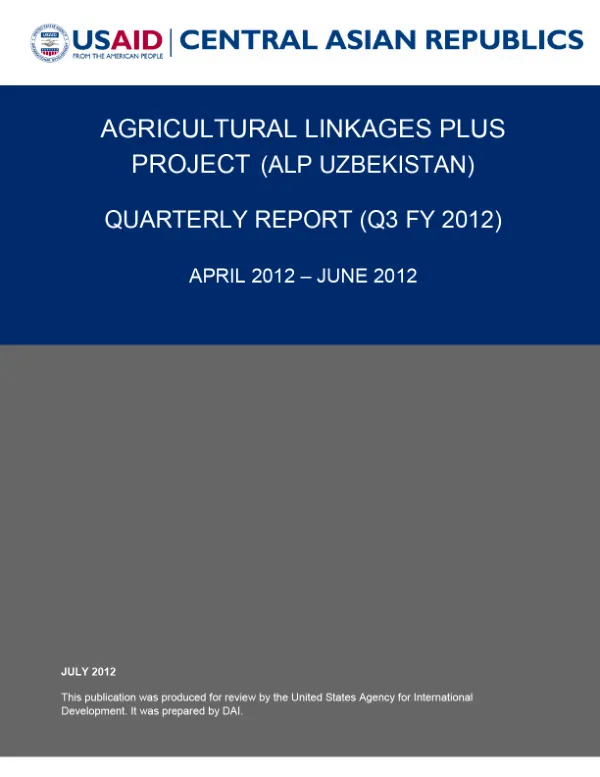
Agricultural Linkages Plus Project (ALP) Q3 FY 2012 Quarterly Report
The Agricultural Linkages Plus project (ALP) in Uzbekistan is a USAID-funded initiative aimed at improving the country's agricultural sector.
2012 · 23 pages
Sign in to readA free account is required to download.
Abstract
The project focuses on enhancing the competitiveness of the horticulture sector, increasing farmers' incomes, and improving food security. ALP is implemented by the US Agency for International Development (USAID) through a contract with Development Alternative Inc. (DAI). ALP's third quarter fiscal year 2012 report highlights the project's progress and achievements. The report notes that the project has made significant strides in training farmers and producers on best practices in fruit production, processing, and drying. A total of 345 participants attended producer-level trainings this quarter, including fruit drying and processing and best grape production. The trainings were conducted in various provinces, including Samarkand, Ferghana, and Bukhara. The report also highlights the success of the Horticultural Exchange Program (HEP), which brought together eight participants from the public and private sectors to learn about best nursery practices in California. The participants visited over 24 sites, including farms, private companies, and fruit nurseries, and gained hands-on experience in the field. In addition to training and exchange programs, ALP has been working to improve the project's infrastructure and capacity. The project has established partnerships with other donor organizations, including the Asian Development Bank (ADB) and the United Nations Development Program (UNDP). These partnerships have enabled ALP to leverage resources and expertise to support the project's goals. Despite the progress made, the report notes that the project still faces challenges, including the lack of an approved amendment to the existing Memorandum of Understanding (MOU) to expand project activities to new provinces and districts. The project remains legally limited to work only in the original provinces and districts identified in the still valid AgLinks (predecessor project) MOU, which is valid through November 2015 until amended. The report concludes by highlighting the project's commitment to improving the agricultural sector in Uzbekistan and its efforts to address the challenges facing the sector. ALP continues to work towards its goal of enhancing the competitiveness of the horticulture sector, increasing farmers' incomes, and improving food security in Uzbekistan. The project's geographic focus is on the provinces of Samarkand, Ferghana, Bukhara, and Namangan, where ALP is working to improve the agricultural sector and increase farmers' incomes. The project's timeframes are quarterly, with the third quarter of fiscal year 2012 being the focus of the report. Implementation details for the project include training farmers and producers on best practices in fruit production, processing, and drying, as well as establishing partnerships with other donor organizations to leverage resources and expertise. The project also includes the Horticultural Exchange Program (HEP), which brings together participants from the public and private sectors to learn about best nursery practices in California. The project's recommendations include the need for an approved amendment to the existing MOU to expand project activities to new provinces and districts, as well as the need for continued support and resources to address the challenges facing the agricultural sector in Uzbekistan.