USAID DEC
Albanian Traditional Cuisine
Albanian cuisine offers a unique blend of Mediterranean flavors, shaped by a rich historical past and influenced by various cultures.
2011 · 40 pages
Sign in to readA free account is required to download.
Abstract
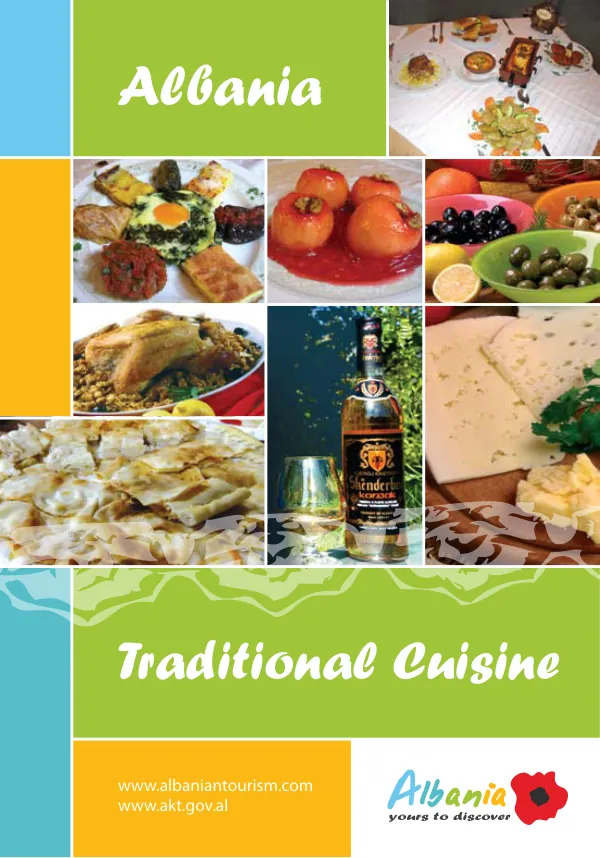
The country's mild climate is conducive to a wide variety of agricultural products, including peppers, eggplants, tomatoes, cucumbers, and legumes. The diverse range of fruits and vegetables grown in Albania contributes to the varied and flavorful nature of its cuisine. Vegetables play a significant role in Albanian cooking, often combined with meats to create a range of dishes. These creations can take the form of stews, casseroles, stuffed vegetables, or meatballs, and are frequently baked in earthenware or sautéed. Some dishes blend multiple vegetables together, with or without meat, and have origins in Asian cuisine. The use of vegetables in Albanian cooking is a testament to the country's agricultural abundance and the creativity of its chefs. Olives are a staple in Albanian cuisine, enjoyed on their own or combined with other foods. The country's regions produce a variety of olive types, each with its unique flavor and characteristics. Olives from the Berat region are prized for their low fat content and distinct flavor, while those from Vlora, Borsh, Himara, and Tirana are higher in fat content and often used for olive oil production. The importance of olives in Albanian cuisine reflects the country's long history of olive cultivation and its significance in Mediterranean cuisine. Kitchen herbs also play a crucial role in Albanian cooking, adding flavor and aroma to a range of dishes. While specific information on the types of herbs used in Albanian cuisine is not provided, it is clear that they are an essential component of the country's culinary traditions. The use of herbs in Albanian cooking is likely influenced by the country's geographic location and its cultural exchange with neighboring countries. The emphasis on herbs in Albanian cuisine highlights the country's commitment to using fresh and locally sourced ingredients in its cooking. The cuisine of Albania is a reflection of the country's rich history, cultural diversity, and geographic location. The use of a wide variety of ingredients, including vegetables, olives, and herbs, contributes to the unique flavor and character of Albanian cooking. The country's culinary traditions are shaped by its Mediterranean climate, agricultural abundance, and cultural exchange with neighboring countries.