USAID DEC
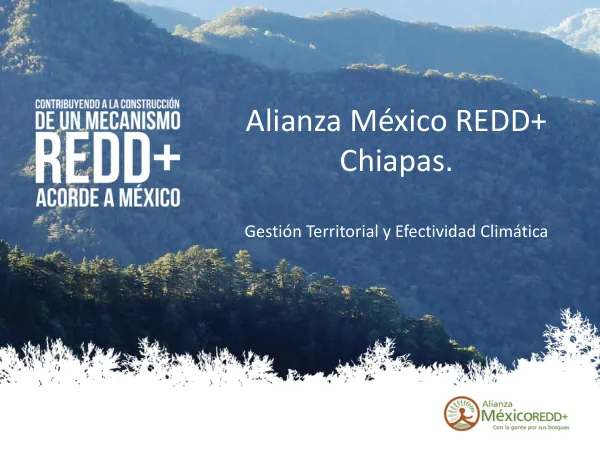
Alianza México REDD+ Chiapas. Comunidad de Aprendizaje Sector Cafetalero
The Alianza México REDD+ initiative in Chiapas focuses on sustainable land use and climate effectiveness through the implementation of the Reducing Emissions from Deforestation and Forest Degradation (REDD+) mechanism.
2015 · 29 pages
Sign in to readA free account is required to download.
Abstract
REDD+ is a mechanism of mitigation that aims to reduce greenhouse gas emissions by conserving and sustainably managing forests. The strategy for REDD+ implementation in Chiapas involves a territorial management approach that identifies areas of high potential for REDD+ actions to achieve the initiative's goals. This includes analyzing the additionality and permanence of REDD+ actions, as well as clarifying assumptions for the long-term sustainability of these actions. The strategy also provides a framework for systematizing REDD+ actions to inform the design of public policies. The initiative targets areas of high deforestation risk, with 1,800 hectares of deforestation resulting in annual emissions of 122,500 tons of CO2. Strategies for REDD+ implementation in these areas include integrated fire management, territorial management, and productive land use conversion. The alliance involves coffee producers, forest managers, and farmers in the implementation of these strategies. Key strategies for REDD+ implementation in Chiapas include stabilizing the agricultural-forest frontier, diversified forest management, and forest valuation. Additionally, the initiative aims to increase the profitability of forest management and conservation activities. The implementation of local REDD+ models involves the evaluation of ejido capacities, capacity building, and investment in productive capacities. The initiative also involves the development of community-based initiatives, agroforestry production, and forest conservation. A business plan is being developed for the sustainable management of 100 hectares of forest, with the goal of increasing the income of forest-dependent communities. The implementation of REDD+ models in Chiapas is conditional on favorable conditions, including the availability of funding and the alignment of policies and programs with the initiative's goals. The initiative involves collaboration with various government agencies, including CONAFOR, PROGAN, PROCAMPO, CDI, CBM, and CDI. Other stakeholders are also involved in the implementation of the initiative, including coffee producers, forest managers, and farmers. The goal of the Alianza México REDD+ initiative is to reduce deforestation and promote sustainable land use in Chiapas, while also contributing to the global effort to mitigate climate change.