ARIZONA STATE UNIVERSITY
AmpUp: Just Transition Factsheet
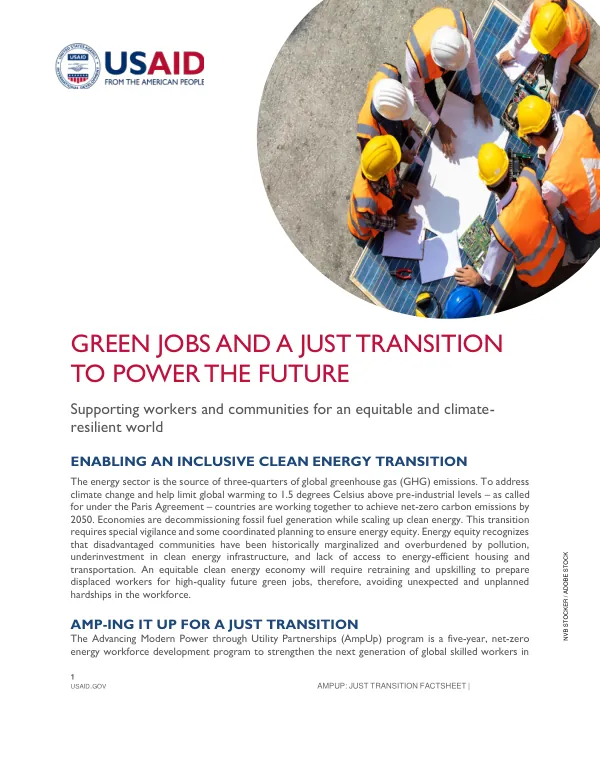
The Advancing Modern Power through Utility Partnerships (AmpUp) program is a five-year, net-zero energy workforce development program to strengthen the next generation of global skilled workers in the energy sector.
2022 · 2 pages
Sign in to readA free account is required to download.
Abstract
The program is centered around peer-to-peer relationships and strong practitioner and stakeholder networks to support net-zero goals through a consortium of five organizations: Arizona State University, MK Advisors, NRECA International, Segura Consulting, and United States Energy Association. The energy sector is the source of three-quarters of global greenhouse gas (GHG) emissions. To address climate change and help limit global warming to 1.5 degrees Celsius above pre-industrial levels, countries are working together to achieve net-zero carbon emissions by 2050. Economies are decommissioning fossil fuel generation while scaling up clean energy. This transition requires special vigilance and coordinated planning to ensure energy equity. Energy equity recognizes that disadvantaged communities have been historically marginalized and overburdened by pollution, underinvestment in clean energy infrastructure, and lack of access to energy-efficient housing and transportation. Just Transition refers to transitioning the global economy to a low-carbon, resilient one in a way that seeks positive environmental, social, and economic outcomes together, delivers equitable benefits, and does no harm. To achieve this, there must be inclusive, gender equitable, and participatory decision-making and development processes that ensure justice in the transition, foster good livelihoods, develop demand-driven skills and labor-matching, protect and enhance workers' rights, safeguard community health, and human rights of affected individuals, including in indigenous and local communities. The AmpUp program will catalyze systemic changes by sharing global case studies, best practices, and emerging lessons, and identifying new workforce development opportunities while addressing socio-economic and socio-technical implications as USAID partner countries decarbonize. Inclusive and transparent social dialogues and forums will target policymakers, financial institutions, utilities, regulatory agencies, ministries, labor unions, and community advocacy organizations to build capacity, engage stakeholders, and facilitate collaborative community engagement and thought leadership exchanges. The program will focus on building capacity through technical assistance to help develop and implement just transition principles and processes, engaging stakeholders and affected communities through deliberative dialogue and social engagement training, and creating frameworks to evaluate and incentivize a just transition. The program will also promote inclusion of citizens in decision-making to create adaptive goals for communities and workers to reduce systemic risks and enhance human capital.