USAID DEC
An Assessment of Health Facility and Community Readiness to Offer Postabortion Care in Rwanda
Sign inICF
An Assessment of Health Facility and Community Readiness to Offer Postabortion Care in Rwanda
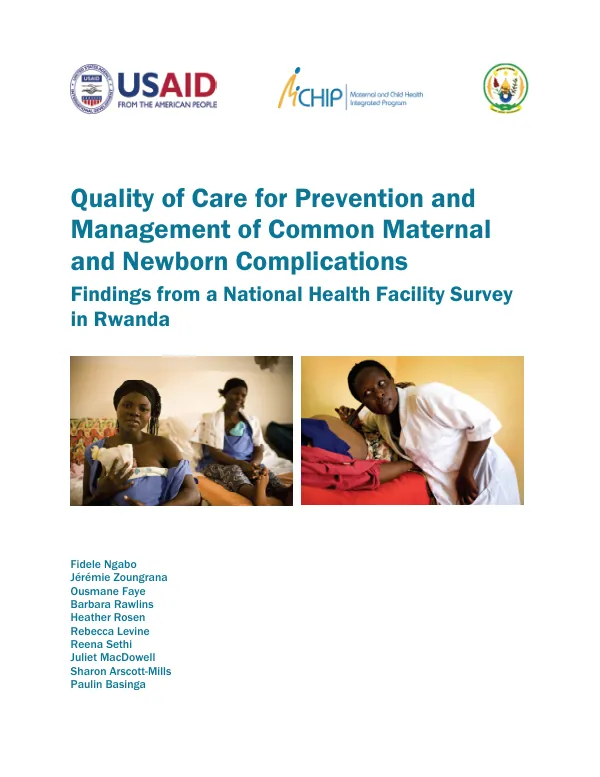
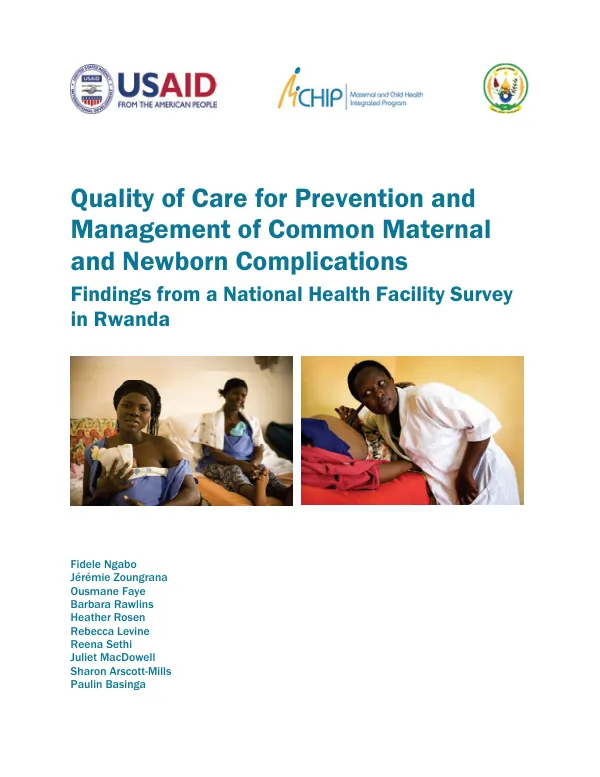
The Maternal and Child Health Integrated Program (MCHIP) conducted a national health facility survey in Rwanda to assess readiness to offer postabortion care (PAC).
2012 · 50 pages
Sign in to readA free account is required to download.
Abstract
The study aimed to evaluate the availability of infrastructure, infection control items, and essential supplies and drugs for PAC emergencies. The survey also assessed the knowledge and skills of health care providers in managing PAC cases. The study involved a cross-sectional survey of 29 districts in Rwanda, with a total of 120 health facilities visited. The facilities included hospitals, health centers, and dispensaries. The survey team collected data on the availability of infrastructure, infection control items, and essential supplies and drugs for PAC emergencies. The team also conducted interviews with health care providers to assess their knowledge and skills in managing PAC cases. The results of the survey showed that the majority of health facilities had the necessary infrastructure to provide PAC services, including functional sterilizing equipment and kits for dilation and curettage (D&C) and medical termination of pregnancy (MVA). However, the availability of infection control items, such as gloves and masks, was variable. The survey also found that health care providers had varying levels of knowledge and skills in managing PAC cases, with some providers reporting that they had received training in PAC but lacked the necessary equipment and supplies to provide the service. The study also assessed community readiness to offer PAC services. The survey team conducted focus group discussions with community members to assess their knowledge and attitudes towards PAC services. The results showed that community members had a good understanding of the importance of PAC services but faced several barriers to accessing these services, including lack of awareness, stigma, and fear of judgment. Based on the findings of the survey, the study made several recommendations to improve readiness to offer PAC services in Rwanda. The recommendations included strengthening the capacity of health care providers through training and equipment provision, improving the availability of infection control items, and increasing community awareness and acceptance of PAC services. The study also recommended that the government of Rwanda develop a national policy on PAC services to guide the provision of these services at the national and district levels. The study concluded that while there were several challenges to providing PAC services in Rwanda, there were also opportunities for improvement. The study recommended that the government of Rwanda and its partners work together to strengthen the capacity of health care providers, improve the availability of infection control items, and increase community awareness and acceptance of PAC services. By doing so, the government can improve the readiness to offer PAC services in Rwanda and reduce the number of maternal deaths and disabilities resulting from unsafe abortion. The study's findings have implications for the development of policies and programs to improve the readiness to offer PAC services in Rwanda. The study's recommendations can inform the development of national and district-level policies and programs to strengthen the capacity of health care providers, improve the availability of infection control items, and increase community awareness and acceptance of PAC services.