USAID DEC
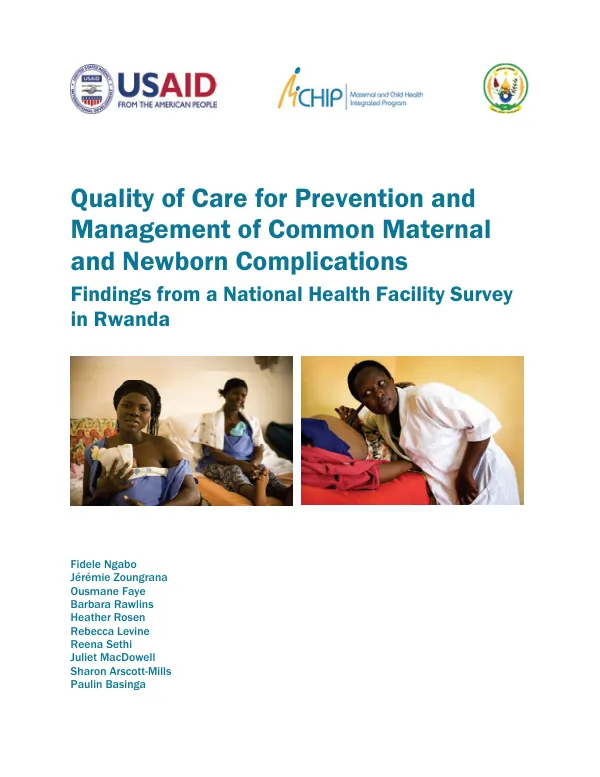
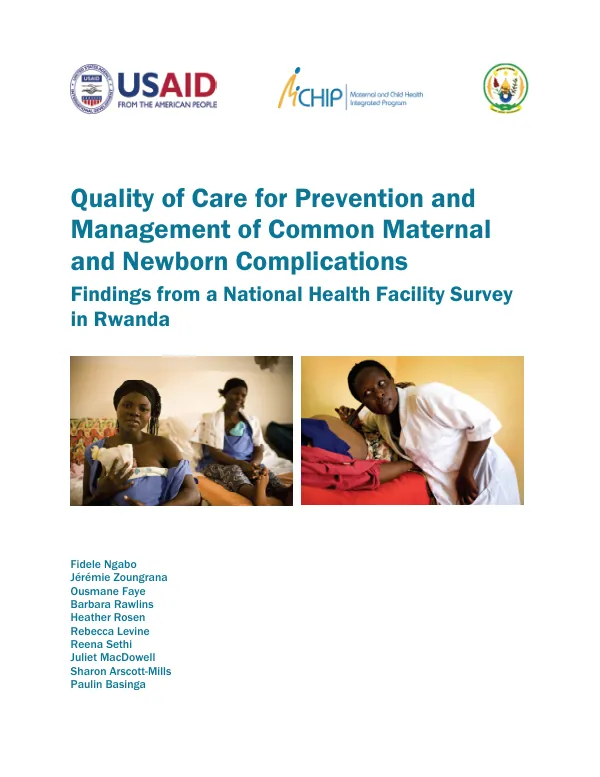
Quality of Care for Prevention and Management of Common Maternal and Newborn Complications in Rwanda
Sign inICF
Quality of Care for Prevention and Management of Common Maternal and Newborn Complications in Rwanda
The Maternal and Child Health Integrated Program (MCHIP) is the USAID Bureau for Global Health flagship maternal, neonatal and child health (MNCH) program.
2012 · 58 pages
Sign in to readA free account is required to download.
Abstract
MCHIP supports programming in maternal, newborn and child health, immunization, family planning, malaria, nutrition and HIV/AIDS, and strongly encourages opportunities for integration. Cross-cutting technical areas include water, sanitation, hygiene, urban health and health systems strengthening. The report was made possible by the generous support of the American people through the United States Agency for International Development (USAID), under the terms of the Leader with Associates Cooperative Agreement GHS-A-00-08-00002-000. The contents are the responsibility of the Maternal and Child Health Integrated Program (MCHIP) and do not necessarily reflect the views of USAID or the United States Government. The study aimed to assess the quality of care for prevention and management of common maternal and newborn complications in Rwanda. The study objectives were to assess facility readiness, routine antenatal and delivery care, and prevention and management of major maternal and newborn complications. The study used a national health facility survey design, with data collection tools including questionnaires and observation checklists. The sample consisted of 120 health facilities, with 240 health workers interviewed and 1,200 antenatal care (ANC) consultations and labor and delivery (L&D) observations. Facility readiness was assessed in terms of the presence of national policies and guidelines, skilled personnel, essential medicines and supplies, and health worker knowledge of management of obstetric and newborn complications. The results showed that 95% of facilities had national policies and guidelines for maternal and newborn care, but only 60% had skilled personnel available 24/7. The availability of essential medicines and supplies was also a concern, with only 50% of facilities having all the necessary supplies. Routine antenatal and delivery care was assessed in terms of focused antenatal care and routine labor and delivery care. The results showed that 80% of facilities provided focused antenatal care, but only 50% provided routine labor and delivery care. The performance of interpersonal communication and support tasks during labor was also assessed, with 70% of facilities performing all tasks correctly. Prevention and management of major maternal and newborn complications were assessed in terms of the provision of emergency obstetric care signal functions, prevention and management of postpartum hemorrhage, and management of birth asphyxia (newborn resuscitation). The results showed that 60% of facilities provided all the emergency obstetric care signal functions, but only 40% had the necessary supplies and equipment to perform these functions. The quality of care in postpartum hemorrhage case management was also assessed, with 50% of facilities providing all the necessary care. The study found that facility readiness, routine antenatal and delivery care, and prevention and management of major maternal and newborn complications were major concerns in Rwanda. The study recommended that facilities should have skilled personnel available 24/7, essential medicines and supplies should be available, and health workers should have knowledge of management of obstetric and newborn complications. The study also recommended that facilities should provide focused antenatal care and routine labor and delivery care, and that health workers should perform all interpersonal communication and support tasks during labor correctly.