USAID DEC
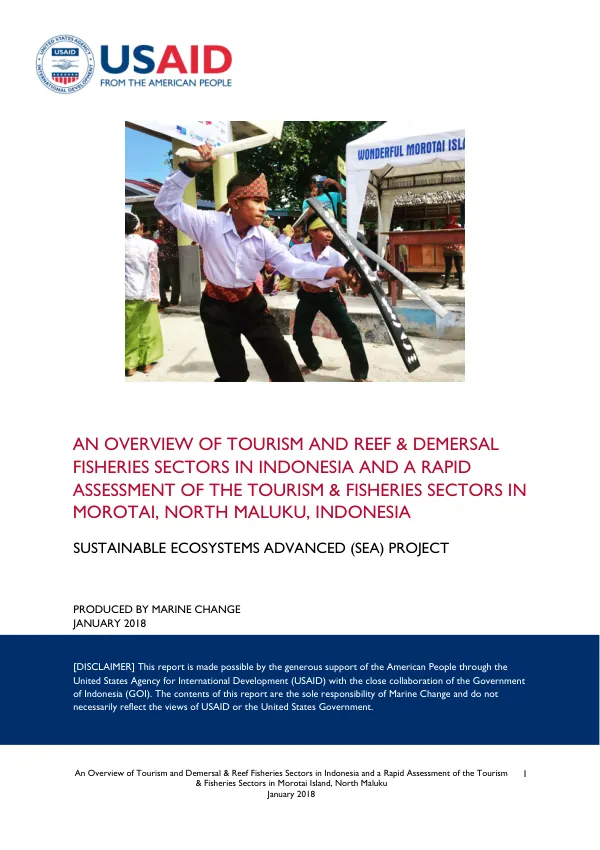
An Overview of Tourism and Demersal & Reef Fisheries Sectors in Indonesia and a Rapid Assessment of the Tourism & Fisheries Sectors in Morotai Island, North Maluku
Sign inWILDLIFE CONSERVATION SOCIETY
An Overview of Tourism and Demersal & Reef Fisheries Sectors in Indonesia and a Rapid Assessment of the Tourism & Fisheries Sectors in Morotai Island, North Maluku
The tourism sector in Indonesia is a significant contributor to the country's economy, with international rankings placing it among the top 10 most visited countries in the world.
2018 · 74 pages
Sign in to readA free account is required to download.
Abstract
The "10 New Balis" program aims to develop 10 new tourist destinations, including Morotai Island in North Maluku, to increase tourism revenue and create jobs. Private and public investment in the tourism sector has been increasing, with a focus on international promotion, domestic tourism, and niche markets such as Muslim tourism, marine tourism, and eco-tourism. Morotai Island, located in North Maluku, has been identified as a potential tourist destination due to its natural beauty, including beaches, offshore islands, coral reefs, and historical sites. The island has a relatively small population and limited infrastructure, but it has the potential to attract tourists interested in adventure and nature-based activities. The main attractions on the island include its beaches, diving sites, and historical sites such as the Morotai War Cemetery. Tourism operators on the island provide a range of services, including accommodation, diving, transportation, and food services. However, the development of the tourism sector in Morotai is constrained by limited access to the island, lack of infrastructure, and limited marketing efforts. The island's tourism operators face challenges in providing high-quality services due to the limited availability of skilled staff and equipment. The demersal and reef fisheries sector in Indonesia is a significant contributor to the country's economy, with small-scale fisheries management being a key aspect of the sector. The typical small-scale fisheries supply chain involves fishermen selling their catch to middlemen, who then sell it to wholesalers and retailers. Reef fisheries are a significant component of the sector, with many species being targeted for export to international markets. Demersal fisheries, which involve fishing for deep-sea species, are also an important component of the sector. Mangrove fisheries, which involve fishing in mangrove forests, are another significant component of the sector. Export markets and local consumption are both important for the sector, with many species being targeted for export to international markets. The fisheries sector in Morotai is characterized by a small number of fishermen and limited infrastructure. The island's fishermen face challenges in accessing markets and selling their catch due to limited transportation options and lack of storage facilities. The sector is also constrained by limited data on fish catches and lack of enforcement of fisheries regulations. Economic modeling was conducted to assess the potential economic benefits of developing the tourism and fisheries sectors in Morotai. The results of the model indicate that the tourism sector has the potential to generate significant revenue and create jobs, while the fisheries sector has the potential to increase income for fishermen and contribute to the local economy. The development of the tourism and fisheries sectors in Morotai requires a coordinated effort from government agencies, private sector operators, and local communities. The island's tourism operators and fishermen need to work together to develop high-quality services and products that meet the needs of tourists and international markets. The government needs to provide support for infrastructure development, marketing efforts, and enforcement of regulations to ensure the sustainable development of the sectors.
Related documents