USAID DEC
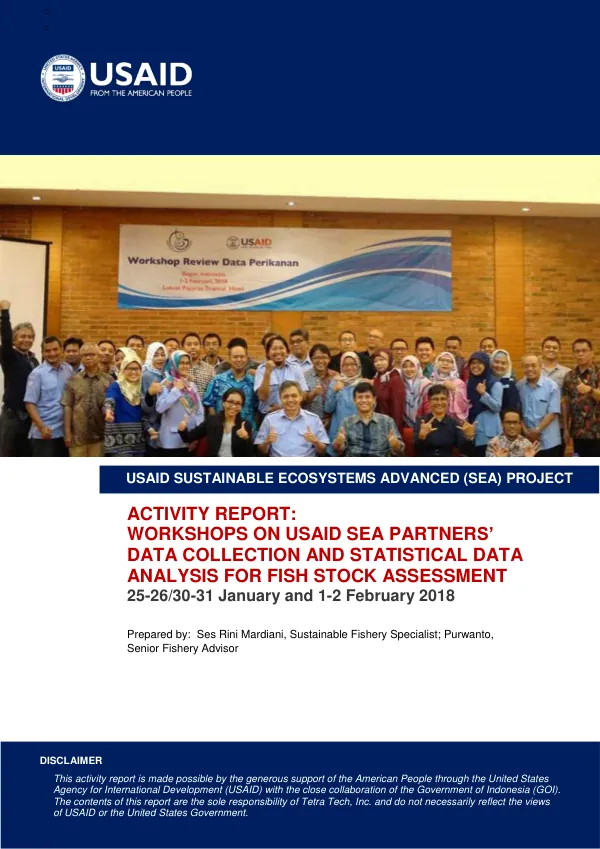
Activity Report: Workshops on USAID SEA Partners’ Data Collection and Statistical Data Analysis for Fish Stock Assessment
Sign inGOVERNMENT OF INDONESIA
Activity Report: Workshops on USAID SEA Partners’ Data Collection and Statistical Data Analysis for Fish Stock Assessment
The USAID Sustainable Ecosystems Advanced (SEA) Project conducted workshops on data collection and statistical data analysis for fish stock assessment in January and February 2018.
2018 · 34 pages
Sign in to readA free account is required to download.
Abstract
The workshops aimed to improve the quality and consistency of data collected by USAID SEA Partners, with a focus on fish stock assessment. The data review workshop, held on January 25-26 and February 1-2, 2018, brought together researchers from the Ministry of Maritime Affairs and Fisheries (MMAF) and USAID SEA Partners. The workshop involved internal review of data collected by USAID SEA Partners, with a focus on data resources, completeness, structure, and quality. The MMAF researchers identified several issues and challenges related to data collection, including incomplete data, inconsistent data formats, and lack of standardization. The data analysis workshop, held on January 30-31, 2018, focused on statistical data analysis for fish stock assessment using non-equilibrium biomass dynamic models. The workshop brought together participants from various organizations, including MMAF, USAID SEA Partners, and other stakeholders. The participants engaged in data analysis exercises, using sample data to demonstrate the application of non-equilibrium biomass dynamic models. The workshops resulted in several key outputs, including a summary of proceedings, key outputs, outcomes, and achievements, and lessons and recommendations. The MMAF researchers identified several areas for improvement, including the need for standardized data formats, improved data quality, and increased collaboration among stakeholders. The workshops also resulted in several follow-up activities, including the development of a data management plan and the establishment of a data analysis working group. The USAID SEA Project has made significant progress in improving the quality and consistency of data collected by USAID SEA Partners. The workshops have provided a platform for stakeholders to share knowledge, experiences, and best practices in data collection and analysis. The project's efforts to improve data quality and consistency are critical to informing fisheries management decisions and ensuring the long-term sustainability of fisheries resources. The workshops also highlighted the importance of collaboration and coordination among stakeholders in achieving the project's objectives. The MMAF researchers and USAID SEA Partners have established a strong working relationship, which has facilitated the sharing of knowledge, expertise, and resources. The project's success depends on the continued collaboration and commitment of all stakeholders involved. The project's success depends on the continued collaboration and commitment of all stakeholders involved. The MMAF researchers and USAID SEA Partners have established a strong working relationship, which has facilitated the sharing of knowledge, expertise, and resources. The project's efforts to improve data quality and consistency will continue to be critical in achieving its objectives and ensuring the long-term sustainability of fisheries resources.
Related documents
Documents in this collection
 2018
2018USAID DEC
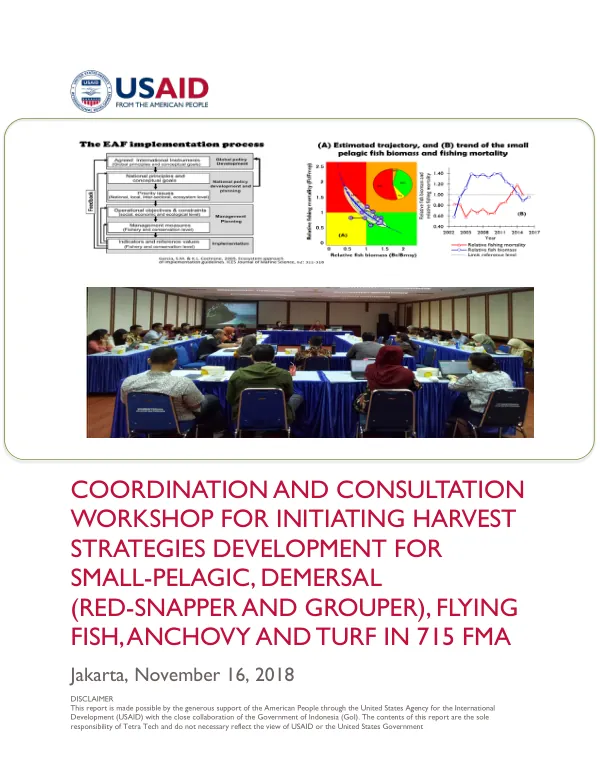
Coordination and Consultation Workshop for Initiating Harvest Strategies Development for Small-Pelagic, Demersal, Flying Fish, Anchovy, and Turf in 715 FMA
Open record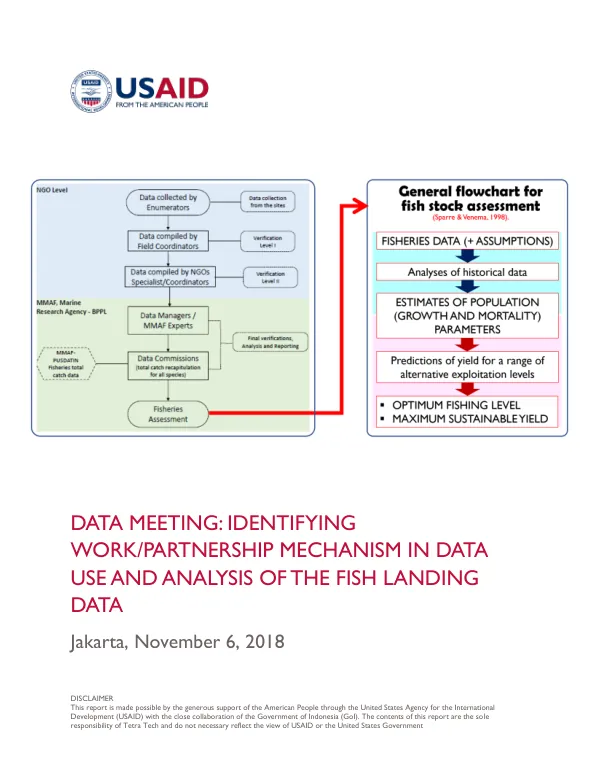 2018
2018USAID DEC
Data Meeting: Identifying Work/Partnership Mechanism in Data Use and Analysis of Fish Landing Data
Open record