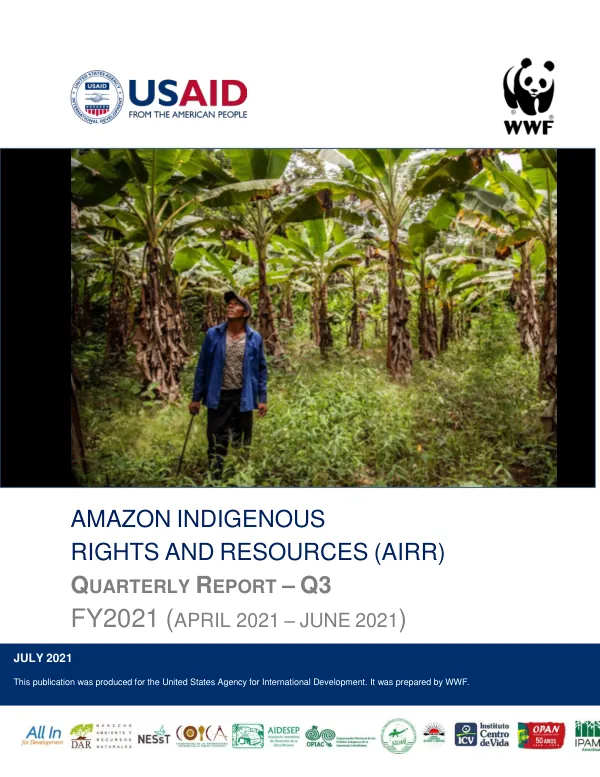
USAID DEC
Análisis Aplicado Político y Económico (A/PEA) Proyecto Amazonía Indígena, Derechos y Recursos (AIRR)
Sign inUSAID DEC
Análisis Aplicado Político y Económico (A/PEA) Proyecto Amazonía Indígena, Derechos y Recursos (AIRR)
The demarcation of indigenous territories in Brazil is governed by a complex legal framework.
2021 · 80 pages
Sign in to readA free account is required to download.
Abstract
The Constitution of the Republic Federative of Brazil of 1988, specifically Article 231, recognizes the rights of indigenous peoples to their ancestral lands. The Estatuto do Índio (Law 6001/73) and the Decreto n.º 1775/96 establish the procedures for demarcating indigenous lands. The demarcation process involves several stages, including the identification and delimitation of the lands, the preparation of a report, and the approval of the demarcation by the National Indian Foundation (FUNAI). The FUNAI also has the authority to issue a certificate of demarcation, which is a crucial step in the process. In the case of the UHE Teles Pires, the demarcation process was complex and involved several stakeholders, including the FUNAI, the Empresa de Pesquisa Energética (EPE), and the Agência Nacional de Energia Elétrica (ANEEL). The EIA/Rima study, which was conducted in 2006, identified the potential impacts of the dam on the indigenous communities in the area, including the Munduruku, Kayabi, and Apiaká peoples. However, the study did not include a specific analysis of the impacts on the indigenous communities, and the FUNAI and the EPE reached an agreement to dispense with the study. This decision was later criticized by the FUNAI, which argued that the study did not provide sufficient information on the impacts of the dam on the indigenous communities. The construction of the UHE Teles Pires began in 2011, and the dam was completed in 2015. The dam has had significant impacts on the indigenous communities in the area, including the displacement of communities and the loss of traditional lands. The Munduruku people, in particular, have been affected by the dam, as their traditional lands and sacred sites have been inundated by the reservoir. The case of the UHE Teles Pires highlights the complexities and challenges of demarcating indigenous territories in Brazil. The process is often slow and contentious, and it requires the involvement of multiple stakeholders, including the government, indigenous communities, and private companies. The case also highlights the need for more effective and inclusive decision-making processes that take into account the rights and interests of indigenous peoples. In Colombia, the Putumayo region is home to several indigenous communities, including the Pueblo Inga and Siona. The region is also rich in natural resources, including oil and gas. The Colombian government has established several protected areas in the region, including the Putumayo National Park, which is home to a diverse range of flora and fauna. However, the region is also affected by the presence of oil and gas companies, which have been accused of violating the rights of indigenous communities and causing environmental damage. The Colombian government has established several regulations and laws to protect the rights of indigenous communities and to ensure the sustainable management of natural resources. In Peru, the government has established several mechanisms for the participation of indigenous communities in decision-making processes related to natural resource management. The mechanisms include the creation of community councils and the establishment of participatory planning processes. However, the implementation of these mechanisms has been slow and uneven, and indigenous communities have often been excluded from decision-making processes. The Peruvian government has also been criticized for its handling of natural resource extraction projects, which have been accused of causing environmental damage and violating the rights of indigenous communities. The case of the UHE Teles Pires highlights the need for more effective and inclusive decision-making processes that take into account the rights and interests of indigenous peoples. The case also highlights the importance of protecting the rights of indigenous communities and ensuring the sustainable management of natural resources. The demarcation of indigenous territories in Brazil is a complex and contentious issue. The process involves several stakeholders, including the government, indigenous communities, and private companies. The case of the UHE Teles Pires highlights the need for more effective and inclusive decision-making processes that take into account the rights and interests of indigenous peoples. However, the implementation of these mechanisms has been slow and uneven, and indigenous communities have often been excluded