USAID
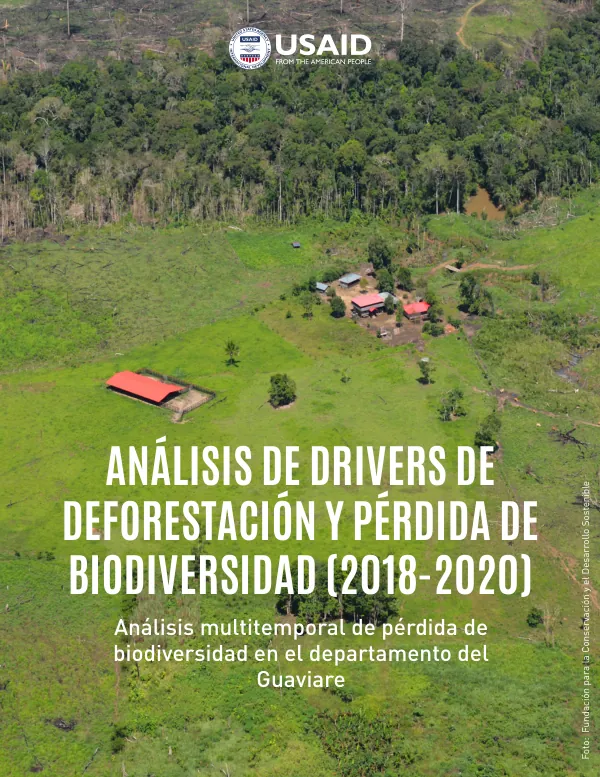
Análisis de drivers de deforestación y pérdida de biodiversidad (2018-2020)
The department of Guaviare in Colombia is characterized by a high degree of biodiversity, with 217 identified ecosystems, including the dense high-altitude forest ecosystem, which covers 51% of the department's total area.
2020 · 92 pages
Sign in to readA free account is required to download.
Abstract
The department is home to approximately 47,000 biological data points associated with plants, animals, and bacteria, as recorded in the national database of biodiversity (SIB Colombia). The department's biodiversity is threatened by the alteration of forest cover and habitat migration of species, primarily driven by deforestation processes. The main drivers of deforestation in the department of Guaviare are identified as livestock farming and illegal land appropriation, which directly affect biodiversity loss. The period from 2017 to 2018 saw a 10% decrease in deforestation rates, but the rate remains high compared to previous periods and is concentrated in the Arco Noroccidental Amazónico (ANA) region. The ANA region is a critical area of connectivity between the Andean, Amazonian, and Orinoquense ecosystems. The department of Guaviare has a total area of 5,557,922 hectares and is home to various ecosystems, including forests, grasslands, and wetlands. The department's biodiversity is characterized by a high degree of endemism, with many species found only in this region. The department's ecosystems are also home to various indigenous communities, who have traditionally managed the forests and maintained the biodiversity of the region. The department of Guaviare is also home to several protected areas, including the Parque Nacional Natural Serranía de Chiribiquete and the Reserva Nacional Nukak, which cover approximately 35% of the department's total area. These protected areas are critical for maintaining the department's biodiversity and ecosystem services. The deforestation process in the department of Guaviare is driven by various factors, including agricultural expansion, livestock farming, and infrastructure development. The department's forests are also vulnerable to fires, which can have devastating impacts on biodiversity and ecosystem services. The department's government and civil society organizations are working to address the drivers of deforestation and promote sustainable land-use practices. The department of Guaviare has a rich cultural heritage, with various indigenous communities living in the region. The department's indigenous communities have traditionally managed the forests and maintained the biodiversity of the region. However, the department's indigenous communities are facing various challenges, including deforestation, land appropriation, and cultural erosion. The department of Guaviare is also home to various economic activities, including agriculture, livestock farming, and mining. The department's economy is largely dependent on these activities, which can have negative impacts on the environment and biodiversity. The department's government and civil society organizations are working to promote sustainable economic development and reduce the negative impacts of economic activities on the environment and biodiversity. In conclusion, the department of Guaviare in Colombia is characterized by a high degree of biodiversity, with various ecosystems and species found in the region. However, the department's biodiversity is threatened by deforestation processes, driven by various factors, including agricultural expansion, livestock farming, and infrastructure development. The department's government and civil society organizations are working to address the drivers of deforestation and promote sustainable land-use practices.
Related documents