USAID DEC
Caracterización y autodiagnóstico productivo de resguardos indígenas Coreguajes, Makaguajes y Uitotos, para la formulación de proyectos productivos
Sign inAMAZON CONSERVATION TEAM
Caracterización y autodiagnóstico productivo de resguardos indígenas Coreguajes, Makaguajes y Uitotos, para la formulación de proyectos productivos
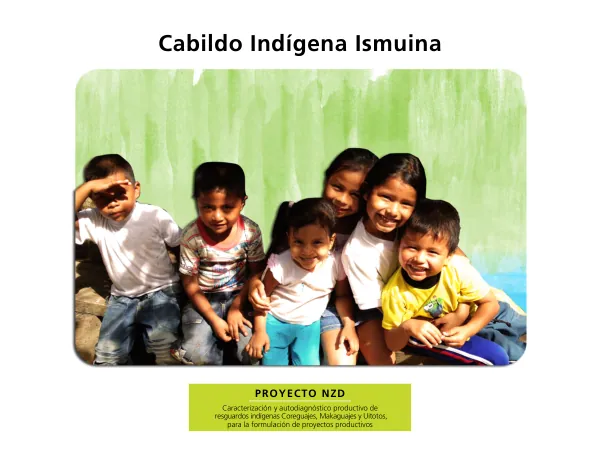
The Cabildo Indígena Ismuina is a community located in the municipality of Solano, Caquetá, Colombia.
2014 · 40 pages
Sign in to readA free account is required to download.
Abstract
The community is situated approximately 15 minutes walking distance from the urban center of Solano, and it is accessible by car or by boat from Florencia. The community has a total area of 37 hectares, which is entirely cultivated with various native and agro-pastoral species. The community is organized through a hierarchical system, with a Cacique, Gobernador, Secretario, Tesorero, Fiscal, and Asamblea. The Cacique serves as the community's counselor, providing guidance and knowledge to implement projects. The Gobernador is responsible for the community's legal and administrative aspects, both locally and nationally. The Secretario is in charge of recording community meetings and preparing necessary documents. The Tesorero manages the community's finances, while the Fiscal oversees the community's projects and ensures good relationships among members. The Cabildo Indígena Ismuina is affiliated with various regional and national organizations, including the Asociación de Cabildos Uitotos del alto río Caquetá (ASCAINCA), the Organización de los Pueblos Indígenas de la Amazonía Colombiana (OPIAC), and the Coordinadora Indígena de la Cuenca Amazónica (COICA). The community has a total of 31 families, with 17 participating in the Net Zero Deforestation (NZD) project. The participating families consist of 71 individuals, with 36 males and 35 females. The community's population is diverse, with various occupations, including farmers, housewives, students, and artisans. The community does not have its own educational center, and students attend the Institución Educativa Campo Elías Marulanda in Solano. However, the community plans to build an ethno-educational school with its own curriculum, tailored to the community's cultural needs and characteristics. The community's education system prioritizes the formation of children with a sense of belonging, to prevent the loss of culture, language, and traditional practices. The community's educational goals aim to preserve the Uitoto culture and promote the community's well-being. The community's economic activities are primarily focused on agriculture, with various native and agro-pastoral species being cultivated. The community's economic development is closely tied to its cultural preservation and the implementation of sustainable practices to reduce deforestation. The NZD project aims to reduce and prevent deforestation in the Amazonian region, while improving the quality of life for the local population. The project involves the development of management plans for each community, the design of alternative productive activities, and the formation of local promoters to support the community's development. The community's participation in the NZD project has led to the identification of various challenges and opportunities for sustainable development. The community's autodiagnóstico productivo has highlighted the need for alternative productive activities, the importance of preserving the community's cultural heritage, and the need for sustainable economic development. The community's participation in the NZD project has also led to the development of various proposals for productive activities, including the creation of a community-managed forest, the development of sustainable agriculture practices, and the implementation of eco-tourism initiatives. Overall, the Cabildo Indígena Ismuina is a community that is deeply committed to preserving its cultural heritage and promoting sustainable development. The community's participation in the NZD project has provided a platform for the community to develop its own solutions to the challenges it faces, while promoting the well-being of its members and the preservation of the Amazonian ecosystem.
Related documents
Documents in this collection
 2013
2013USAID DEC
Caracterización y autodiagnóstico productivo de resguardos indígenas Coreguajes, Makaguajes y Uitotos, para la formulación de proyectos productivos
Open record 2013
2013USAID DEC