USAID DEC
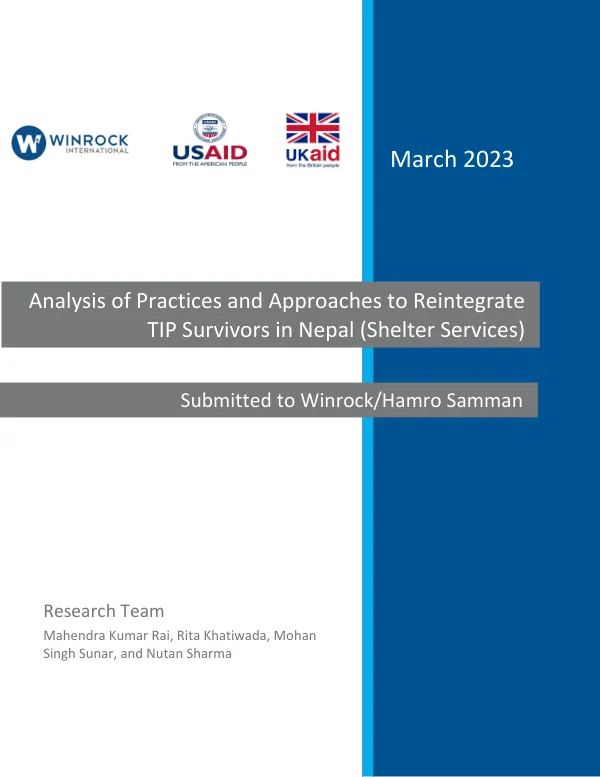
Analysis of Practices and Approaches to Reintegrate TIP Survivors in Nepal (Shelter Services)
Sign inUSAID
Analysis of Practices and Approaches to Reintegrate TIP Survivors in Nepal (Shelter Services)
The John D.
2023 · 67 pages
Sign in to readA free account is required to download.
Abstract
Rockefeller 3rd Scholars Program conducted a research project in partnership with the Hamro Samman Project, funded by the United States Agency for International Development (USAID) and the United Kingdom's UK Aid. The project aimed to analyze practices and approaches to reintegrate Trafficking in Persons (TIP) survivors in Nepal, with a focus on shelter services. Research Context and Background The research project was conducted in the context of Nepal's efforts to combat human trafficking and provide support to survivors. The country has a significant number of TIP survivors, with many facing challenges in reintegrating into their communities. The research aimed to identify best practices and approaches to support the reintegration of TIP survivors, with a focus on shelter services. Shelter Care Services in Nepal Shelter care services play a critical role in supporting TIP survivors in Nepal. These services provide a safe and secure environment for survivors to recover from their experiences and receive necessary support and care. The research project identified several shelter care services in Nepal, including those provided by government agencies, non-governmental organizations (NGOs), and civil society organizations (CSOs). Reintegration of TIP Survivors The reintegration of TIP survivors is a complex process that requires a comprehensive approach. The research project identified several key factors that contribute to successful reintegration, including access to shelter services, economic empowerment, and social support. The project also highlighted the importance of coordination and collaboration among stakeholders, including government agencies, NGOs, and CSOs. Key Findings and Discussions The research project identified several key findings and discussions related to the reintegration of TIP survivors in Nepal. These included: * The importance of shelter management and services in supporting the reintegration of TIP survivors. * The need for coordination and collaboration among stakeholders to ensure effective reintegration. * The importance of economic empowerment and social support in supporting the reintegration of TIP survivors. * The need for shelter-running organizations to prioritize the needs of TIP survivors, including access to shelter services, economic empowerment, and social support. Policy Influence The research project aimed to influence policy and practice related to the reintegration of TIP survivors in Nepal. The project identified several key policy recommendations, including: * The need for government agencies to provide adequate funding and resources to support shelter services and reintegration programs. * The importance of coordination and collaboration among stakeholders to ensure effective reintegration. Conclusions The research project concluded that shelter services play a critical role in supporting the reintegration of TIP survivors in Nepal. The project identified several key findings and discussions related to the reintegration of TIP survivors, including the importance of shelter management and services, coordination and collaboration, economic empowerment, and social support. The project also highlighted the need for policy and practice changes to support the effective reintegration of TIP survivors. Recommendations The research project made several key recommendations to support the effective reintegration of TIP survivors in Nepal. These included: