USAID DEC
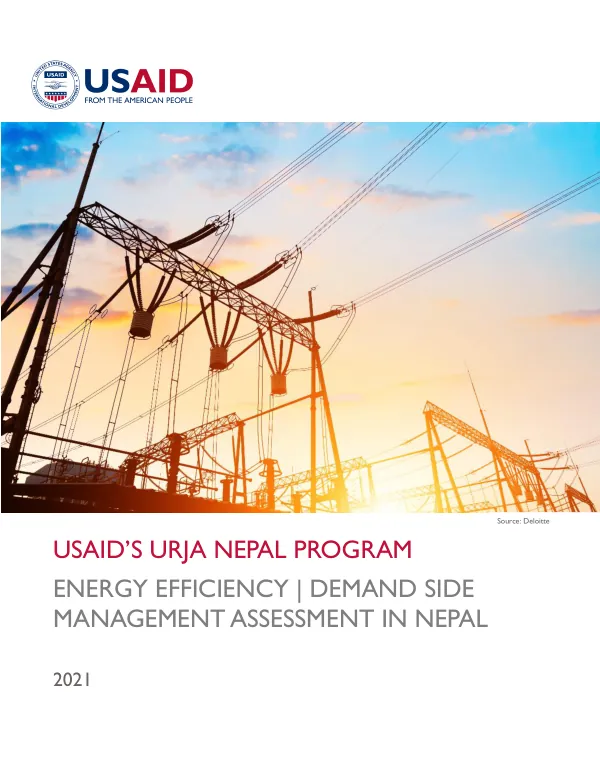
USAID’s URJA NEPAL PROGRAM ENERGY EFFICIENCY | DEMAND SIDE MANAGEMENT ASSESSMENT IN NEPAL
Sign inDELOITTE INC.
USAID’s URJA NEPAL PROGRAM ENERGY EFFICIENCY | DEMAND SIDE MANAGEMENT ASSESSMENT IN NEPAL
The Government of Nepal has emphasized the importance of implementing Energy Efficiency and Conservation (EE&C) measures to develop the electricity sector and protect the environment.
2021 · 75 pages
Sign in to readA free account is required to download.
Abstract
Energy efficiency, a component of demand side management, serves as the first fuel for most developed and developing economies. Nepal can potentially save 550 GWh of electricity annually, both in residential and industrial usage, by investing approximately USD 546 million in super-efficient lights, fans, refrigerators, and motors. The report presents a high-level analysis of the measures already taken to promote energy efficiency in Nepal. The Alternative Energy Promotion Centre (AEPC) has been actively involved in promoting energy efficiency through various initiatives, including the development of energy-efficient technologies and the implementation of energy-efficient practices in industries. The Nepal Electricity Authority (NEA) has also been working to improve energy efficiency through the implementation of energy-efficient technologies and practices in its operations. A sector-wise analysis of energy consumption in Nepal reveals that the industrial sector accounts for the largest share of energy consumption, followed by the residential sector. The report highlights the potential for energy savings in the industrial sector through the adoption of energy-efficient technologies and practices. For instance, the use of energy-efficient motors can lead to significant energy savings, with an estimated potential of 150 GWh of electricity annually. The report also emphasizes the importance of demand side management (DSM) in promoting energy efficiency in Nepal. DSM involves managing energy demand through various measures, including the use of energy-efficient technologies, behavioral changes, and pricing mechanisms. The report highlights the potential for DSM to reduce energy consumption and peak demand, thereby improving the overall efficiency of the energy system. The Government of Nepal has set ambitious targets for energy efficiency and conservation, including reducing energy intensity by 10% by 2025. The report highlights the need for a comprehensive approach to achieve these targets, involving the participation of various stakeholders, including the government, private sector, and civil society. The report also emphasizes the importance of creating an enabling environment for energy efficiency and conservation, including the development of policies and regulations that support the adoption of energy-efficient technologies and practices. The report concludes by highlighting the potential for energy efficiency and conservation to contribute to Nepal's economic development and environmental protection. The adoption of energy-efficient technologies and practices can lead to significant energy savings, reduced greenhouse gas emissions, and improved air quality. The report emphasizes the need for continued efforts to promote energy efficiency and conservation in Nepal, including the development of policies and regulations, the promotion of energy-efficient technologies and practices, and the creation of an enabling environment for energy efficiency and conservation. A key finding of the report is that Nepal can save as much as 550 GWh of electricity annually, both in residential and industrial usage, with an investment of approximately USD 546 million – simply by adopting super-efficient lights, fans, refrigerators, and motors. The report also highlights the potential for energy savings in the industrial sector through the adoption of energy-efficient technologies and practices, with an estimated potential of 150 GWh of electricity annually. The report emphasizes the importance of creating an enabling environment for energy efficiency and conservation, including the development of policies and regulations that support the adoption of energy-efficient technologies and practices. The report also highlights the need for continued efforts to promote energy efficiency and conservation in Nepal, including the development of policies and regulations, the promotion of energy-efficient technologies and practices, and the creation of an enabling environment for energy efficiency and conservation.