AECOM INTERNATIONAL
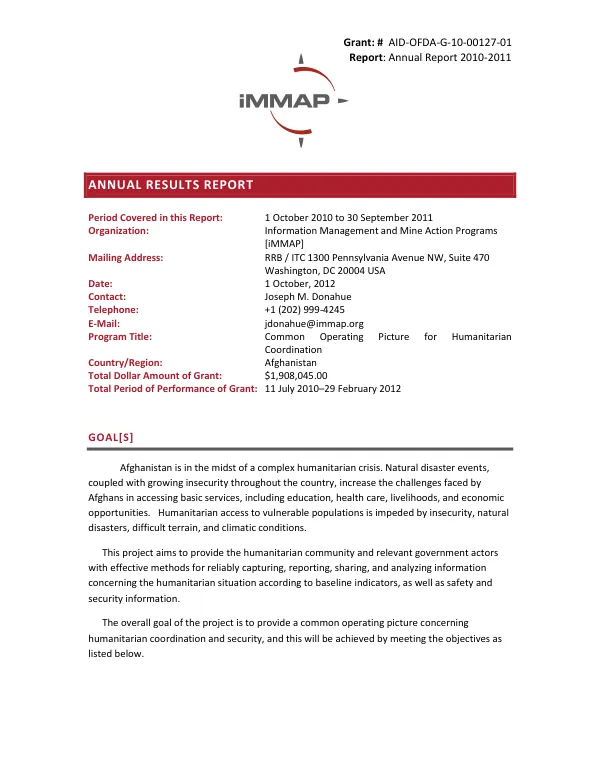
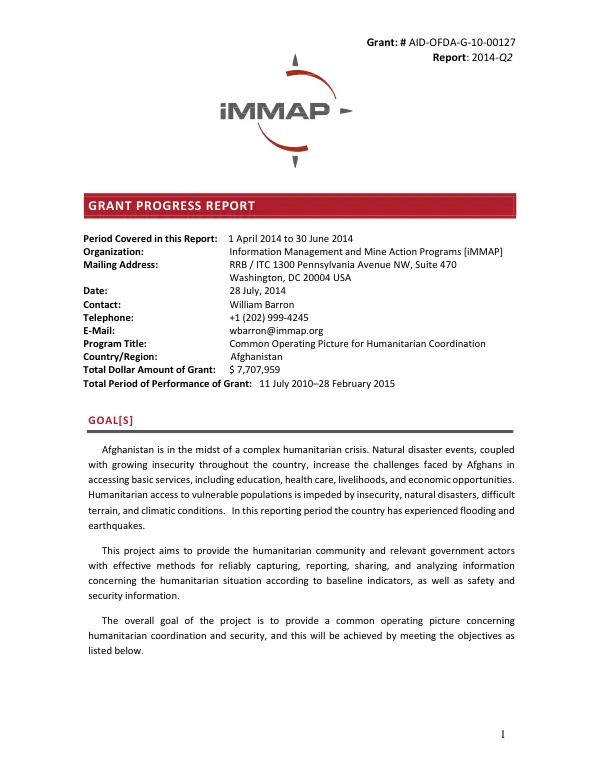
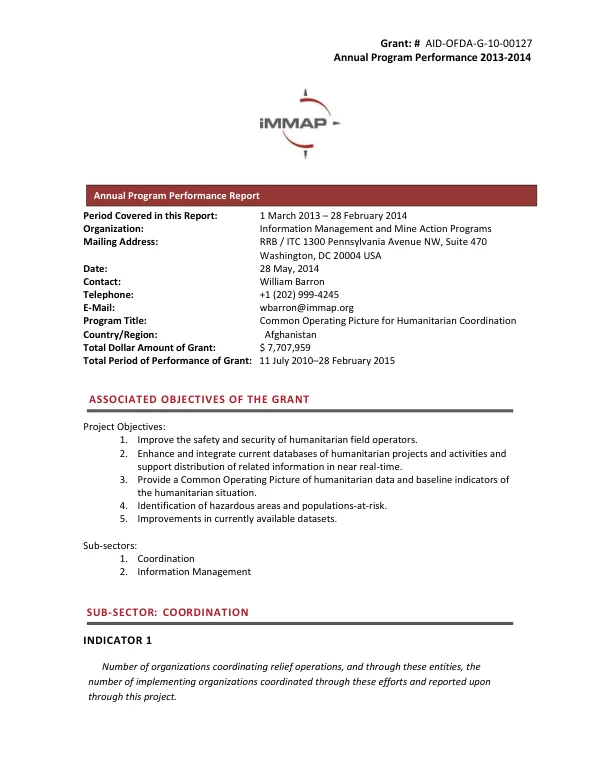
Annual Program Performance 2013-2014: AID-OFDA-G-10-00127
The Common Operating Picture for Humanitarian Coordination in Afghanistan began in 2010 with a total dollar amount of $7,707,959.
2014 · 10 pages
Sign in to readA free account is required to download.
Abstract
The project objectives included improving the safety and security of humanitarian field operators, enhancing and integrating current databases of humanitarian projects and activities, and providing a common operating picture of humanitarian data and baseline indicators of the humanitarian situation. Implementation focused on three key areas: coordination, information management, and data analysis. The project aimed to improve the safety and security of humanitarian field operators by expanding the OASIS database, which contains information on security incidents. As of the end of the reporting period, the database contained 118,555 security incidents, with 23,391 new incidents entered during the reporting period. The project also aimed to enhance and integrate current databases of humanitarian projects and activities. The OASIS database was used by 79 organizations with 162 installations, and approximately 148 trained users. Organizations used the common platform for security updates and mapping, as well as for agency-specific programmatic information and natural disaster data management. The project provided a common operating picture of humanitarian data and baseline indicators of the humanitarian situation. The OASIS database allowed humanitarian actors to obtain updated and historical information concerning the security situation in their areas of operation and create maps and reports of security incidents. The project also produced various information products, including water basin snow accumulation and flood risk maps, security incidents summaries, and local population targeted in security incidents. The project's implementation involved various stakeholders, including the Food Security and Agriculture Cluster, the Protection Cluster, and the Education Cluster. The project also collaborated with other organizations, such as the United Nations High Commissioner for Refugees (UNHCR), the World Food Programme (WFP), and the Food and Agriculture Organization (FAO). The project's performance was evaluated through various indicators, including the number of organizations utilizing common information management services and the number of information products made available through these services. The project's achievements included the expansion of the OASIS database, the development of new information products, and the provision of training and support to humanitarian organizations. The project's geographic focus was Afghanistan, and the timeframes for the project were from July 2010 to February 2015. The project's recommendations included the continued expansion of the OASIS database, the development of new information products, and the provision of training and support to humanitarian organizations.