CREATIVE ASSOCIATES INTERNATIONAL INC.
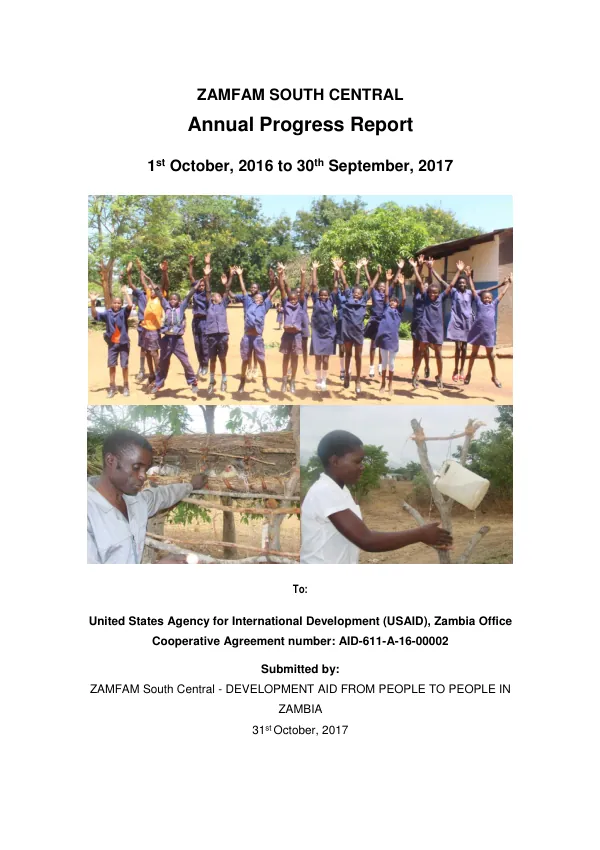
Annual Progress Report for USAID – DAPP ZAMFAM South Central Project
The USAID-funded DAPP ZAMFAM South Central Project operates in 15 districts of Southern and Central Provinces in Zambia.
2017 · 66 pages
Sign in to readA free account is required to download.
Abstract
The project aims to improve the well-being of orphans and vulnerable children (OVC) and their families through a range of interventions. Key activities include the establishment of Village Action Groups (VAGs) and Action Groups, which provide support and services to OVC and their families. In the second year of the project, a total of 2,500 VAGs and 1,500 Action Groups were established, with 15,000 OVC and 30,000 family members benefiting from the project's services. The project also implemented a pass-on gifts program, which provided inputs such as cow peas, sweet potatoes, and cassava trees to 10,000 households. The program aimed to improve food security and income generation for participating households. The project's monitoring and evaluation (M&E) system was strengthened during the reporting period, with the development of a database system and the finalization of M&E tools. The project also conducted an outcome survey to assess the impact of its interventions on OVC and their families. The survey revealed significant improvements in the well-being of OVC and their families, including increased access to education, healthcare, and economic opportunities. The project's staff and management structure were also strengthened during the reporting period. The project hired additional staff, including community health workers and data management specialists, to support the implementation of its activities. The project also established a project filing system and implemented a data entry and cleaning process to ensure the accuracy and reliability of its data. The project faced several challenges during the reporting period, including limited resources and capacity constraints. However, the project was able to overcome these challenges through effective planning, coordination, and collaboration with its partners. The project also identified several best practices and lessons learned during the reporting period, including the importance of community engagement and participation in project implementation. The project plans to continue its activities in the coming quarter, with a focus on scaling up its interventions and improving the well-being of OVC and their families. The project will also continue to strengthen its M&E system and ensure the accuracy and reliability of its data. The project's success will depend on its ability to maintain its momentum and continue to adapt to the changing needs of its beneficiaries. The project's geographic focus is on 15 districts in Southern and Central Provinces, with a total population of approximately 1.5 million people. The project's timeframes are from October 1, 2016, to September 30, 2017, with a total budget of $2.5 million. The project's recommendations include the need for continued support and funding to ensure the sustainability of its activities and the well-being of its beneficiaries.