MANAGEMENT SYSTEMS INTERNATIONAL
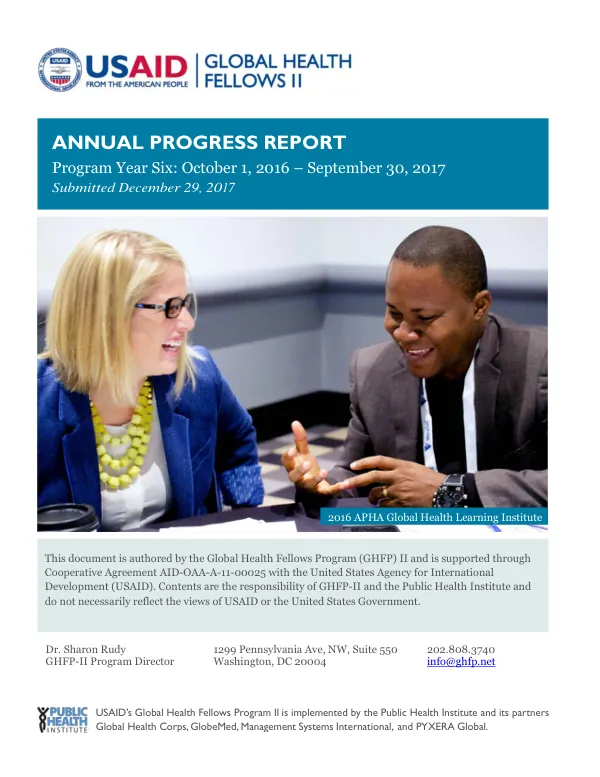
Annual Progress Report Program Year Six: October 1, 2016 – September 30, 2017
The Global Health Fellows Program II (GHFP-II) continued to implement activities that support key objectives in program year six (PY6).
2017 · 90 pages
Sign in to readA free account is required to download.
Abstract
The program's primary focus was on meeting USAID's human capacity needs and building the next generation of diverse global health professionals. GHFP-II's efforts were centered on four key areas: recruitment and support, diversity, professional development, and performance management and evaluation. Recruitment and support were critical components of the program. GHFP-II aimed to recruit and support a diverse pool of fellows, with a focus on historically underrepresented groups. The program implemented various strategies to achieve this goal, including outreach and recruitment efforts, as well as support services for fellows. In PY6, GHFP-II reported a significant increase in the number of fellows from historically underrepresented groups. Diversity was a key aspect of the program, with a focus on recruiting and supporting a diverse pool of fellows. GHFP-II implemented various strategies to achieve this goal, including outreach and recruitment efforts, as well as support services for fellows. The program also recognized the importance of diversity among its staff and implemented strategies to increase diversity within the organization. Professional development was a critical component of the program, with a focus on providing fellows with the skills and knowledge necessary to succeed in their careers. GHFP-II implemented various strategies to achieve this goal, including orientation, coaching, and competency assessments. The program also provided fellows with opportunities for professional development, including training and networking events. Performance management and evaluation were critical components of the program, with a focus on measuring the effectiveness of GHFP-II's activities. GHFP-II implemented various strategies to achieve this goal, including performance monitoring and evaluation plans, as well as regular assessments of program effectiveness. In PY6, GHFP-II reported significant progress in meeting its objectives. The program reported a 27% increase in the number of fellows from historically underrepresented groups, as well as a 25% increase in the number of fellows who completed their fellowships. GHFP-II also reported a 30% increase in the number of fellows who secured employment in the global health field. Overall, GHFP-II's efforts in PY6 demonstrated the program's commitment to meeting USAID's human capacity needs and building the next generation of diverse global health professionals. The program's focus on recruitment and support, diversity, professional development, and performance management and evaluation ensured that GHFP-II was well-positioned to achieve its objectives and make a meaningful impact in the global health field. GHFP-II's success in PY6 was also reflected in the program's ability to adapt to changing circumstances. The program's flexibility and responsiveness to emerging needs and challenges allowed it to stay on track and achieve its objectives. GHFP-II's commitment to continuous learning and improvement also ensured that the program was well-positioned to address emerging challenges and opportunities in the global health field.
Related documents