RTI INTERNATIONAL
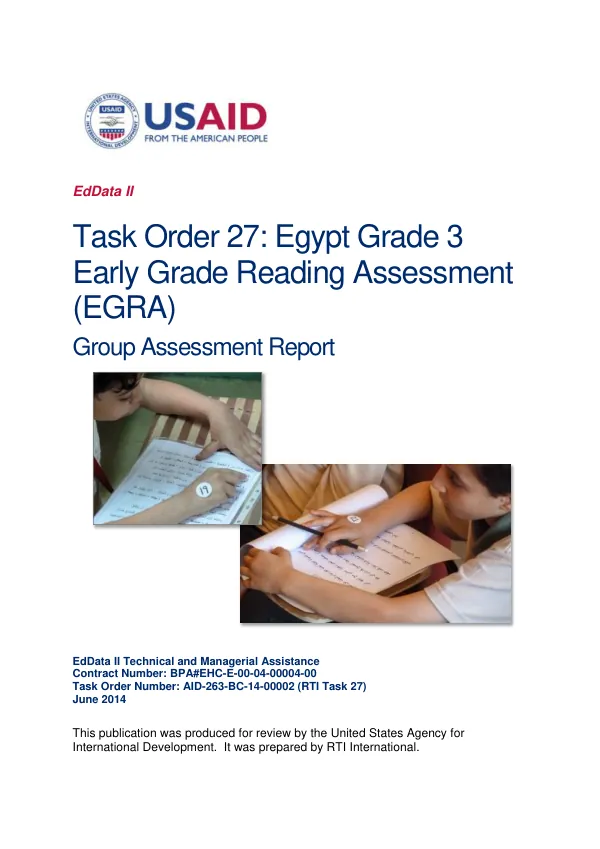
Annual Report: dot-EDU India Technology Tools for Teaching and Training
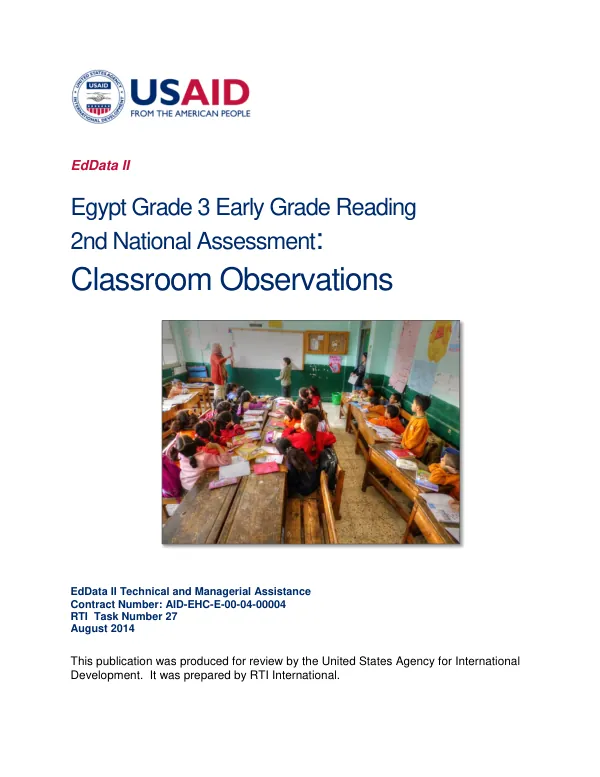
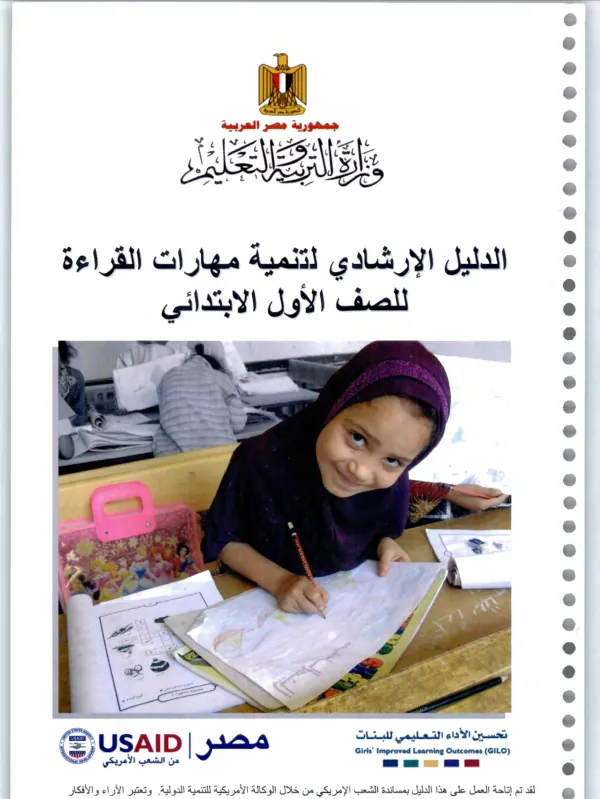
The Girls' Improved Learning Outcomes (GILO) project is a development initiative launched by the United States Agency for International Development (USAID) in Egypt, in cooperation with the Ministry of Education.
2011 · 21 pages
Sign in to readA free account is required to download.
Abstract
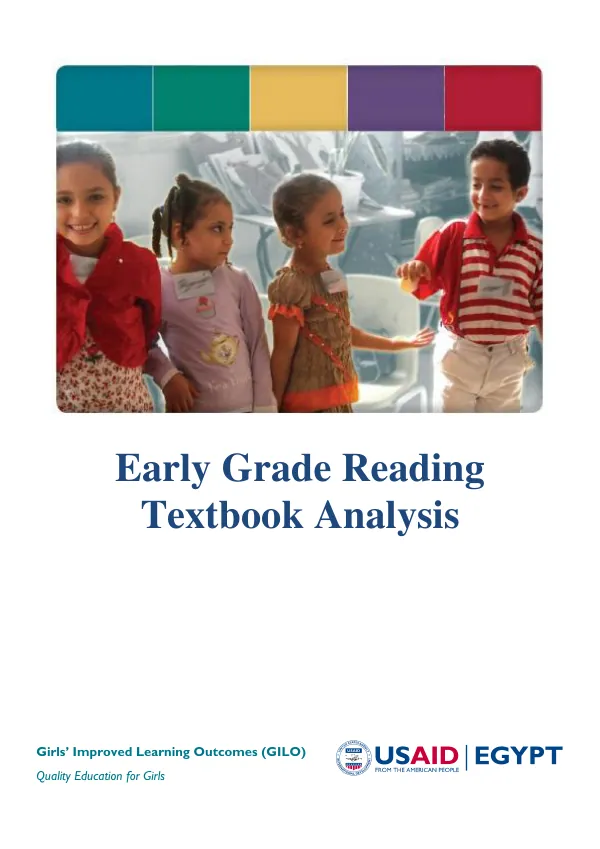
The project aims to improve the quality of education and learning achievements among girls in grades K-9 in 2800 classrooms of 166 schools in al-Fayoum, Beni Suef, al-Minia, and Qena governorates. The project focuses on expanding coverage of girls' education, improving the quality of teaching and learning, and strengthening the management and governance of education at the school level in targeted communities. The lead implementer for the project is RTI International, with partner support from World Education, Keys to Effective Learning (KEYS), Community & Institutional Development (CID), and Infonex. The project was made possible by the support of the American People through USAID. The contents of the study are the sole responsibility of the GILO project and do not necessarily reflect the view of USAID or the United States Government. The GILO project conducted a study on the Early Grade Reading Textbook Analysis, which aimed to examine the readability and accessibility of Arabic textbooks used in early primary grades. The study group consisted of Egypt MOE and GILO staff along with an Arabic language textbook expert from Ain Shams University in Cairo. The primary objective of the textbook analysis was to determine whether students in the early primary grades, with direct teacher instruction, could read and comprehend the official textbooks. The study group reviewed research literature on reading best practices and how decodable textbooks supplement teacher-guided instruction. They also reviewed previous studies that examined the readability and accessibility of Arabic textbooks. The study group endeavored to ensure that the quality of the textbook analysis study would contribute to the research literature by providing greater understanding of the impact of textbooks on students' learning to read Arabic. The study identified three over-arching factors that contribute to a student experiencing success at the "Instructional Reading Level": textbook readability, decidability, and predictability. Readability is generally defined as the predicted level at which a student can comprehend a text. Two factors are commonly used to make this prediction: familiarity of text (vocabulary) and syntactical complexity. Familiarity of text is defined by the balance in text of the three kinds of vocabulary encountered in texts: unknown words, partially known words, and known words. Syntactical complexity of text includes several features, such as the number of letters in a word, the number of syllables in a word, the number of words in a phrase, sentence, and paragraph, and the different kinds of words in a sentence. The percentage of unknown words has a profound impact on a student's ability to experience success at the "Instructional Reading Level." If the text contains too many unknown words, students will not derive meaning from the text. The study also identified three reading levels: Independent Reading Level, Instructional Reading Level, and Frustration Reading Level. The Instructional Reading Level is the best level for learning new vocabulary and requires the assistance of a teacher or tutor. The word error range allowed while reading orally to the teacher is from 2 to 5 word errors per 100 words of text, with at least 80 percent comprehension on simple recall questions about what they have read. The study found that the Arabic textbooks used in early primary grades in Egypt are not suitable for students to read and comprehend independently. The textbooks contain too many unknown words, making it difficult for students to derive meaning from the text. The study recommends that the Ministry of Education and the GILO project work together to develop new textbooks that are more readable and accessible for students in early primary grades. The study also recommends that teachers receive training on how to use the new textbooks effectively and provide support to students who are struggling to read and comprehend the text. The study suggests that the Ministry of Education and the GILO project work together to develop a reading program that is tailored to the needs of students in early primary grades and provides them with the necessary skills to read and comprehend Arabic texts. The study concludes that the development of new textbooks and the provision of teacher training and support are essential for improving the reading skills of students in early primary grades in Egypt. The study recommends that the Ministry of Education and the GILO project work together to implement these recommendations and improve the quality of education and learning achievements among girls in grades K-9 in Egypt.
Related documents