BANK FOR WEST AFRICAN DEVELOPMENT
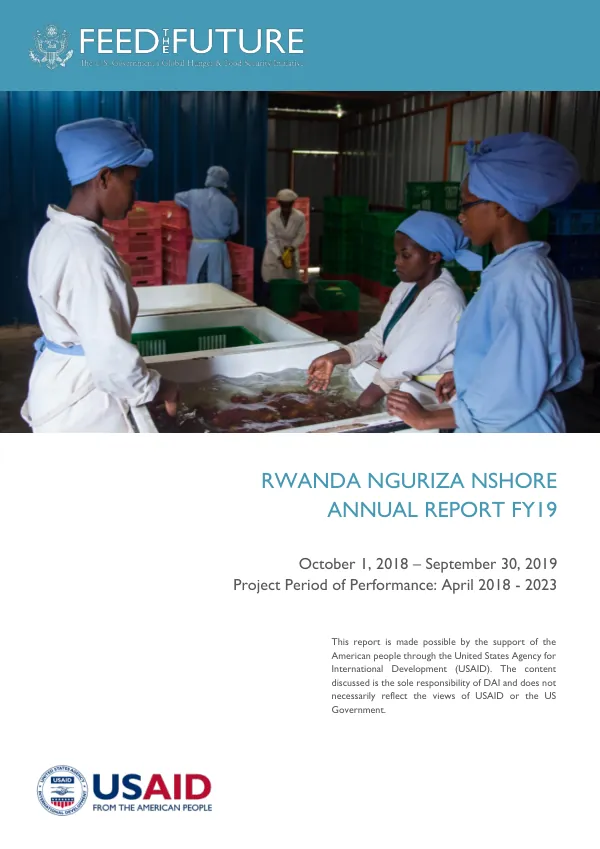
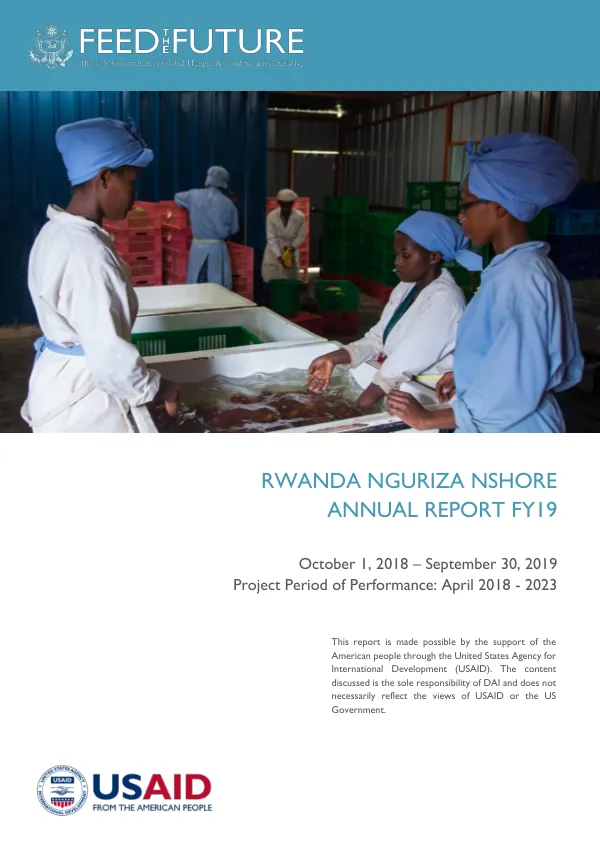
Annual Report FY19: Rwanda Nguriza Nshore
Rwanda Nguriza Nshore is a program aimed at promoting the growth of small and medium-sized enterprises (SMEs) in Rwanda.
2019 · 95 pages
Sign in to readA free account is required to download.
Abstract
The program is funded by the United States Agency for International Development (USAID) and is implemented by DAI Global, LLC. The program's main objective is to increase access to finance for SMEs, promote private and commercial investment, and strengthen the enabling environment for off-farm SMEs. The program is divided into three components. Component 1 focuses on expanding the capacity of financial institutions to lend to SMEs. This is achieved through training and capacity-building programs for financial institutions, as well as the development of new financial products and services tailored to the needs of SMEs. Component 2 aims to increase private and commercial investment in SMEs through the provision of investment capital, business advisory services, and market linkage facilitation. Component 3 focuses on strengthening the enabling environment for off-farm SMEs by improving the business climate, enhancing access to markets, and promoting entrepreneurship. During the program's second year, significant progress was made in all three components. In Component 1, financial institutions such as AB Bank Rwanda and Bank of Kigali received training and capacity-building support, resulting in an increase in lending to SMEs. In Component 2, investment capital was provided to SMEs, and business advisory services were offered to help them improve their performance and profitability. In Component 3, the program worked with the Government of Rwanda to improve the business climate and enhance access to markets for SMEs. The program also made significant progress in promoting gender equality, youth empowerment, and inclusion of persons with disabilities. The program also worked with youth and persons with disabilities to provide them with access to training and employment opportunities. The program's monitoring and evaluation framework was implemented, and progress was made in achieving the program's objectives. The program's performance indicators, including the number of SMEs that received financing, the amount of investment capital provided, and the number of jobs created, were tracked and reported. The program's success can be attributed to its collaborative approach, which brought together government agencies, financial institutions, and private sector partners to achieve its objectives. The program's ability to adapt to changing circumstances and learn from its experiences also contributed to its success. The program's communications strategy was effective in promoting its activities and achievements to stakeholders, and the program's operations and administrative activities were well-managed. Overall, the Rwanda Nguriza Nshore program has made significant progress in promoting the growth of SMEs in Rwanda and has contributed to the country's economic development. The program's success has been recognized by the Government of Rwanda, and it has been extended for an additional period to continue its activities.
Related documents