USAID DEC
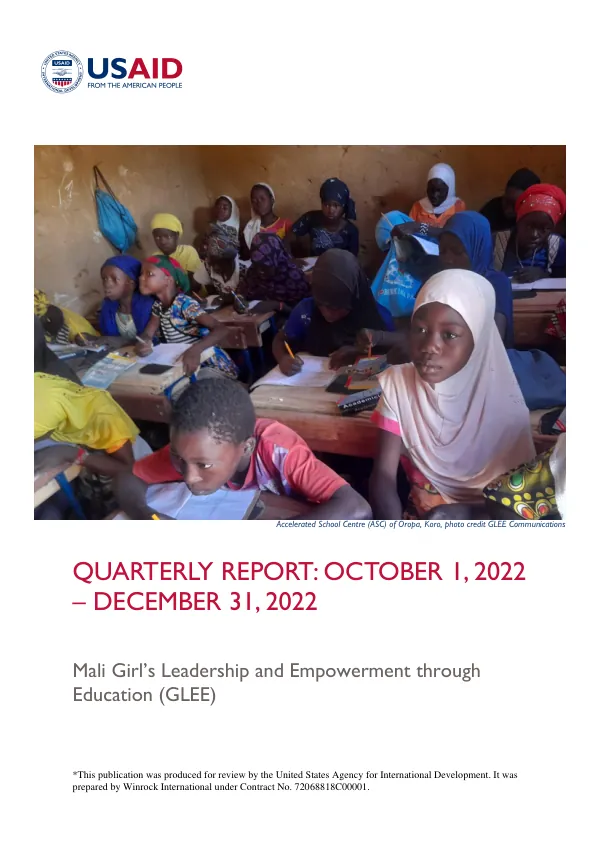
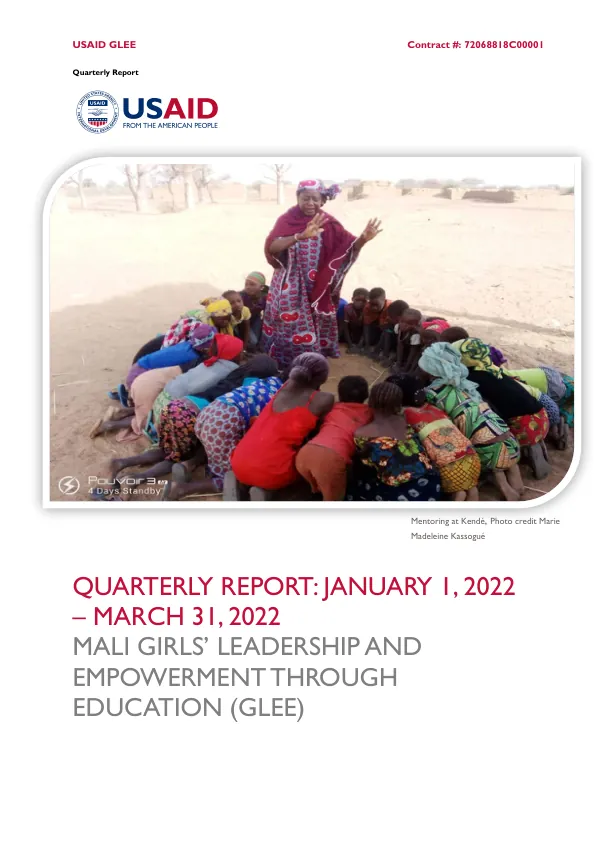
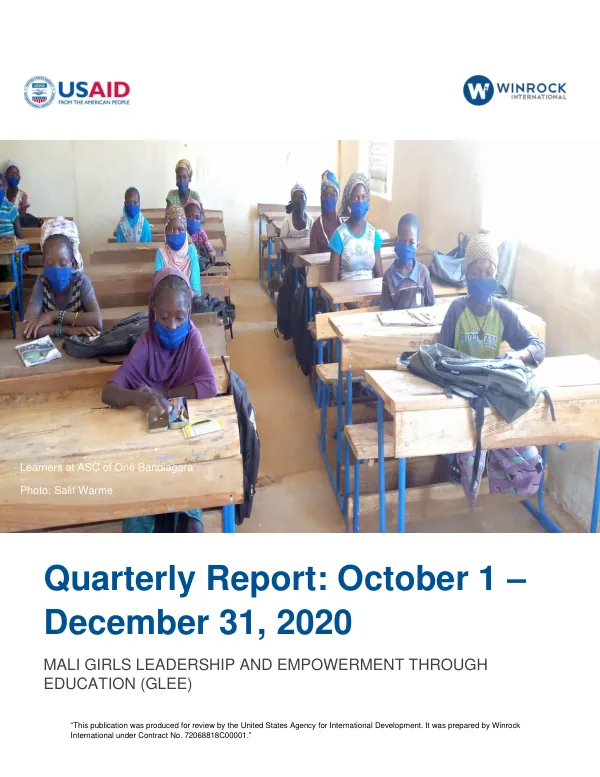
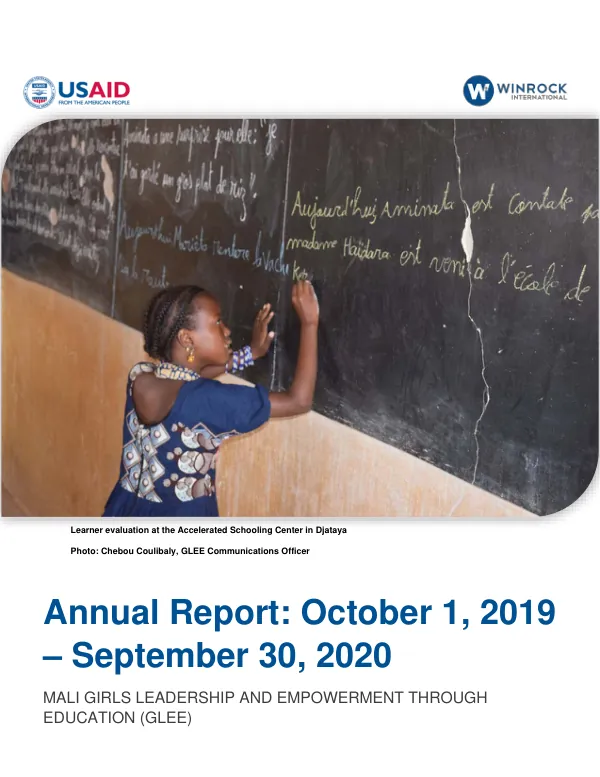
Annual Report: October 1, 2019 – September 30, 2020 MALI GIRLS LEADERSHIP AND EMPOWERMENT THROUGH EDUCATION (GLEE)
Sign inUSAID|MALAWI
Annual Report: October 1, 2019 – September 30, 2020 MALI GIRLS LEADERSHIP AND EMPOWERMENT THROUGH EDUCATION (GLEE)
The Mali Girls Leadership and Empowerment through Education (GLEE) project is a USAID-funded initiative aimed at improving the education and well-being of adolescent girls in Mali.
2020 · 112 pages
Sign in to readA free account is required to download.
Abstract
The project began in 2018 and operates under contract number 72068818C00001. The GLEE project focuses on three main objectives: decreasing key barriers to quality education, improving safety for adolescent girls, and increasing knowledge and adoption of positive health behaviors. One of the primary strategies employed by the GLEE project is the establishment of Accelerated Schooling Centers (ASCs) in rural areas. These centers provide girls with access to quality education and support services, including learning support opportunities, community mobilization, and monitoring by GLEE supervisors. By the end of the 2019-2020 school year, more than 2,500 girls had received training in sustainable agriculture techniques, and demonstration plots established in 15 communities showed yield improvements of 60% when applying the recommended practices. The GLEE project also focuses on promoting enrollment and retention through the payment of girls' school fees. In 2019-2020, the project helped identify girls re-enrolled in school who needed birth certificates, developed the Annual Program Statement (APS), and secured approval from the Chief of Party (COP). Additionally, the project issued in-kind grants to the Community Girls' Support (CGS) to support the reduction of barriers to girls' access to school. To improve safety for adolescent girls, the GLEE project supports schools in developing a code of conduct to be implemented by both teachers and pupils. The project also oversees the implementation of the code of conduct through close monitoring by the CGS/APE/AME and identifies adolescent girls and boys trained to monitor its implementation. Furthermore, the project establishes an SRGBV Referral System, organizes information sessions for young people on reporting, and develops Social Behavior Change Communication messages to prevent violence in the community. The GLEE project also focuses on increasing knowledge and adoption of positive health behaviors among adolescent girls. The project trains grandmothers and aunts to be Sexual and Reproductive Health (SRH) advocates, introduces and orients school and community leaders to a Comprehensive Life Skills Program, and trains teachers and health workers on "Adolescent and Youth Education on Hygiene and Reproductive Health." Additionally, the project promotes menstrual hygiene and hygiene supply use at the school level, trains peer educators, youth, and teachers on menstrual hygiene and hygiene in school, and renovates school latrines, considering gender and disability. Overall, the GLEE project aims to improve the education and well-being of adolescent girls in Mali by addressing key barriers to quality education, improving safety, and promoting positive health behaviors. The project's strategies and interventions are designed to support the development of adolescent girls and help them achieve their full potential.
Related documents