INTRAHEALTH
Quarterly Report: January 1, 2022 – March 31, 2022
The USAID Girls' Leadership and Empowerment through Education (GLEE) project aims to increase access to education for adolescent girls in Mali.
2022 · 61 pages
Sign in to readA free account is required to download.
Abstract
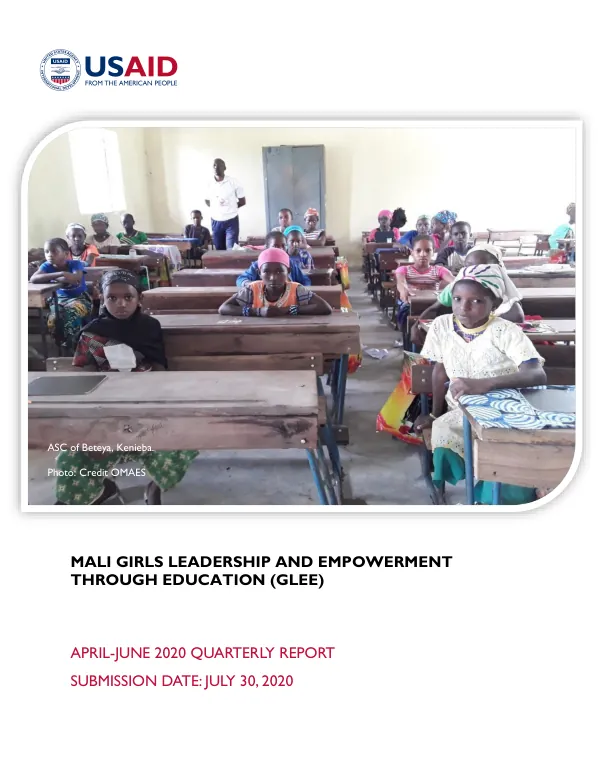
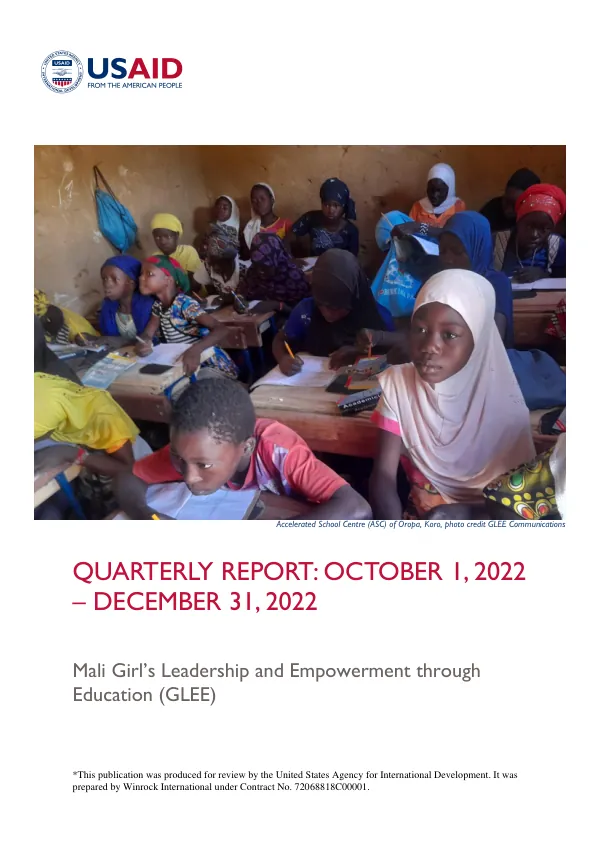
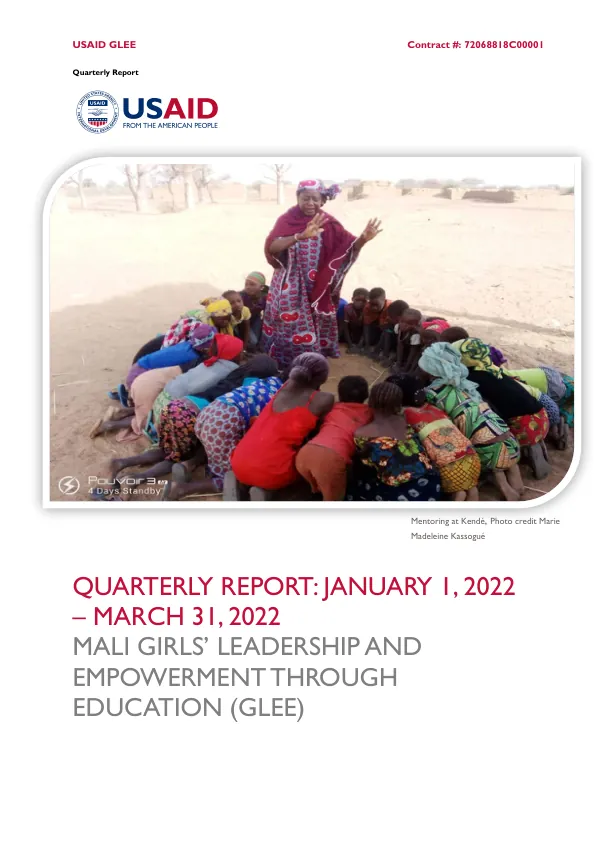
The project is led by Winrock International and consists of three partners: GAAS, OMAES, and IntraHealth. Community engagement and school support activities are implemented by GAAS, while OMAES facilitates Accelerated Schooling Centers and teacher professional development activities. IntraHealth is responsible for reproductive health and WASH activities. During the reporting period from January 1, 2022, to March 31, 2022, the project continued to operate the 170 Accelerated Schooling Centers in Mopti. Despite security threats and challenges posed by COVID-19 and ECOWAS sanctions, the project successfully adapted its approach to small group work and continued to work with local leaders, mentors, youth ambassadors, and peer educators. The project's objective is to decrease key barriers to access quality education for adolescent girls. To achieve this objective, the project focuses on three key areas: learning support opportunities for girls, teaching that is more responsive and relevant for adolescent girls, and communities and families that support girls' education. The project also aims to improve the safety of adolescent girls in schools and their communities, as well as increase knowledge and adoption of positive health behaviors among adolescent girls. During the reporting period, the project made significant progress in achieving its objectives. The number of learning support opportunities for girls increased, and teaching became more responsive and relevant for adolescent girls. Communities and families also began to support girls' education, and the project's efforts to improve safety for adolescent girls in schools and their communities showed positive results. The project's reproductive health and WASH activities also made significant progress during the reporting period. The project trained peer educators, youth ambassadors, and grandmothers on the culture of good health and hygiene practices, and community leaders on the education of adolescents and youth in health and reproduction. The project also established a referral system for students to access reproductive health and family planning services. The project's monitoring and evaluation activities continued to track progress towards its objectives. The project used a variety of indicators to measure progress, including the number of learning support opportunities for girls, the responsiveness and relevance of teaching for adolescent girls, and the level of community and family support for girls' education. The project's collaboration with local leaders, mentors, youth ambassadors, and peer educators was critical to its success during the reporting period. The project's ability to adapt its approach to small group work allowed it to continue operating effectively despite the challenges posed by security threats and COVID-19. The project's efforts to improve safety for adolescent girls in schools and their communities, as well as its reproductive health and WASH activities, also showed positive results. The project's next steps will focus on continuing to adapt its approach to the changing context in Mali, while maintaining its focus on improving access to education for adolescent girls and increasing knowledge and adoption of positive health behaviors among adolescent girls. The project will also continue to work with local leaders, mentors, youth ambassadors, and peer educators to ensure that its activities are effective and sustainable.
Related documents