USAID DEC
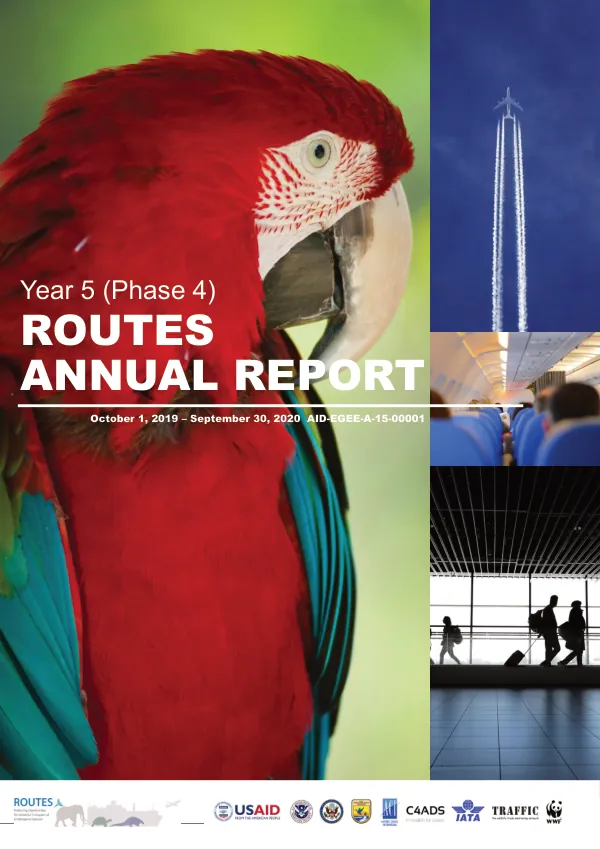
Annual Report: Year 5 (Phase 4) of the USAID Reducing Opportunities for Unlawful Transport of Endangered Species (ROUTES) Partnership
Sign inTRAFFIC INTERNATIONAL
Annual Report: Year 5 (Phase 4) of the USAID Reducing Opportunities for Unlawful Transport of Endangered Species (ROUTES) Partnership
The USAID Reducing Opportunities for Unlawful Transport of Endangered Species (ROUTES) Partnership is an innovative and transformational partnership that brings together transport and logistics companies, government agencies, development groups, law enforcement, conservation organizations, academia, and donors to disrupt wildlife trafficking activities.
2020 · 18 pages
Sign in to readA free account is required to download.
Abstract
The partnership's goal is to disrupt wildlife trafficking by reducing the use of legal transportation supply chains. The ROUTES Partnership has three main objectives: improving data and analytics on wildlife trafficking within passenger and cargo supply chains, engaging corporate leadership to collaborate to combat wildlife trafficking, and improving the ability of transportation personnel to assist law enforcement to combat wildlife trafficking. The partnership also aims to integrate wildlife trafficking into relevant industry standards and protocols and strengthen collaboration between transport and law enforcement. During the period from October 2019 to September 2020, the ROUTES Partnership faced unprecedented global change and challenges caused by the COVID-19 pandemic. Despite these challenges, the partnership delivered many excellent outcomes and products. The partnership adapted its strategy and work plan to more effectively provide support and relevant information to the aviation industry, while being considerate of the concerns that the industry was facing. The partnership's approaches and outreach moved to virtual platforms, including hosting a virtual booth at the Africa Tomorrow conference, and more resources were made available online, including a new awareness video. The results demonstrated in this report are testament to the continued efforts and support to reduce wildlife trafficking by members of the ROUTES Partnership and the air transport industry, even when faced with such a tumultuous year. The partnership's efforts included the launch of a new report, Animal Smuggling in Air Transport and Preventing Zoonotic Disease, which details the financial and operational impacts of pandemic-level human disease arising from zoonoses on the aviation industry. The report highlights the disease risks amplified by the evasion of animal health and safety protocols that wildlife trafficking can cause and urges specific actions by stakeholders to help prevent future outbreaks. The partnership also launched Runway to Extinction, a report focused globally and on six regions: Africa, the Americas, Asia, Europe, Middle East, and Oceania. The report provides recommendations to the air transport industry on how to address wildlife trafficking and has been reported on over 30 times. The ROUTES Dashboard received 835 unique users from over 100 countries between November 2019 and September 2020 and now incorporates a Route Risk Tool, which can be used to identify the level of risk of wildlife trafficking on selected flight routes. The partnership also engaged corporate leadership, with AirAsia and Ethiopian Airlines becoming engaged with ROUTES, totaling 21 airlines engaged and at least 16 which have taken direct and measurable action. Airport participation in the ACI Wildlife Task Force increased by 70% this year, and seven new airports signed the Buckingham Palace Declaration. Indicators were identified to support the air transport industry to report and communicate how their actions taken to combat wildlife trafficking contribute towards the UN Sustainable Development Goals 3, 14, 15, and 17. The partnership's efforts have resulted in significant progress in reducing wildlife trafficking, including the engagement of airlines and airports, the development of new tools and resources, and the launch of several reports and assessments. The partnership's continued efforts and support are crucial to addressing wildlife trafficking and building a sustainable and resilient future for the aviation industry.