USAID DEC
Antenatal Visit Checklist
Antenatal Care is a critical component of maternal and child health services.
2 pages
Sign in to readA free account is required to download.
Abstract
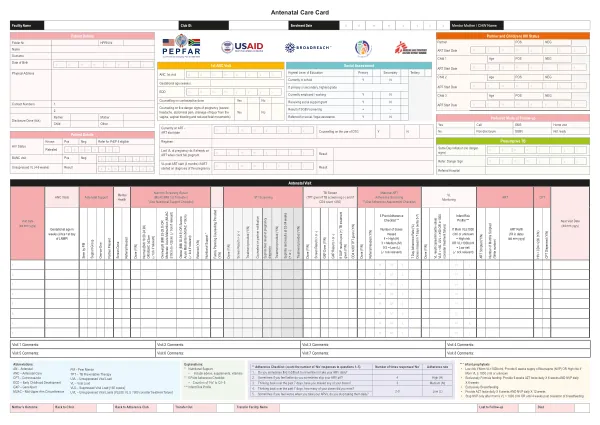
The antenatal visit schedule typically begins at 12-14 weeks of gestation and continues until delivery. Each visit is designed to monitor the mother's health, provide essential services, and promote healthy behaviors. The first antenatal visit is crucial, as it sets the stage for the entire pregnancy. During this visit, the healthcare provider conducts a thorough assessment of the mother's health, including a physical examination, blood pressure measurement, and urine analysis. The provider also reviews the mother's medical history, discusses her pregnancy, and provides guidance on healthy behaviors, such as a balanced diet and regular exercise. Subsequent antenatal visits are scheduled at regular intervals, typically every 4-6 weeks, to monitor the mother's health and the fetus's development. During these visits, the healthcare provider conducts a physical examination, measures the mother's weight and blood pressure, and performs a urine analysis. The provider also reviews the mother's medical history, discusses her pregnancy, and provides guidance on healthy behaviors. In addition to monitoring the mother's health, antenatal visits provide essential services, such as HIV testing, syphilis testing, and tuberculosis (TB) screening. The healthcare provider also provides counseling on family planning, safe sex practices, and the importance of exclusive breastfeeding. The antenatal visit schedule also includes regular check-ups for the infant, starting from birth. The healthcare provider conducts a thorough assessment of the infant's health, including a physical examination, weight measurement, and urine analysis. The provider also reviews the infant's medical history, discusses their health, and provides guidance on healthy behaviors, such as exclusive breastfeeding and regular vaccinations. The infant's risk profile is assessed at each visit, and the healthcare provider provides guidance on infant prophylaxis, including the administration of Nevirapine (NVP) and AZT. The provider also monitors the infant's viral load and provides guidance on infant feeding practices, such as exclusive breastfeeding and formula feeding. The antenatal visit schedule is designed to promote healthy behaviors, prevent complications, and ensure the best possible outcomes for both the mother and the infant. Regular check-ups and essential services provided during these visits play a critical role in maintaining the health and well-being of both the mother and the infant. The 5-point adherence checklist is used to assess the mother's adherence to antiretroviral therapy (ART). The checklist includes questions about the mother's ability to remember to take her ART daily, her willingness to take her ART even when she feels better, and her ability to take her ART even when she feels worse. The healthcare provider uses the checklist to assess the mother's adherence and provide guidance on how to improve it. The infant's viral load is monitored regularly, and the healthcare provider provides guidance on infant prophylaxis, including the administration of NVP and AZT. The provider also monitors the infant's weight and height, and provides guidance on infant feeding practices, such as exclusive breastfeeding and formula feeding. The antenatal visit schedule is an essential component of maternal and child health services. Regular check-ups and essential services provided during these visits play a critical role in maintaining the health and well-being of both the mother and the infant.