DELOITTE CONSULTING, LLP
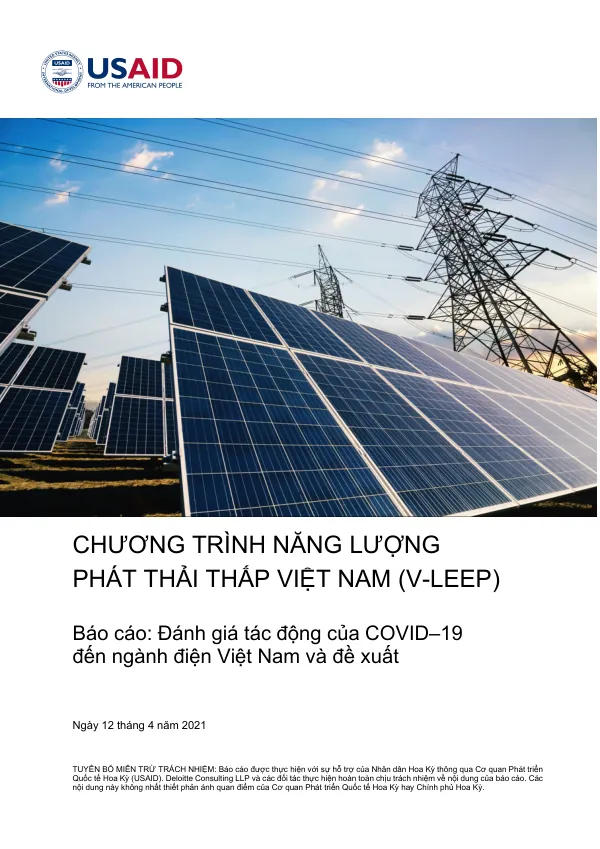
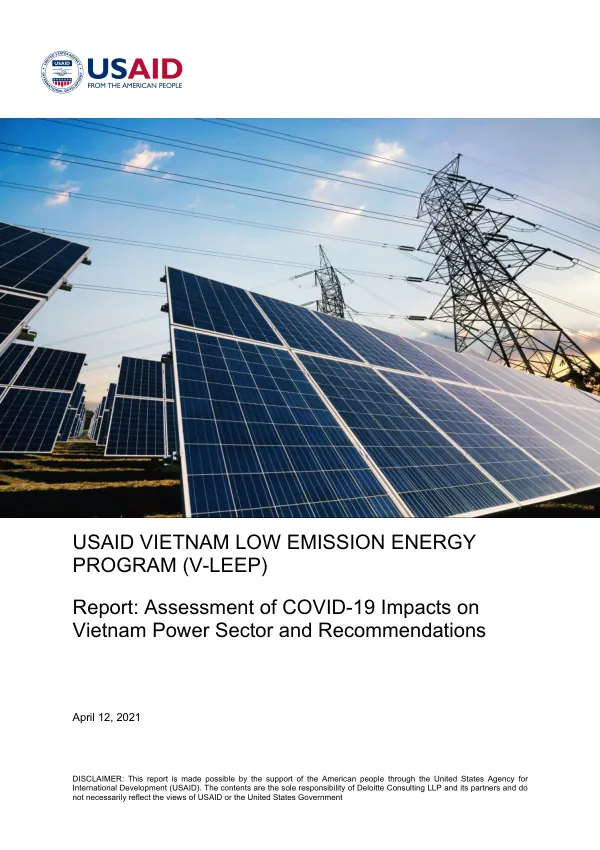
Assessment of COVID-19 Impacts on Vietnam Power Sector and Recommendations
The Vietnam Low Emission Energy Program (V-LEEP) was established to support the Government of Vietnam in its efforts to reduce greenhouse gas emissions from the energy sector.
2021 · 58 pages
Sign in to readA free account is required to download.
Abstract
The program's primary objective is to promote the development and use of renewable energy sources, improve energy efficiency, and enhance the resilience of the power sector to climate change. In response to the COVID-19 pandemic, the V-LEEP team conducted an assessment of the impacts on the Vietnam power sector. The assessment aimed to identify the effects of the pandemic on the power sector's operations, workforce, and supply chain, as well as the sector's response to the crisis. The research methodology involved a combination of desk reviews, interviews with key stakeholders, and data collection from various sources. The COVID-19 pandemic had a significant impact on the Vietnam power sector, particularly in the areas of workforce management, service continuity, and business and production continuity. The pandemic led to a reduction in power demand, particularly from commercial and industrial customers, resulting in a decrease in electricity output. The power sector's workforce was also affected, with many employees being required to work from home or take leave due to health concerns. The power sector's response to the pandemic was characterized by a focus on maintaining service continuity and ensuring the reliability of the power supply. The Electricity of Vietnam (EVN) and other power sector operating companies implemented various measures to mitigate the impacts of the pandemic, including remote work arrangements, social distancing measures, and enhanced cleaning and disinfection protocols. The assessment identified several key findings, including the need for the power sector to develop a more robust business continuity plan, improve its supply chain resilience, and enhance its workforce management capabilities. The report also made several recommendations, including the development of a comprehensive business continuity plan, the implementation of remote work arrangements, and the enhancement of supply chain resilience through the use of digital technologies. The assessment highlighted the importance of the power sector's response to the pandemic, particularly in terms of maintaining service continuity and ensuring the reliability of the power supply. The report's findings and recommendations are intended to support the power sector in its efforts to recover from the pandemic and build a more resilient and sustainable energy system for the future. The power sector's response to the pandemic was also influenced by the Government of Vietnam's policies and regulations, including the Directive 16/CT-TTg on temporary working conditions. The directive allowed for the implementation of remote work arrangements and other measures to mitigate the impacts of the pandemic. The assessment also identified several challenges facing the power sector, including the need to improve its supply chain resilience, enhance its workforce management capabilities, and develop a more robust business continuity plan. The report's recommendations are intended to support the power sector in addressing these challenges and building a more resilient and sustainable energy system for the future. The power sector's response to the pandemic was also influenced by the use of digital technologies, including remote work arrangements, online platforms, and digital communication tools. The assessment highlighted the importance of the power sector's use of digital technologies in maintaining service continuity and ensuring the reliability of the power supply. The report's findings and recommendations are intended to support the power sector in its efforts to recover from the pandemic and build a more resilient and sustainable energy system for the future. The assessment provides a comprehensive analysis of the impacts of the pandemic on the power sector and identifies several key areas for improvement, including workforce management, supply chain resilience, and business continuity planning.