FANTA
Assessment of Nutritional Status for Adults, Using Weight and Height
Assessment of Nutritional Status for Adults Using Weight and Height is a critical component of healthcare, particularly for individuals living with HIV/AIDS (PLWHA).
2 pages
Sign in to readA free account is required to download.
Abstract
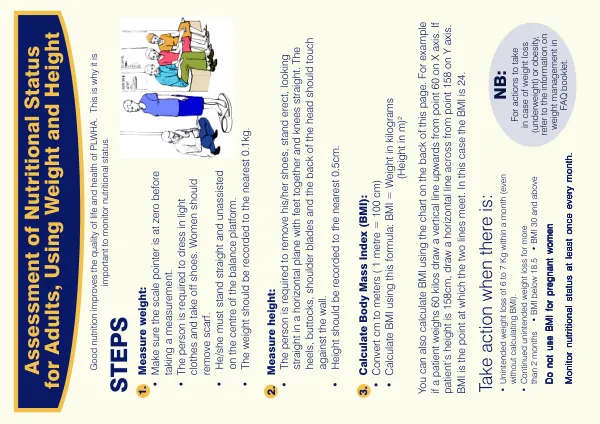
Good nutrition improves the quality of life and health of PLWHA, making it essential to monitor nutritional status regularly. To assess nutritional status, weight and height measurements are taken. Weight should be recorded to the nearest 0.1kg, and height should be recorded to the nearest 0.5cm. The Body Mass Index (BMI) is then calculated using the formula: BMI = Weight in kilograms / (Height in meters)2. BMI is a widely used indicator of nutritional status, with the following categories: underweight (BMI < 18.5), normal weight (BMI 18.5-24.9), overweight (BMI 25-29.9), and obese (BMI 30 and above). The World Health Organization (WHO) recommends using the following BMI categories: underweight (BMI < 18.5), normal weight (BMI 18.5-24.9), overweight (BMI 25-29.9), and obese (BMI 30 and above). The BMI reference table provides a visual representation of these categories, with different colors indicating underweight, normal weight, overweight, and obesity. Monitoring nutritional status at least once every month is essential for individuals with HIV/AIDS. This involves taking regular weight and height measurements and calculating BMI. If the BMI falls below 18.5, the individual is considered underweight and may require nutritional support. If the BMI is 30 or above, the individual is considered obese and may require lifestyle modifications to reduce weight. In addition to BMI, other indicators of nutritional status include unintended weight loss of 6 to 7 kg within a month, continued unintended weight loss for more than 2 months, and BMI below 18.5. If any of these indicators are present, the individual should be referred to a healthcare provider for further evaluation and treatment. The Regional Centre for Quality of Health Care, Makerere University Medical School, in collaboration with the FANTA and LINKAGES projects, has developed a tool for assessing nutritional status using weight and height measurements. This tool is designed to be user-friendly and accessible to healthcare providers in resource-limited settings. Financial support for this project was provided by USAID/REDSO/ESA.
Related documents