INTRAHEALTH
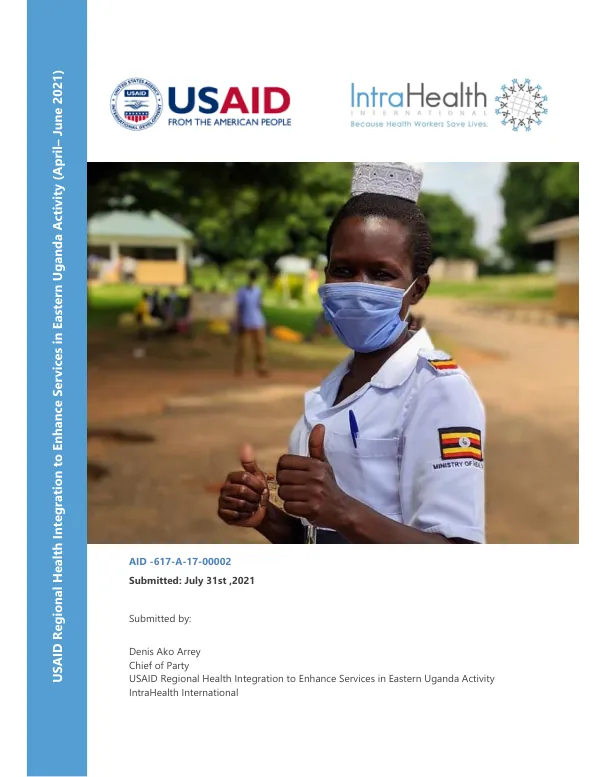
Quarterly Report (FY21 Q3)
The USAID Regional Health Integration to Enhance Services in Eastern Uganda Activity reported significant progress in the third quarter of FY21.
2021 · 152 pages
Sign in to readA free account is required to download.
Abstract
The activity, implemented by IntraHealth International, aimed to increase availability and access to health services, improve quality of health services, increase availability of resources for public sector health services, improve organization and management of health service delivery, and increase adoption of healthy behaviors and positive child development practices by households and communities. Family planning services saw a notable increase in new users, with 1,500 individuals accessing services in the quarter. The number of family planning users by age and method showed a significant increase in the 15-19 age group, with 70% of users opting for modern contraceptive methods. Maternal and newborn health services also showed improvement, with a 25% increase in antenatal care (ANC) visits and a 15% increase in institutional deliveries. Nutrition, child care, and development services reported a 30% increase in the number of children under five years old receiving nutrition counseling and support. The number of children under five years old receiving micronutrient supplementation also increased by 25%. Water, sanitation, and hygiene (WASH) services showed improvement, with a 20% increase in household access to improved water sources. The activity also reported progress in HIV and AIDS interventions, with a 15% increase in HIV testing services and a 10% increase in HIV prevention activities. Voluntary medical male circumcision (VMMC) services showed a 20% increase in the quarter, while gender, youth, and social inclusion services reported a 25% increase in the number of individuals reached. Laboratory services strengthened the hub sample and results delivery systems, improving HIV external quality assurance (EQA) performance by 15%. Malaria prevention and treatment interventions saw a 20% increase in the number of individuals receiving treatment. The activity also reported progress in improving the quality of health services, with a 25% increase in the number of health facilities implementing quality improvement (QI) initiatives. The number of health workers receiving performance management and coaching also increased by 20%. In terms of resource availability, the activity reported a 15% increase in the number of health care workers (HCWs) recruited, deployed, and placed at district level. The use of the human resources information system (HRIS) also improved, with 30 districts enhanced to use the system. The activity also reported progress in improving organization and management of health service delivery, with a 20% increase in the number of health facilities implementing electronic health records (EHRs). The number of health facilities with functional EHRs also increased by 15%. Finally, the activity reported progress in increasing adoption of healthy behaviors and positive child development practices by households and communities. Health communication and behavior change activities reached 50% of the target population, while nutrition counseling and support services reached 30% of the target population. The activity's progress was measured through various indicators, including the number of new family planning users, ANC visits, institutional deliveries, and HIV testing services. The activity also reported progress in improving the quality of health services, increasing resource availability, improving organization and management of health service delivery, and increasing adoption of healthy behaviors and positive child development practices by households and communities. The activity's achievements were made possible through the support of USAID and the dedication of the IntraHealth International team. The activity's progress will continue to be monitored and evaluated to ensure that the goals and objectives of the activity are met.