ENVIRONMENTAL INCENTIVES, LLC
Bangladesh Tropical Forest and Biodiversity (FAA 118/119) Analysis - Final Report
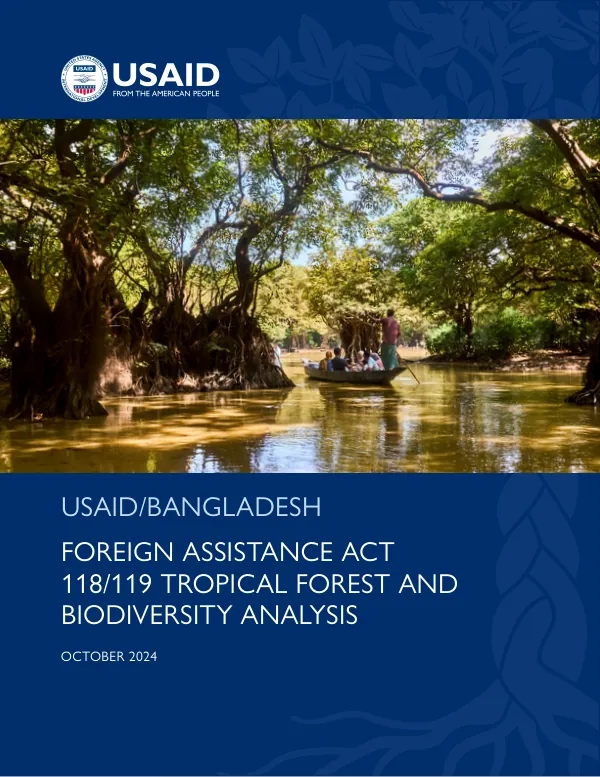
The tropical forest and biodiversity analysis in Bangladesh is a comprehensive report that assesses the current status of the country's biodiversity and tropical forests.
2024 · 149 pages
Sign in to readA free account is required to download.
Abstract
The report is based on a thorough analysis of various ecosystem types, including tropical forests, and evaluates the impact of human activities on these ecosystems. The analysis highlights the importance of conservation efforts to protect the country's biodiversity and tropical forests. The report begins by providing an overview of the country's location and development context, including its biophysical setting. Bangladesh is a densely populated country with a diverse range of ecosystems, including tropical forests, mangroves, and wetlands. The country's biophysical setting is characterized by a monsoon climate, with high levels of rainfall and flooding during the monsoon season. The report then examines the status of biodiversity and tropical forests in Bangladesh, including major ecosystem types and their status. The country's tropical forests are found in the Chittagong Hill Tracts and the Sundarbans, and are characterized by high levels of species diversity and endemism. However, these forests are under threat from deforestation, habitat fragmentation, and climate change. The report also evaluates the impact of human activities on the country's biodiversity and tropical forests. The main drivers of deforestation and habitat loss are agriculture, urbanization, and infrastructure development. The report highlights the need for sustainable forest management practices and the protection of critical habitats to conserve the country's biodiversity. The report also examines the legal framework affecting conservation in Bangladesh, including national laws, policies, and strategies. The country has a number of laws and policies in place to protect its biodiversity and tropical forests, including the Forest Act, the Wildlife Act, and the Environmental Conservation Act. However, the report highlights the need for stronger enforcement of these laws and policies to effectively protect the country's biodiversity. The report also identifies the main threats to biodiversity and tropical forests in Bangladesh, including direct threats such as deforestation and habitat loss, and drivers and enablers of these threats, such as population growth and poverty. The report highlights the need for a comprehensive approach to conservation that addresses the root causes of these threats. The report concludes by outlining the actions necessary to conserve and sustainably manage biodiversity and tropical forests in Bangladesh. The report recommends a number of strategies, including the establishment of protected areas, the promotion of sustainable forest management practices, and the protection of critical habitats. The report also highlights the need for stronger enforcement of laws and policies to protect the country's biodiversity and tropical forests. The report also examines the extent to which the USAID mission in Bangladesh meets the actions necessary to conserve and sustainably manage biodiversity and tropical forests. The report highlights the need for a more comprehensive approach to conservation that addresses the root causes of biodiversity loss and habitat degradation.