USAID DEC
Conservation Genetics Application to Safeguard Biodiversity: Training and Curriculum Report
Sign inDAI
Conservation Genetics Application to Safeguard Biodiversity: Training and Curriculum Report
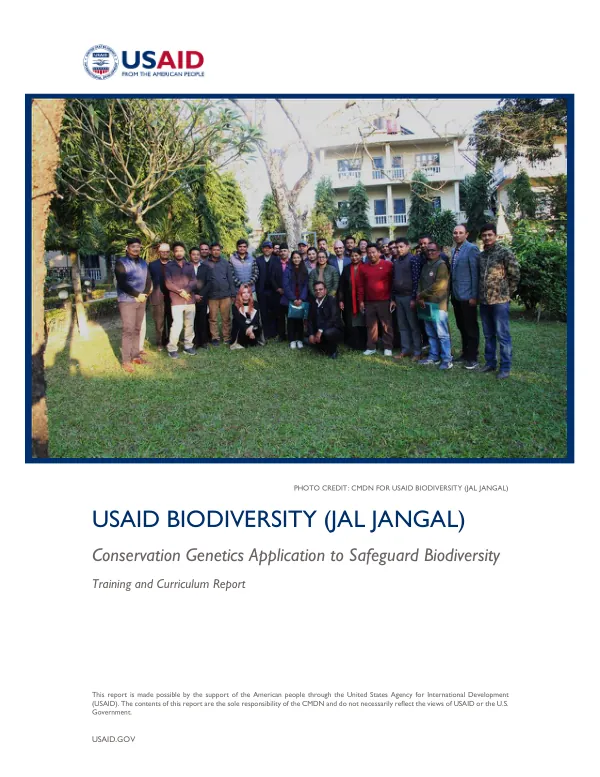
The Conservation Genetics Application to Safeguard Biodiversity training and curriculum report is a comprehensive document outlining the objectives, methodologies, and outcomes of a three-workshop series conducted under the USAID Biodiversity-CMDN T02 program.
2024 · 53 pages
Sign in to readA free account is required to download.
Abstract
The program aimed to enhance the capacity of conservation professionals in Nepal to apply conservation genetics principles in safeguarding biodiversity. The program's general objective was to develop a training curriculum that would equip conservation professionals with the necessary skills and knowledge to apply conservation genetics in their work. The specific objectives of the program included developing a comprehensive training curriculum, conducting three workshops, and evaluating the effectiveness of the training program. The first workshop, conducted in [insert date], brought together 25 participants from various conservation organizations in Nepal. The workshop focused on introducing conservation genetics principles and their application in conservation efforts. The participants received training on DNA forensics, wildlife forensics, and challenges in DNA forensics. The workshop also included a practical demonstration of DNA sampling and sequencing using the MinION DNA sequencer. The second workshop, conducted in [insert date], built on the knowledge and skills gained during the first workshop. The workshop focused on advanced topics in conservation genetics, including DNA analysis and interpretation. The participants received training on DNA analysis software and participated in a practical exercise on DNA sequencing and analysis. The third workshop, conducted in [insert date], focused on the application of conservation genetics in conservation efforts. The workshop brought together 30 participants from various conservation organizations in Nepal. The participants received training on the use of conservation genetics in conservation planning, monitoring, and evaluation. The workshop also included a practical exercise on developing a conservation plan using conservation genetics principles. Throughout the three workshops, the participants received training from a team of experts in conservation genetics, including Dr. Bikalpa Karki, Mr. Shanta Bahadur Magar, and Mr. Abhinash Thapa Magar. The participants also had the opportunity to interact with each other and share their experiences and knowledge. The program evaluation revealed that the training program was effective in enhancing the capacity of conservation professionals in Nepal to apply conservation genetics principles in safeguarding biodiversity. The participants reported a significant increase in their knowledge and skills in conservation genetics, and they expressed their appreciation for the training program. The program's outcomes include the development of a comprehensive training curriculum in conservation genetics, the enhancement of the capacity of conservation professionals in Nepal, and the application of conservation genetics principles in conservation efforts. The program's success demonstrates the importance of conservation genetics in safeguarding biodiversity and the need for continued capacity building in this area. The program's recommendations include the continued development of training programs in conservation genetics, the establishment of a network of conservation professionals in Nepal, and the application of conservation genetics principles in conservation efforts. The program's success also highlights the importance of collaboration between conservation organizations, research institutions, and government agencies in safeguarding biodiversity. The program's impact will be sustained through the continued application of conservation genetics principles in conservation efforts, the establishment of a network of conservation professionals in Nepal, and the continued development of training programs in conservation genetics. The program's success demonstrates the potential of conservation genetics to contribute to the safeguarding of biodiversity in Nepal and beyond.