CHEMONICS
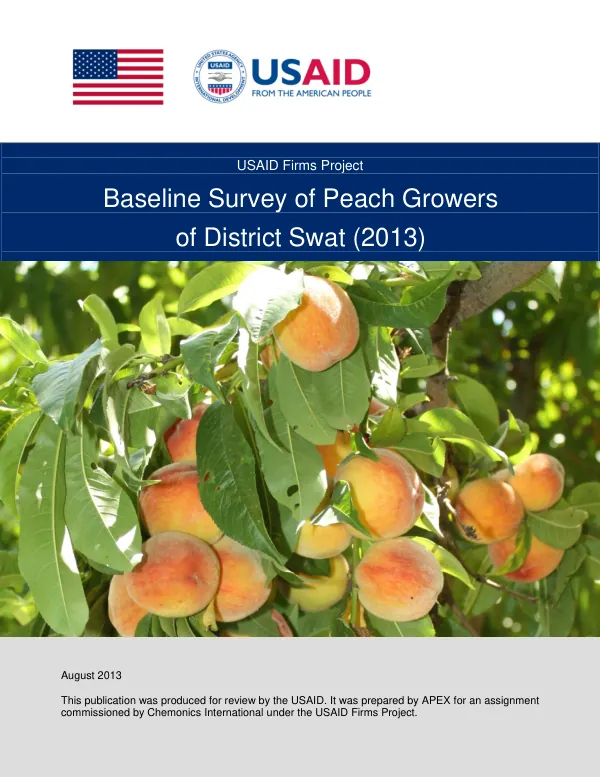
Baseline Survey of Peach Growers of District Swat (2013)
The USAID Firms Project Baseline Survey of Peach Growers of District Swat (2013) aimed to establish baselines for peach growers in the Swat district of Khyber Pakhtunkhwa, Pakistan.
2013 · 72 pages
Sign in to readA free account is required to download.
Abstract
The survey was conducted to assess farm management, production, and marketing practices, as well as access to credit services, technical advice, and training facilities, input supplies, market information, and market linkages. The survey found that the peach value chain sectors create employment opportunities for a large number of people in the Swat district. However, a significant amount of produce is wasted due to pre- and post-harvest losses. The growth of these sectors is limited due to a lack of access to inputs supplies, market information, market linkages, and credit facilities, as well as an untrained workforce, poor management practices, and inability to meet product standards. The survey collected data from 1,200 peach growers in the Swat district, representing 60% of the total number of peach growers in the area. The data was collected through a survey instrument that included questions on farm ownership, management, and irrigation, as well as information on labor, production, and marketing practices. The survey found that the majority of peach growers in the Swat district are small-scale farmers, with an average landholding size of 2.5 acres. The majority of farmers use traditional irrigation methods, and the majority of labor is hired on a seasonal basis. The survey also found that the majority of peach farmers face difficulties in accessing credit facilities, technical advice, and training facilities. In terms of production and marketing practices, the survey found that the majority of peach farmers sell their produce through local markets, with the majority of sales taking place during the peak season. The survey also found that the majority of peach farmers face difficulties in accessing market information and market linkages. The survey concluded that the peach sector in the Swat district faces several challenges, including a lack of access to inputs supplies, market information, market linkages, and credit facilities, as well as an untrained workforce, poor management practices, and inability to meet product standards. The survey recommended that the USAID Firms Project should focus on improving access to inputs supplies, market information, market linkages, and credit facilities, as well as providing training and technical advice to peach farmers. The survey also recommended that the USAID Firms Project should focus on improving the quality of peach production, including the use of modern irrigation systems and the adoption of good agricultural practices. The survey also recommended that the USAID Firms Project should focus on improving the marketing and sales of peach produce, including the use of modern marketing techniques and the establishment of market linkages. The survey provided several appendices, including a scope of work and deliverables, a peach questionnaire, a peach key informant interview guide, and tehsil-wise production data. The survey also provided information on the educational level of respondents, as well as their sales categories and financial requirements. Overall, the USAID Firms Project Baseline Survey of Peach Growers of District Swat (2013) provided valuable information on the peach sector in the Swat district, including the challenges faced by peach farmers and the opportunities for improvement. The survey provided recommendations for improving the peach sector, including improving access to inputs supplies, market information, market linkages, and credit facilities, as well as providing training and technical advice to peach farmers.