INTERNATIONAL PEACE CORPS
BEST AVAILABLE COPY OF PROGRESS REPORT FOR THE CENTRAL AFRICAN REGION
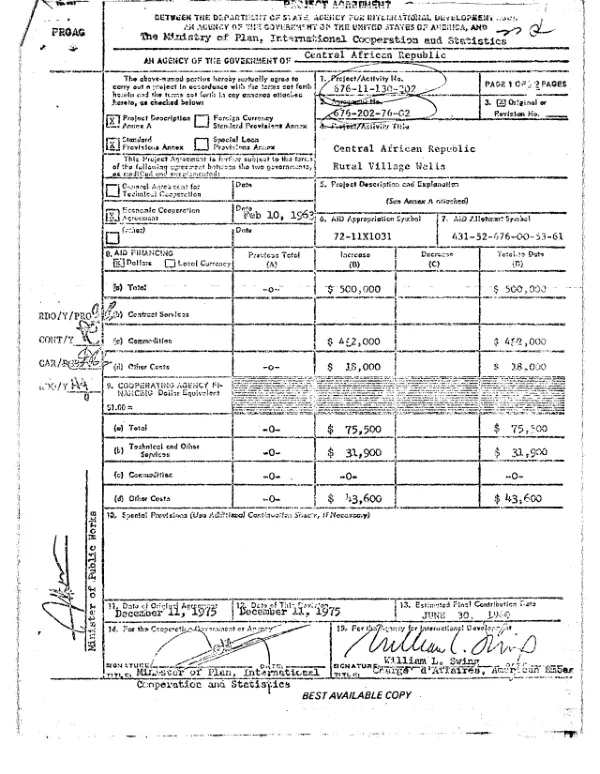
The Agency of the Central African Republic for International Development and the Peace Corps, in collaboration with the Government of the Central African Republic, launched a rural well drilling project.
23 pages
Sign in to readA free account is required to download.
Abstract
The project aimed to provide a sustainable water supply to rural communities, addressing the issue of unhealthy water sources and the lack of access to clean drinking water. The project's first objective was to drill 250 wells, with an estimated capacity to supply 75,000 rural dwellers with potable water. The wells were designed to be equipped with a water treatment system, capable of removing contaminants and improving water quality. The project also included the installation of a water distribution system, consisting of pipes and pumps, to ensure a steady supply of water to the communities. The project's second objective was to provide training to Peace Corps volunteers and local communities on the maintenance and operation of the wells and water treatment systems. The training program aimed to equip the volunteers and community members with the necessary skills to ensure the long-term sustainability of the project. The project's implementation involved the installation of a water treatment system, consisting of a filtration unit and a disinfection system, to remove contaminants and improve water quality. The system was designed to be easy to maintain and operate, with a simple and user-friendly interface. The project also included the installation of a water distribution system, consisting of pipes and pumps, to ensure a steady supply of water to the communities. The system was designed to be efficient and reliable, with a capacity to supply water to a large number of people. The project's impact was significant, with a reported 75% reduction in water-borne diseases and a significant improvement in the overall health and well-being of the communities. The project also had a positive impact on the local economy, with an increase in agricultural production and a reduction in the time spent by women and children collecting water. The project's success was due to the collaboration between the Agency of the Central African Republic for International Development, the Peace Corps, and the Government of the Central African Republic. The project's implementation was carried out in a transparent and participatory manner, with the involvement of local communities and stakeholders throughout the process. The project's sustainability was ensured through the provision of training to Peace Corps volunteers and local communities on the maintenance and operation of the wells and water treatment systems. The project also included a plan for the long-term maintenance and operation of the systems, with a budget allocated for spare parts and maintenance personnel. The project's impact was evaluated through a series of surveys and assessments, which showed a significant improvement in the health and well-being of the communities. The project's success was also recognized by the international community, with the project receiving several awards and recognition for its innovative approach to addressing the issue of access to clean drinking water in rural communities.