TETRA TECH
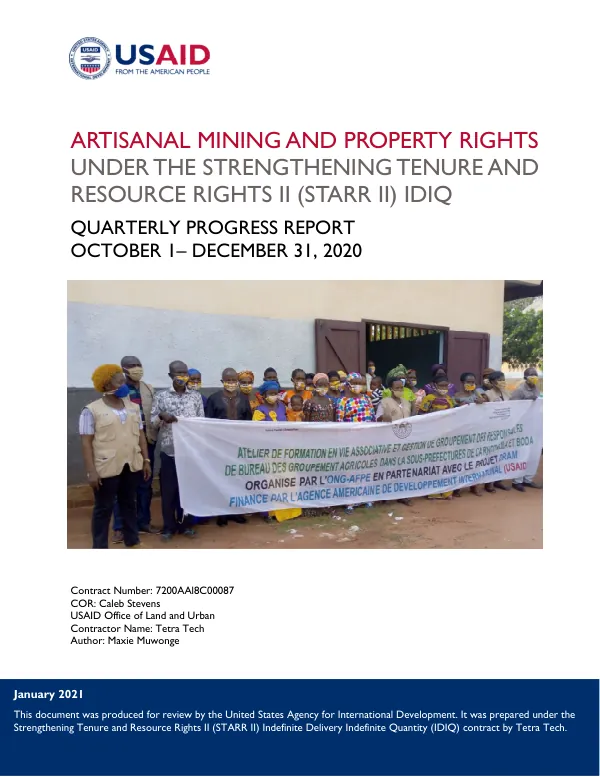
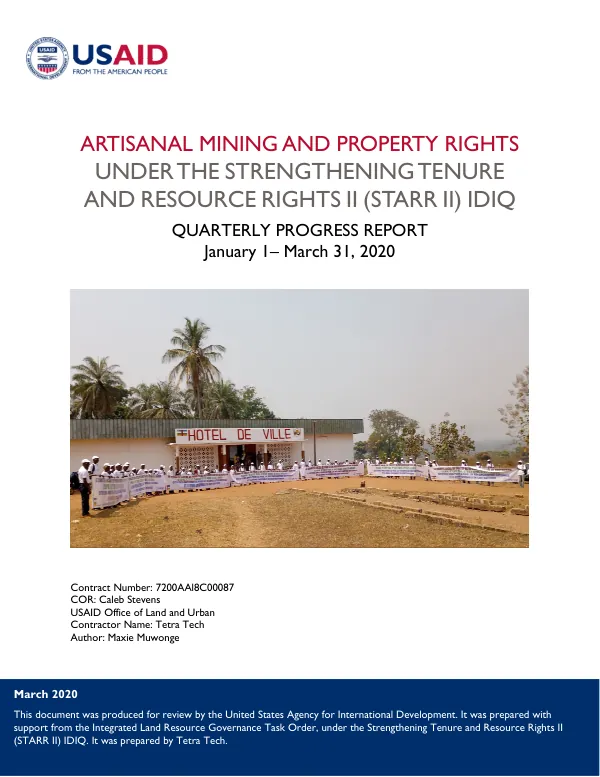
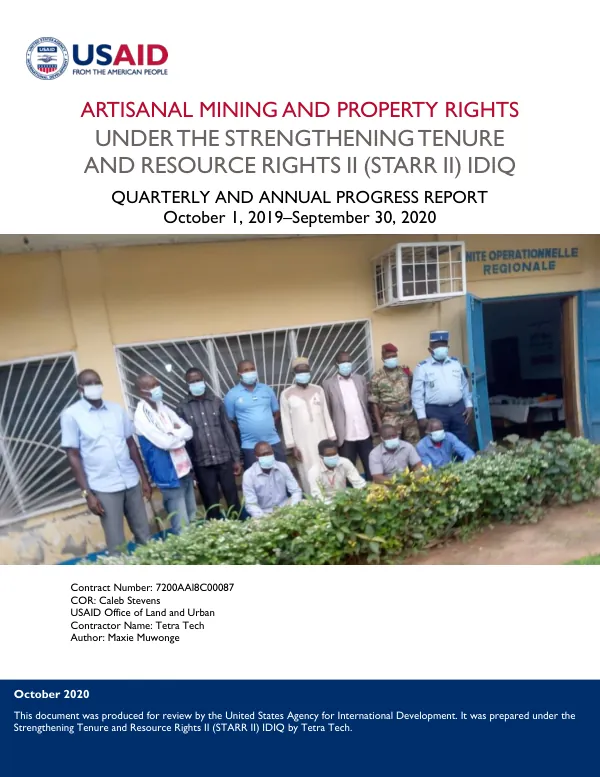
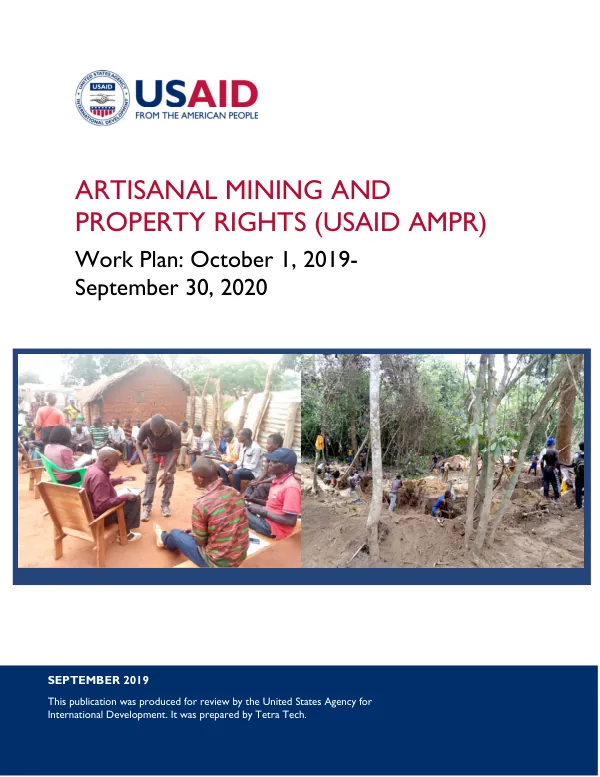
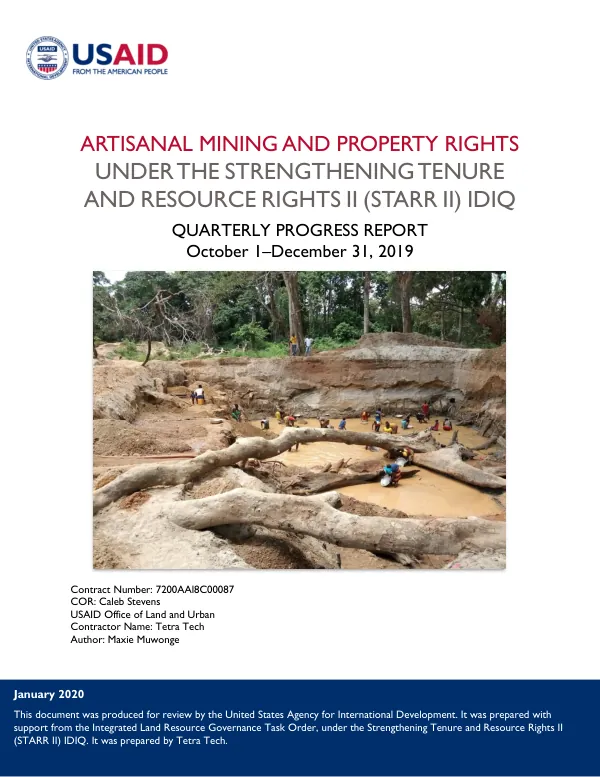
Quarterly Progress Report: Artisanal Mining and Property Rights
The artisanal mining and property rights initiative in the Central African Republic (CAR) aims to improve compliance with Kimberley Process requirements and promote licit economic activities.
2020 · 45 pages
Sign in to readA free account is required to download.
Abstract
The project is implemented by Tetra Tech under the Strengthening Tenure and Resource Rights II (STARR II) IDIQ, with funding from the United States Agency for International Development (USAID). The initiative focuses on four objectives: assisting the Government of CAR (GoCAR) to improve compliance with Kimberley Process requirements, strengthening community resilience and social cohesion, increasing awareness and understanding of responsible gold supply chains, and improving USAID programming through increased understanding of linkages between artisanal mining and development issues. The project's first objective aims to improve legal, policy, and institutional frameworks for conflict-free diamond production at domestic and regional levels. This involves expanding formalization of land and resource rights in artisanal diamond mining communities, increasing awareness of Kimberley Process requirements, and strengthening the capacity of GoCAR to manage and expand KP-compliant zones effectively. The project also supports inclusive community dialogue, particularly between different religious and ethnic groups, to resolve conflicts over land and natural resources. The second objective focuses on strengthening community resilience, social cohesion, and response to violent conflict in CAR. This involves promoting women's economic and social empowerment in artisanal mining communities, supporting inclusive community dialogue, and strengthening cooperation between GoCAR ministries and agencies and other stakeholders on social cohesion and Kimberley Process compliance. The third objective aims to increase awareness and understanding of the opportunities and challenges of establishing responsible gold supply chains in CAR. This involves researching and communicating recommendations for policy, legal, and institutional reforms at the national and regional levels to key stakeholders. The project also assists relevant USAID operating units to assess the link between artisanal mining and development issues, and strengthens knowledge sharing and understanding of USAID operating units and partners on the link between artisanal mining and development issues. The project management structure includes a project manager, a chief of party, and a team of staff members responsible for project implementation, monitoring, and evaluation. The project includes a range of activities, including inclusion of women and other vulnerable populations, coordination and collaboration with USAID missions and other USAID partners, and security and risk management. The project has made significant progress in the past quarter, including the completion of a gold sector diagnostic in the CAR, which identified key challenges and opportunities for the artisanal mining sector. The project has also established a network of community-based monitoring committees to track progress on Kimberley Process compliance and social cohesion. Additionally, the project has conducted a range of training and capacity-building activities for GoCAR officials and artisanal mining communities. The project's performance indicators include the number of KP-compliant zones established, the number of artisanal mining communities formalized, and the level of awareness and understanding of responsible gold supply chains among key stakeholders. The project's monitoring and evaluation framework includes a range of tools and indicators to track progress and identify areas for improvement. The project's geographic focus is on the Central African Republic, with a particular emphasis on the southwestern region. The project's timeframes are quarterly, with a focus on achieving specific objectives and outcomes within each quarter. The project's recommendations include the need for continued support for GoCAR to improve compliance with Kimberley Process requirements, the need for increased awareness and understanding of responsible gold supply chains among key stakeholders, and the need for continued support for artisanal mining communities to formalize their operations and improve their social and economic inclusion.
Related documents