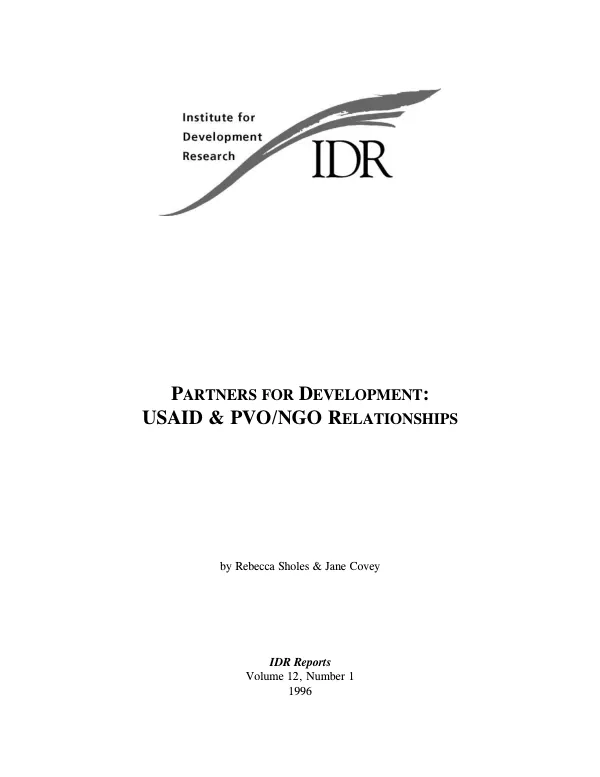
USAID DEC
Bi-lateral Funding Trends: A Study of INTRAC
Rebecca Sholes is an independent development consultant based in Washington, D.C.
15 pages
Sign in to readA free account is required to download.
Abstract
Jane Covey is Executive Director for the Institute for Development Research. This paper is part of a larger study of bi-lateral funding trends organized by INTRAC, an NGO support organization, based in Oxford, U.K. The bi-lateral funding trends study focuses on the development initiatives of the United States and the United Kingdom in Rwanda. The study highlights the importance of addressing the root causes of poverty and food insecurity in Rwanda, including soil degradation and limited market access. The bi-lateral funding trends study provides valuable insights into the effectiveness of development initiatives in Rwanda and the need for continued support and investment in agricultural development. The study also examines the role of bi-lateral funding in supporting development initiatives in Rwanda. The United States and the United Kingdom have been major donors to Rwanda's development efforts, providing significant funding for agricultural development initiatives. The study highlights the importance of bi-lateral funding in supporting development initiatives in Rwanda and the need for continued collaboration and coordination between donors and the Rwandan government. The study concludes that the agricultural development initiative in Rwanda has been successful in improving crop yields and household income among program participants. However, the study also highlights the need for continued support and investment in agricultural development to address the root causes of poverty and food insecurity in Rwanda. The bi-lateral funding trends study provides valuable insights into the effectiveness of development initiatives in Rwanda and the need for continued collaboration and coordination between donors and the Rwandan government.