USAID DEC
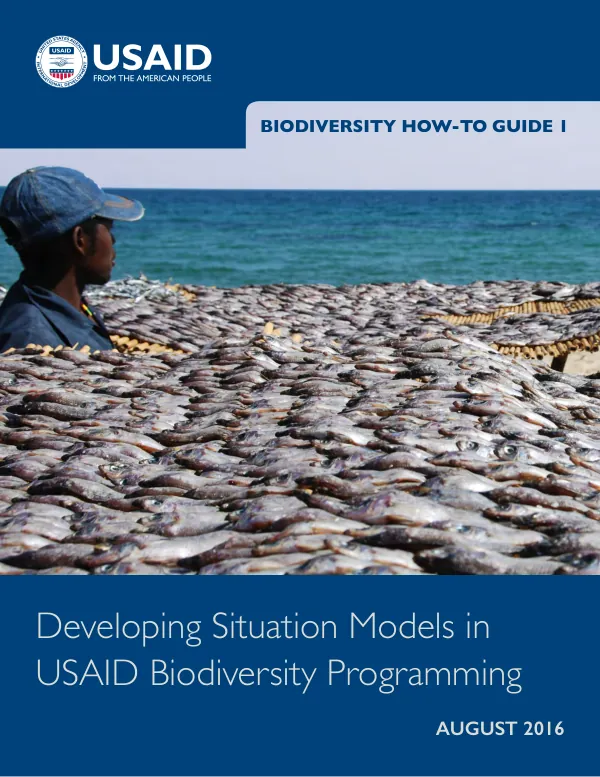
Biodiversity How-To Guide 1: Developing Situation Models in USAID Biodiversity Programming
Sign inENVIRONMENTAL INCENTIVES, LLC
Biodiversity How-To Guide 1: Developing Situation Models in USAID Biodiversity Programming
Developing Situation Models in USAID Biodiversity Programming is a guide aimed at assisting USAID staff and partners in developing effective biodiversity programs.
2016 · 32 pages
Sign in to readA free account is required to download.
Abstract
The guide was published in August 2016 by the USAID Bureau for Economic Growth, Education, and Environment/Office of Forestry and Biodiversity. The guide emphasizes the importance of situation models in biodiversity programming, which are visual representations of the complex relationships between biodiversity, ecosystem services, and human well-being. Situation models help identify key components, such as biodiversity focal interests, ecosystem services, and direct threats, and provide a framework for strategic planning and decision-making. The guide outlines a step-by-step process for developing and using situation models, which includes defining the biodiversity program scope, identifying biodiversity focal interests, and rating direct threats. It also provides examples of situation models in action, including case studies from the Philippines, Galápagos Islands, and Mexico's Gulf of California. The guide highlights the benefits of using situation models, including improved communication and collaboration among stakeholders, enhanced strategic planning, and more effective decision-making. However, it also acknowledges the challenges associated with using situation models, such as the need for detailed and accurate information, and the potential for complexity and confusion. The guide provides resources and tools for developing and using situation models, including software programs, information for a situation model, and frequently asked questions. It also includes a table of contents, figures, and boxes that provide additional information and examples. The guide is intended for USAID staff and partners who are involved in biodiversity programming, including program managers, conservationists, and development specialists. It provides a comprehensive framework for developing and using situation models, and offers practical guidance and examples for implementing effective biodiversity programs. The guide's authors, Caroline Stem and Richard Margoluis from Foundations of Success, and Marco Flores from the USAID Bureau for Economic Growth, Education, and Environment/Office of Forestry and Biodiversity, have extensive experience in biodiversity programming and conservation. The guide is a valuable resource for anyone involved in biodiversity programming, and provides a comprehensive framework for developing and using situation models. Situation models are a powerful tool for biodiversity programming, and the guide provides a clear and concise framework for developing and using them. By following the guide's steps and examples, USAID staff and partners can develop effective situation models that help identify key components, prioritize actions, and inform decision-making. The guide's emphasis on situation models as a tool for strategic planning and decision-making is particularly relevant in the context of USAID's biodiversity programming. By using situation models, USAID staff and partners can better understand the complex relationships between biodiversity, ecosystem services, and human well-being, and develop more effective programs that address the needs of local communities and conserve biodiversity. Overall, the guide provides a comprehensive framework for developing and using situation models in USAID biodiversity programming, and offers practical guidance and examples for implementing effective biodiversity programs.